Car options
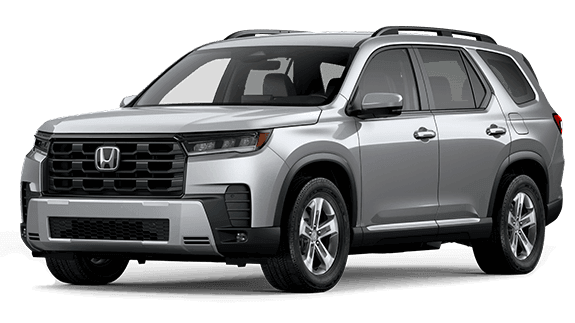
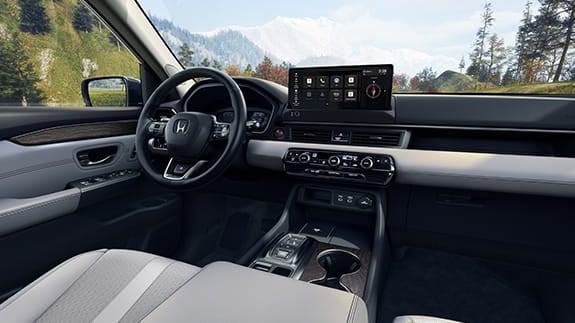
Options are features that don't come as standard equipment with the vehicle, ranging from audio system upgrades to more powerful engines. Most options are installed at the factory. Others are "port-installed options," meaning they're added to a vehicle before it heads out to the dealership on a delivery truck. Other options might be installed at the dealership itself, although these are usually called "accessories" instead.
When you're configuring a car, you choose options after you select a style and trim level. Though an automaker might offer a wide — and even overwhelming — array of options, this doesn't mean every vehicle on a dealer's lot will have those options. The dealership often orders a selection of vehicles from the manufacturer based on what will help the cars sell more quickly, not necessarily what will give customers a wide choice of optional equipment. If you want a specific combination of options, you can custom-order the vehicle — provided you are willing to wait eight to 12 weeks for delivery.
Car packages
Packages are groups of options bundled together with a common theme. For example, a technology package might include options such as navigation, advanced driver assistance systems and adaptive LED headlights. A cold weather package might have heated seats, headlight washers and all-weather floor mats. Some automakers may give their packages a vague name, such as Equipment Group 102A (Ford) or Premium Group (Dodge). In such cases, you'll want to read the Edmunds review in detail or check the automaker's website.
Sometimes these bundles are labeled "value" packages, and they can be a better deal than if you'd purchased the options separately. But most of the time, the packages are grouped to make it easier for a dealer to order vehicles.
If there's a certain package you must have in a car, it is helpful to add it to the search filters when browsing inventory online.
Car accessories
Accessories are parts or modifications that didn't come from the factory and that dealerships sell and install. These items can range from cosmetic parts, such as car covers, black emblems and alloy wheels, to performance add-ons like skid plates, suspension lifts and exhaust systems. If you are interested in these items, make sure you research the price and compare the dealer's price to those of other shops. Many of the same pieces are often found for less online or at another dealership. Also, it's often best to buy accessories after you've purchased the car. If you include them in the financed purchase of your car, while more convenient, you will be paying interest on that set of upgraded wheels for years to come.
Automakers' different approaches to options
Some automakers try to make the shopping process easier by consolidating potential options into the trim levels. This approach makes the vehicles cheaper to produce, and the savings can be passed along to the consumer. While some automakers have certain vehicles with option-free trim levels, only Honda and Acura (Honda's luxury brand) apply this concept to all their vehicles. With this simplified trim structure, the only things you have to decide upon are the color and trim level. When Acura offers a package, it usually treats it as if it is a different trim level. And any additional features are sold as dealer-installed accessories, not factory-built options.
While Honda strives to simplify its options offerings, other carmakers take the opposite approach. Mini and Porsche, for example, encourage their customers to personalize their vehicles with everything from seats upholstered in different colors of leather to colorful graphic decals for the bodywork. As a result, these brands have a high percentage of buyers who custom-order their vehicles. But for someone new to the process, shopping for vehicles with a laundry list of options may be overwhelming. In these situations, you might want to visit a dealership, see how the vehicles are commonly configured, and either purchase the vehicle as it is set up or make your own choices based on what you've seen.
Fully loaded car downsides
Now that you know how to read into trim levels, options and packages, the next step is to balance what you want with what you can afford (and what you can actually find in the dealer's inventory).
If you're not careful, options and packages can turn a reasonably priced car into an overly optioned beast that's well outside your price range — for example, it's possible to turn the reasonably priced Toyota RAV4 that starts around $31,000 into a car that costs over $48,000 if you choose the top trim and all the options.
Additionally, don't count on those add-ons to help you get your money back when you're trading in your vehicle a few years down the road. Highly optioned vehicles sometimes see higher depreciation because used-car customers are less interested in all the bells and whistles.
Once you speak the language of make and model, trim and options, you'll be better able to find the car that's right for you and less likely to wind up with a tricked-out model that blows your budget.
" fill-opacity=".3" d="M0-111h1200v397s-252.211 51.289-538.449 54C375.312 342.711 0 292 0 292v-403Z"/%3E%3Cpath fill="url(%23b)" d="M1-114h1199v378s-252 51.289-538 54C376 320.711 0 270 0 270v-384Z"/%3E%3Cpath fill="url(%23c)" d="M0 60h1200v188s-327 63.289-613 66C301 316.711 0 273 0 273V60Z"/%3E%3Cpath fill="url(%23d)" d="M0 60h1200v188s-327 63.289-613 66C301 316.711 0 273 0 273V60Z"/%3E%3Cmask id="e" width="1201" height="255" x="-1" y="60" maskUnits="userSpaceOnUse" style="mask-type:alpha"%3E%3Cpath fill="%23EEF1F6" d="M0 60h1200v188s-327 63.289-613 66C301 316.711 0 273 0 273V60Z"/%3E%3C/mask%3E%3Cg mask="url(%23e)"%3E%3Cmask id="g" width="1438" height="328" x="-124" y="-13" maskUnits="userSpaceOnUse" style="mask-type:alpha"%3E%3Cpath fill="url(%23f)" fill-rule="evenodd" d="M-123.5 258.5-109-13h1395l27.5 245c-232.5 34.5-487.705 80.384-725.581 83-237.486-2.721-265.419-4-711.419-56.5Z" clip-rule="evenodd"/%3E%3C/mask%3E%3Cg mask="url(%23g)"%3E%3Cpath fill="%23FEF3C7" fill-opacity=".05" d="M774.502 1161.55c72.001-3.83 144.529-16.6 217.321-38.74C1514.56 964.017 1919.92 369.717 2099-392.74 1846.08 72.142 1341.28 313.096 774.502 323.314 207.726 312.671-296.808 72.141-549.998-392.74-370.919 369.717 34.449 964.017 557.181 1122.81c72.792 21.71 145.32 34.48 217.321 38.74Z"/%3E%3Cpath fill="%232070E8" fill-opacity=".25" d="M1243.34 184.225c102.44 30.548 204.48 74.055 305.68 131.036C2275.79 724.198 2778.24 1714.59 2935.35 2866.48 2634.05 2114.1 1943.59 1594 1134.58 1382.03 322.864 1199.88-429.69 1367.89-852 1944.02-497.039 916.86 159.636 208.787 927.603 163.907c106.887-5.677 212.247 1.329 315.737 20.318Z"/%3E%3Cpath fill="%23FEF3C7" fill-opacity=".05" d="M1232.5 70.76c104.07 5.535 208.91 23.986 314.13 55.967C2302.21 356.131 2888.15 1214.7 3147 2316.21 2781.41 1644.6 2051.75 1296.5 1232.5 1281.74 413.251 1297.12-316.027 1644.6-682.001 2316.21-423.151 1214.7 162.788 356.131 918.372 126.727 1023.59 95.361 1128.43 76.91 1232.5 70.76Z"/%3E%3Cpath fill="%23154A99" fill-opacity=".29" d="M421.155 420.269c113.733 46.994 226.413 108.503 337.53 185.053C1556.67 1154.75 2075.77 2329.98 2199.28 3644.03 1895.3 2761.18 1143.24 2091.29 243.733 1753.08c-903.919-305.05-1757.473-209.22-2258.663 386.12C-1568.66 1028.61-797.982 313.945 67.226 358.413c120.398 6.829 238.484 27.723 353.929 61.856Z"/%3E%3C/g%3E%3C/g%3E%3Cdefs%3E%3ClinearGradient id="a" x1="600" x2="600" y1="-92" y2="449" gradientUnits="userSpaceOnUse"%3E%3Cstop offset=".336" stop-color="%23007EE5"/%3E%3Cstop offset="1" stop-color="%2363D9EA"/%3E%3C/linearGradient%3E%3ClinearGradient id="b" x1="600.5" x2="600.5" y1="-114" y2="427" gradientUnits="userSpaceOnUse"%3E%3Cstop offset=".336" stop-color="%23007EE5"/%3E%3Cstop offset="1" stop-color="%2363D9EA"/%3E%3C/linearGradient%3E%3ClinearGradient id="c" x1="647" x2="647" y1="60" y2="319" gradientUnits="userSpaceOnUse"%3E%3Cstop offset=".052" stop-color="%23007EE5"/%3E%3Cstop offset=".514" stop-color="%231561D4"/%3E%3Cstop offset=".938" stop-color="%2300A0B5"/%3E%3C/linearGradient%3E%3ClinearGradient id="d" x1="647" x2="647" y1="60" y2="319" gradientUnits="userSpaceOnUse"%3E%3Cstop offset=".282" stop-color="%23007EE5" stop-opacity="0"/%3E%3Cstop offset=".822" stop-opacity=".3"/%3E%3C/linearGradient%3E%3ClinearGradient id="f" x1="588.5" x2="588.5" y1="-13" y2="499.532" gradientUnits="userSpaceOnUse"%3E%3Cstop stop-color="%23154A99"/%3E%3Cstop offset="1" stop-color="%2363D9EA"/%3E%3C/linearGradient%3E%3C/defs%3E%3C/svg%3E)