" fill-opacity=".3" d="M0-111h1200v397s-252.211 51.289-538.449 54C375.312 342.711 0 292 0 292v-403Z"/%3E%3Cpath fill="url(%23b)" d="M1-114h1199v378s-252 51.289-538 54C376 320.711 0 270 0 270v-384Z"/%3E%3Cpath fill="url(%23c)" d="M0 60h1200v188s-327 63.289-613 66C301 316.711 0 273 0 273V60Z"/%3E%3Cpath fill="url(%23d)" d="M0 60h1200v188s-327 63.289-613 66C301 316.711 0 273 0 273V60Z"/%3E%3Cmask id="e" width="1201" height="255" x="-1" y="60" maskUnits="userSpaceOnUse" style="mask-type:alpha"%3E%3Cpath fill="%23EEF1F6" d="M0 60h1200v188s-327 63.289-613 66C301 316.711 0 273 0 273V60Z"/%3E%3C/mask%3E%3Cg mask="url(%23e)"%3E%3Cmask id="g" width="1438" height="328" x="-124" y="-13" maskUnits="userSpaceOnUse" style="mask-type:alpha"%3E%3Cpath fill="url(%23f)" fill-rule="evenodd" d="M-123.5 258.5-109-13h1395l27.5 245c-232.5 34.5-487.705 80.384-725.581 83-237.486-2.721-265.419-4-711.419-56.5Z" clip-rule="evenodd"/%3E%3C/mask%3E%3Cg mask="url(%23g)"%3E%3Cpath fill="%23FEF3C7" fill-opacity=".05" d="M774.502 1161.55c72.001-3.83 144.529-16.6 217.321-38.74C1514.56 964.017 1919.92 369.717 2099-392.74 1846.08 72.142 1341.28 313.096 774.502 323.314 207.726 312.671-296.808 72.141-549.998-392.74-370.919 369.717 34.449 964.017 557.181 1122.81c72.792 21.71 145.32 34.48 217.321 38.74Z"/%3E%3Cpath fill="%232070E8" fill-opacity=".25" d="M1243.34 184.225c102.44 30.548 204.48 74.055 305.68 131.036C2275.79 724.198 2778.24 1714.59 2935.35 2866.48 2634.05 2114.1 1943.59 1594 1134.58 1382.03 322.864 1199.88-429.69 1367.89-852 1944.02-497.039 916.86 159.636 208.787 927.603 163.907c106.887-5.677 212.247 1.329 315.737 20.318Z"/%3E%3Cpath fill="%23FEF3C7" fill-opacity=".05" d="M1232.5 70.76c104.07 5.535 208.91 23.986 314.13 55.967C2302.21 356.131 2888.15 1214.7 3147 2316.21 2781.41 1644.6 2051.75 1296.5 1232.5 1281.74 413.251 1297.12-316.027 1644.6-682.001 2316.21-423.151 1214.7 162.788 356.131 918.372 126.727 1023.59 95.361 1128.43 76.91 1232.5 70.76Z"/%3E%3Cpath fill="%23154A99" fill-opacity=".29" d="M421.155 420.269c113.733 46.994 226.413 108.503 337.53 185.053C1556.67 1154.75 2075.77 2329.98 2199.28 3644.03 1895.3 2761.18 1143.24 2091.29 243.733 1753.08c-903.919-305.05-1757.473-209.22-2258.663 386.12C-1568.66 1028.61-797.982 313.945 67.226 358.413c120.398 6.829 238.484 27.723 353.929 61.856Z"/%3E%3C/g%3E%3C/g%3E%3Cdefs%3E%3ClinearGradient id="a" x1="600" x2="600" y1="-92" y2="449" gradientUnits="userSpaceOnUse"%3E%3Cstop offset=".336" stop-color="%23007EE5"/%3E%3Cstop offset="1" stop-color="%2363D9EA"/%3E%3C/linearGradient%3E%3ClinearGradient id="b" x1="600.5" x2="600.5" y1="-114" y2="427" gradientUnits="userSpaceOnUse"%3E%3Cstop offset=".336" stop-color="%23007EE5"/%3E%3Cstop offset="1" stop-color="%2363D9EA"/%3E%3C/linearGradient%3E%3ClinearGradient id="c" x1="647" x2="647" y1="60" y2="319" gradientUnits="userSpaceOnUse"%3E%3Cstop offset=".052" stop-color="%23007EE5"/%3E%3Cstop offset=".514" stop-color="%231561D4"/%3E%3Cstop offset=".938" stop-color="%2300A0B5"/%3E%3C/linearGradient%3E%3ClinearGradient id="d" x1="647" x2="647" y1="60" y2="319" gradientUnits="userSpaceOnUse"%3E%3Cstop offset=".282" stop-color="%23007EE5" stop-opacity="0"/%3E%3Cstop offset=".822" stop-opacity=".3"/%3E%3C/linearGradient%3E%3ClinearGradient id="f" x1="588.5" x2="588.5" y1="-13" y2="499.532" gradientUnits="userSpaceOnUse"%3E%3Cstop stop-color="%23154A99"/%3E%3Cstop offset="1" stop-color="%2363D9EA"/%3E%3C/linearGradient%3E%3C/defs%3E%3C/svg%3E)
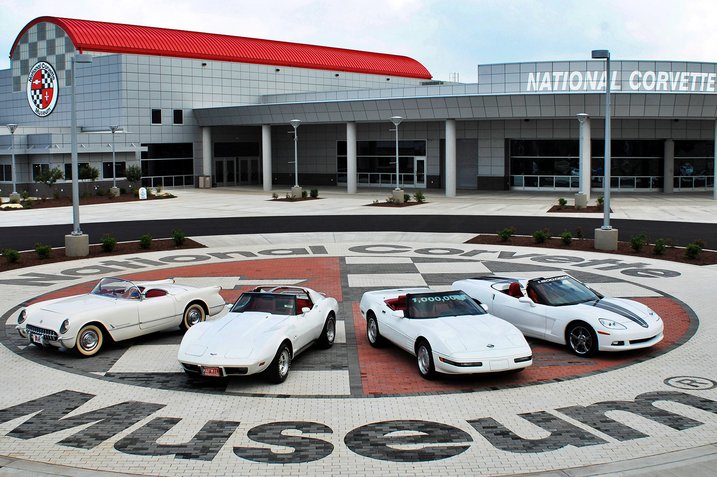
Whether through performance, style or innovation (or a combination of all three), Chevrolet has produced a handful of Corvette models over the past seven decades that truly stood out from the pack. While the criteria that make a sports car the best of its breed are highly subjective, for our money it's tough to beat Chevrolet's latest and greatest — the mind-boggling 1,250-horsepower hybrid-assisted ZR1X. This is a car that delivers contemporary hypercar performance at a fraction of the typical cost of entry, yet it also comes with a standard Chevrolet warranty and virtually all of the creature comforts that we've come to expect from the American sports car icon.
But not all of the Corvette's greatest hits have featured mind-boggling power and wild aerodynamics. Some of the greatest moments in the Corvette's history have come as a result of a timeless design, a technical breakthrough, or a newfound capability that raised the bar for sports cars on the whole. We'll be sticking to road-going series production models here, so you won't find the John Greenwood road racers from the early 1970s or the Le Mans-winning C5-R and C6.R on this list.
These are the Corvettes that Chevy dealers sold to anyone who could qualify for a loan. To read about the 10 Worst Corvettes of All Time, click here.
Jump to:
- 2001 Corvette Z06
- 2017 Corvette Grand Sport
- 1953 Corvette
- 1957 Corvette "Fuelie"
- 1967 Corvette 427 L88
- 1955 Corvette
- 1990 Corvette ZR-1
- 2006 Corvette Z06
- 1963 Corvette Split-Window
- 2026 Corvette ZR1X
10. 2001 Corvette Z06
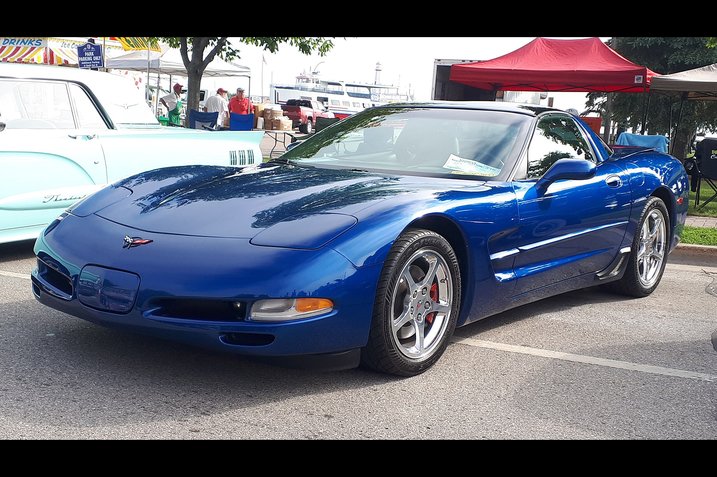
Photo by SsmIntrigue for Wikimedia Commons
Chevrolet put the sports car world on notice when it resurrected the Z06 name after a nearly four-decade hiatus. Outfitted with the FE4 suspension package, wider wheels and tires, a bespoke manual transmission and a 385-horsepower LS6 V8, the 3,100-pound C5 Z06 offered performance that was so formidable, it's still commendable by today's standards.
The C5 Z06's distinctive roofline comes as a result of the FRC, which stands for "fixed-roof coupe." Originally envisioned as a more affordable, no-frills alternative to the standard C5 Corvette coupe, the FRC is effectively a C5 Corvette convertible with a hardtop roof bonded in place. During the FRC's development, engineers realized that this permanent retrofit resulted in a 12% increase in chassis stiffness, which in turn made the FRC the stiffest production Corvette in history at the time.
This discovery convinced Chevrolet product planners to instead position the FRC as the most performance-focused version of the C5 Corvette, and all examples of the C5 Z06 used this roof configuration.
9. 2017 Corvette Grand Sport
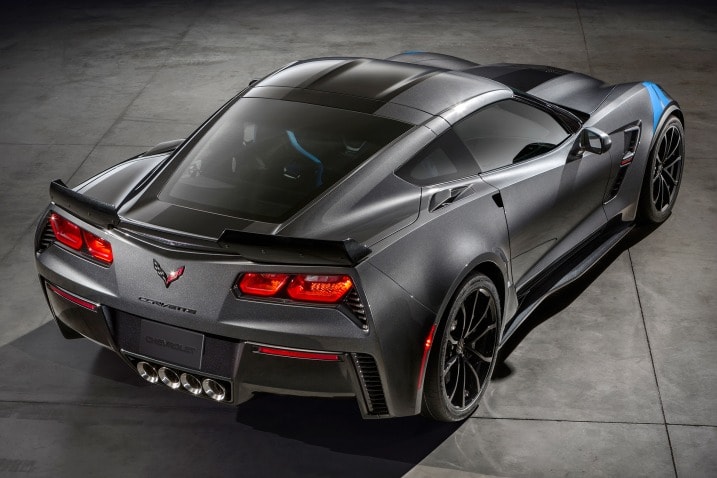
Although the Z06 has traditionally been the most track-focused iteration of a given Corvette generation while the Grand Sport has served as a more civilized touring model, these roles were effectively reversed with the seventh-generation car.
Slotting between the standard Stingray and the supercar-baiting Z06 in the C7 Corvette hierarchy, the Grand Sport benefited from the Z06's wide-body look and the chassis upgrades that came with it, yet it wasn't handicapped by the heat management issues that hounded the Z06's supercharged 6.2-liter LT4 V8 during extended hot laps on a road course. The Grand Sport was also lighter due to its use of the Stingray's 460-horsepower naturally aspirated 6.2-liter V8, yet it could be outfitted with nearly every option available for the C7 Z06 — including the hardcore track-focused Z07 package.
8. 1953 Corvette
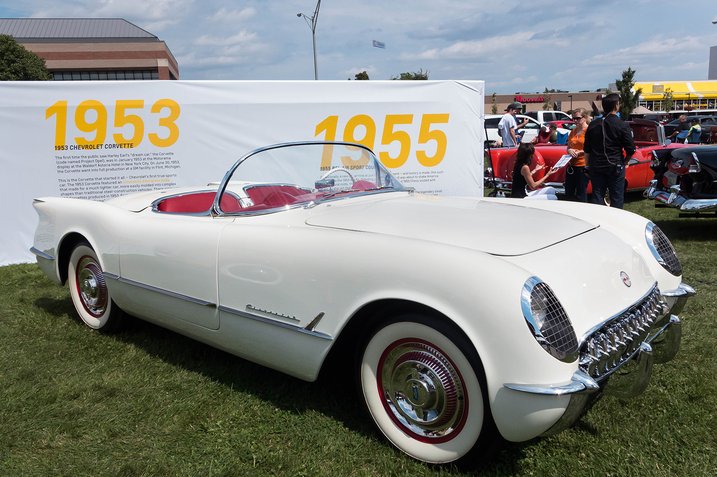
Photo by Mustang Joe for Wikimedia Commons
The greatness of the original Corvette lies in that it was the very first of its species.
When the first Corvette debuted at the GM Motorama in New York City on January 17, 1953, it was an instant sensation. It wasn't because the mechanical bits were exotic — the engine under the hood was a slightly tweaked 150-horsepower version of the Chevy Stovebolt inline-six that had been around since 1941, the transmission was a two-speed automatic, and the suspension was lifted straight from the Chevy sedans — but its fiberglass body was a stunner. Based on crowd reaction, Chevrolet immediately ordered the Corvette into production, and 300 examples of the new 1953 Corvette were built virtually by hand on a pilot line, all of which featured a red interior and Polo White paint. Although the 1953 Corvette's performance left something to be desired, its head-turning beauty captured the attention of American sports car enthusiasts and helped set the stage for the fire-breathing models that were to come.
7. 1957 Corvette "Fuelie"
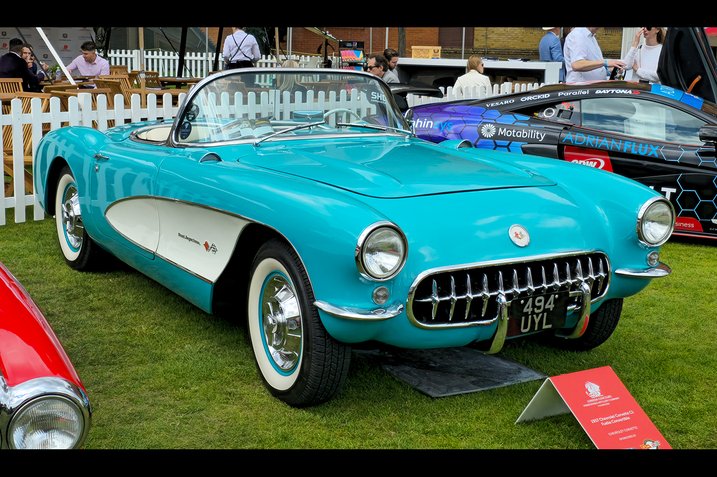
Photo by Calreyn88 for Wikimedia Commons
With Zora Arkus-Duntov guiding Corvette development as chief engineer, Chevrolet's two-seater finally came of age with the addition of mechanical fuel injection from Rochester for the 1957 model year. Thanks to the precise fuel distribution, the 283-cubic-inch small-block V8 was able to produce 283 horsepower — a startling 1 hp per cubic inch in an era when most engines were only half that power-dense.
A development of the injection fitted to John Fitch's 1956 B-Class winner at Sebring, it was a sophisticated system that became instantly iconic. Chevrolet built 6,338 Corvettes for 1957, and of those, just 1,040 had the "Ramjet Fuel Injection" option.
Road & Track tested a '57 Corvette running fuel injection and a 4.11:1 rear gear set. According to its test, the Corvette ran from zero to 60 mph in 5.7 seconds, an incredible performance figure for the time that would be considered impressive even today.
6. 1967 Corvette 427 L88
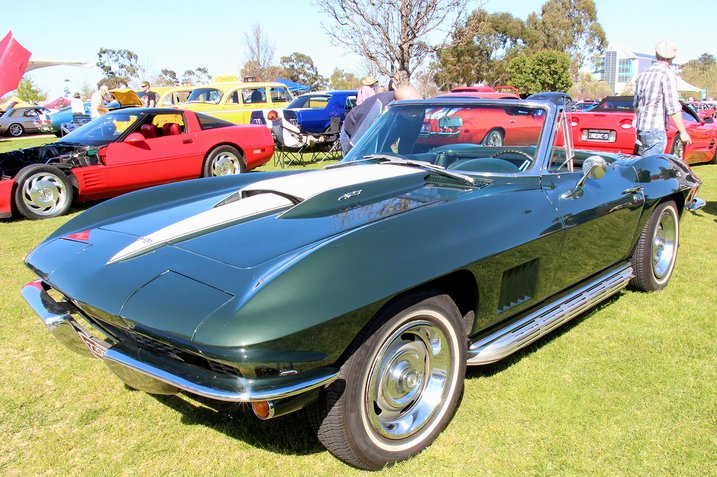
Photo by Cars Down Under for Flickr
Stand next to an L88 Corvette when it starts and you can practically feel the big Holley 850 carburetor fighting to pull the air out of your lungs. After a few moments, the engine settles into a vicious idle and the heat coming from the exhaust begins to roast your nostrils. There have been faster Corvettes than the L88, but none are more uncompromisingly aggressive.
There was a label on the L88 that carried this message: "Warning: Vehicle must operate on fuel having a minimum of 103 research octane and 95 motor octane or engine damage may result." It was necessary because the aluminum heads capping the iron 427-cubic-inch big-block V8 had combustion chambers with a fierce 12.5:1 compression ratio. Chevrolet officially rated the L88 engine at 430 hp, but it's rumored that the automaker grossly underrated the motorsport-tuned engine in order to dissuade casual buyers from ordering it. Selecting the L88 engine made optional equipment like power-assisted brakes, heavy-duty suspension and Positraction mandatory, while creature comforts like the heater and defroster were deleted to help reduce unnecessary weight. Only 20 of these track-ready L88 supercars were produced in total.
5. 1955 Corvette
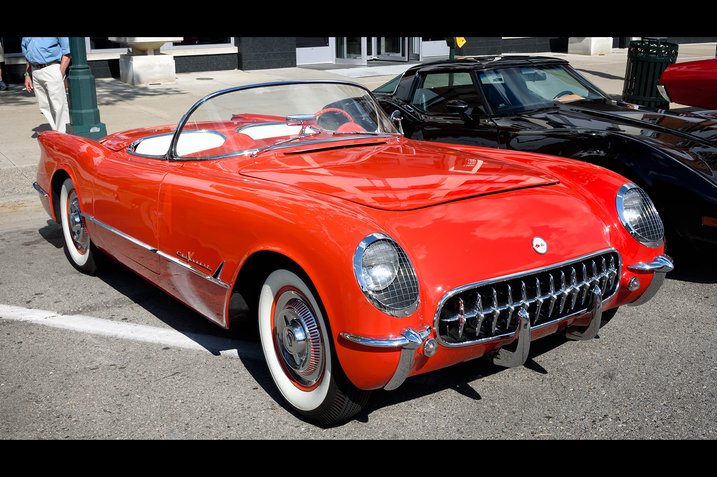
Photo by: Mustang Joe for Wikimedia Commons
At first glance, the 1955 Corvette doesn't look much different from the '53 or '54. That's deceiving because while the body and chassis didn't change much, the 1955 model represented a major step forward for Corvette performance.
Keen to inject some excitement into its curvaceous two-seater, Chevrolet engineers shoehorned the automaker's then-new 265-cubic-inch small-block V8 into the engine bay. Good for 195 horsepower, it was a significant jump in power compared to the 150-hp 3.9-liter "Blue Flame" inline six-cylinder engine that had motivated previous models, and it helped make the Corvette a viable contender in the sports car world. Although it was initially hampered by a two-speed automatic transmission, the introduction of an optional three-speed manual gearbox later in the model year's production run enhanced the 1955 Corvette's performance capability and helped pave the way for the more potent models that would debut in the years that followed.
4. 1990 Corvette ZR-1
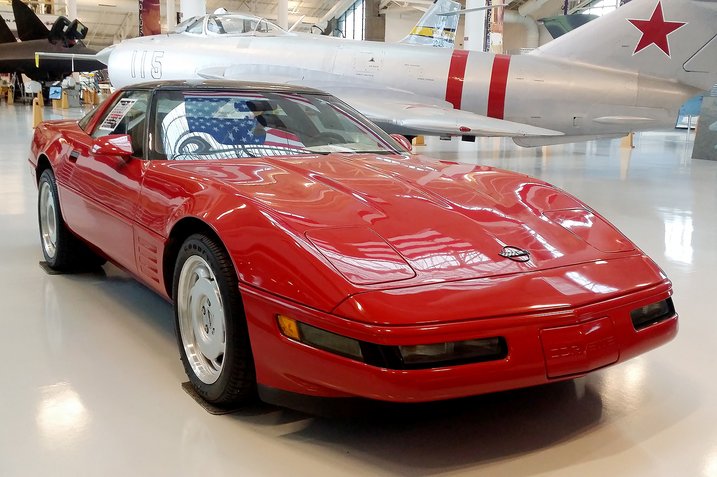
Photo by Eric Friedebach for Wikimedia Commons
The debut of the fourth-generation Corvette in 1984 marked a turning point for Chevrolet's sports car. After a period that saw the third-generation Corvette's performance progressively choked into oblivion as the 1970s and early '80s wore on, Chevy's clean-sheet, tech-focused approach with the all-new fourth-generation car was a breath of fresh air for enthusiasts, and it signaled a shift toward a new era of more robust performance.
Although the 1984 Corvette's 200-horsepower L83 V8 was still a far cry from the tire-roasting big-block engines that had powered the top-tier models in the late '60s, GM purchased English sports car builder and engineering firm Lotus a few years after the C4's introduction and soon set to work creating a sports car that could go toe-to-toe with Dodge's upcoming Viper. Designed by Lotus and built by Mercury Marine, the ZR-1's 32-valve DOHC LT5 V8 was wholly unique to the model, and paired with ZR-1's widened bodywork and numerous chassis upgrades, it quickly became known as the "King of the Hill" Corvette.
According to Motor Trend, the final 405-hp edition of the C4-based ZR-1 could reach 60 mph from rest in 4.9 seconds and cover the quarter mile in only 13.0 seconds at over 117 mph. But the LT5's forte was actually midrange punch, a characteristic that enabled the ZR-1 to make the dash from 0 to 100 mph in a mere 4.8 seconds. While later models would surpass the performance offered by the C4 ZR-1, it remains a remarkable achievement in Corvette history.
3. 2006 Corvette Z06
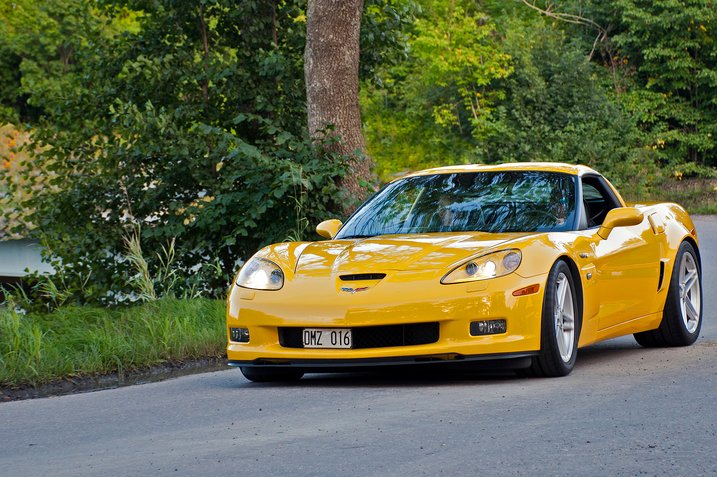
Photo by Staffan Andersson for Wikimedia Commons
Boasting a high-revving, naturally aspirated 505-horsepower 7.0-liter LS7 dry-sump V8, many enthusiasts consider the C6 Z06 the peak of modern front-engine Corvette performance. Backing up that engine and furthering the car's surprisingly exotic credentials is a sophisticated Magnetic Ride Control suspension system, massive six-piston brakes, a unique aluminum frame, and a svelte curb weight of just over 3,100 pounds.
Upon its debut, we deemed the Z06 to be "an unforgettable monster on the street" that offered performance that was on par with the world's best sports cars. Figures like a sub 4-second sprint to 60 mph, a high 11-second quarter-mile time and lateral grip well in excess of 1 g certainly lend credence to that claim and remain impressive figures even two decades later, but it's the 2012 Corvette Z06's Ferrari Enzo–beating official Nürburgring lap time of 7:22.68 that really drives the point home.
2. 1963 Corvette Split-Window
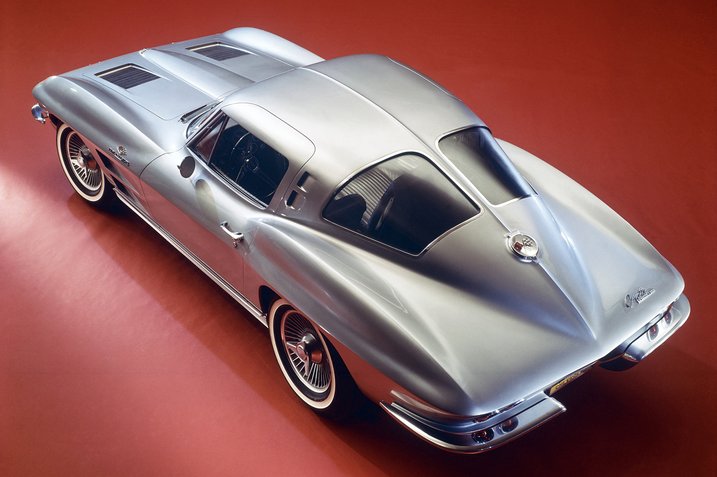
Photo: General Motors
More than six decades after its debut, the 1963 Corvette coupe remains one of the most alluring automotive designs ever conceived. Razor-sharp fenders, a tapered tail and a sharklike mouth make it both gorgeous and aggressive. While the C2 was also notable for being the first fixed-roof Corvette coupe, the 1963 model is a particular standout due to the split design of the rear window. It's a one-year-only styling trait that plays a pivotal role in the widely held notion that the '63 coupe is the most beautiful Corvette of all time.
But it's not just the looks that separate the C2 generation from the solid-rear-axle C1. The chassis was all-new and outfitted with a fully independent suspension that made the Corvette significantly more competitive with sports cars from around the world in terms of both everyday comfort and on-track capability. For 1963, the most potent engine available in the Corvette was the 360-horsepower L84 327-cubic-inch V8 capped by Rochester mechanical fuel injection. If would-be buyers wanted more track-focused performance than the standard tuning offered, the new Z06 option package could also be selected, which brought a stiffened suspension, a close-ratio Muncie four-speed manual gearbox, upgraded brakes, and a 36.5-gallon fuel cell into the mix.
1. 2026 Corvette ZR1X
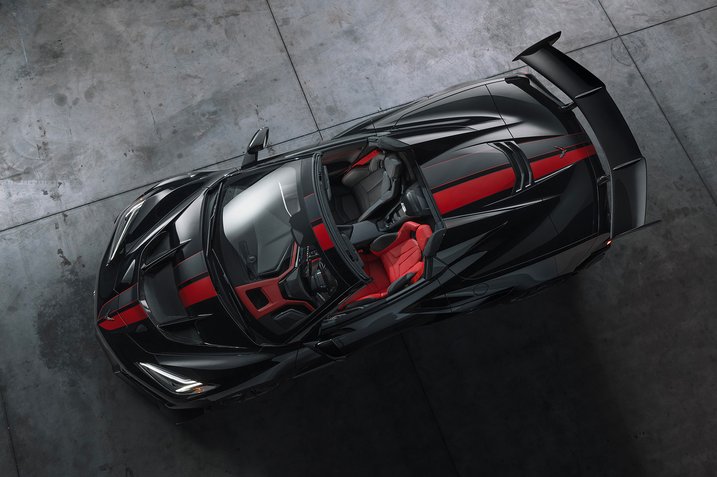
Photo: General Motors
The eighth-generation Corvette's transition to a rear mid-mounted engine configuration for the 2020 model year was revolutionary in many ways and controversial in others, but by now it has become clear that Chevrolet had some very big plans in store for the thoroughly revamped sports car when it made the leap. While models like the C8 Z06 and its Ferrari-like flat-plane LT6 V8 offer an exotic soundtrack and the E-Ray ushered in the world's first hybridized Corvette, the ZR1X represents the culmination of the C8 engineering team's efforts to date.
Here the E-Ray's electric motor powers the front wheels while a twin-turbocharged version of the Z06's 5.5-liter V8 sends its grunt to the rears, resulting in combined power output figures of 1,250 horsepower and roughly 950 lb-ft of torque on 93 octane fuel. Chevrolet says that the ZR1X is capable of hitting 60 mph from a standstill in under 2 seconds and dusts the quarter mile in under 9 seconds on its way to a top speed of 233 mph with the standard aerodynamic package. But despite its blistering straight-line thrust, the ZR1X isn't expressly tuned for the drag strip.
The ZR1X also features massive 16.5-inch rotors front and rear with 10-piston calipers installed at the front — a first for a General Motors product — while the aero elements that are included as part of the hardcore ZTK package generate more the 1,200 pounds of downforce at top speed. Combined with the package's stiffer suspension tuning and ultra-sticky Michelin Pilot Sport Cup 2R tires, the ZR1X boasts an official Nürburgring Nordschleife time of 6:49.275, which makes this Corvette the fastest American production car to have ever lapped the famed German road course. Although there have been more beautiful models in the Corvette's storied history, none is a more capable performer.

.jpg)

.jpg)

