" fill-opacity=".3" d="M0-111h1200v397s-252.211 51.289-538.449 54C375.312 342.711 0 292 0 292v-403Z"/%3E%3Cpath fill="url(%23b)" d="M1-114h1199v378s-252 51.289-538 54C376 320.711 0 270 0 270v-384Z"/%3E%3Cpath fill="url(%23c)" d="M0 60h1200v188s-327 63.289-613 66C301 316.711 0 273 0 273V60Z"/%3E%3Cpath fill="url(%23d)" d="M0 60h1200v188s-327 63.289-613 66C301 316.711 0 273 0 273V60Z"/%3E%3Cmask id="e" width="1201" height="255" x="-1" y="60" maskUnits="userSpaceOnUse" style="mask-type:alpha"%3E%3Cpath fill="%23EEF1F6" d="M0 60h1200v188s-327 63.289-613 66C301 316.711 0 273 0 273V60Z"/%3E%3C/mask%3E%3Cg mask="url(%23e)"%3E%3Cmask id="g" width="1438" height="328" x="-124" y="-13" maskUnits="userSpaceOnUse" style="mask-type:alpha"%3E%3Cpath fill="url(%23f)" fill-rule="evenodd" d="M-123.5 258.5-109-13h1395l27.5 245c-232.5 34.5-487.705 80.384-725.581 83-237.486-2.721-265.419-4-711.419-56.5Z" clip-rule="evenodd"/%3E%3C/mask%3E%3Cg mask="url(%23g)"%3E%3Cpath fill="%23FEF3C7" fill-opacity=".05" d="M774.502 1161.55c72.001-3.83 144.529-16.6 217.321-38.74C1514.56 964.017 1919.92 369.717 2099-392.74 1846.08 72.142 1341.28 313.096 774.502 323.314 207.726 312.671-296.808 72.141-549.998-392.74-370.919 369.717 34.449 964.017 557.181 1122.81c72.792 21.71 145.32 34.48 217.321 38.74Z"/%3E%3Cpath fill="%232070E8" fill-opacity=".25" d="M1243.34 184.225c102.44 30.548 204.48 74.055 305.68 131.036C2275.79 724.198 2778.24 1714.59 2935.35 2866.48 2634.05 2114.1 1943.59 1594 1134.58 1382.03 322.864 1199.88-429.69 1367.89-852 1944.02-497.039 916.86 159.636 208.787 927.603 163.907c106.887-5.677 212.247 1.329 315.737 20.318Z"/%3E%3Cpath fill="%23FEF3C7" fill-opacity=".05" d="M1232.5 70.76c104.07 5.535 208.91 23.986 314.13 55.967C2302.21 356.131 2888.15 1214.7 3147 2316.21 2781.41 1644.6 2051.75 1296.5 1232.5 1281.74 413.251 1297.12-316.027 1644.6-682.001 2316.21-423.151 1214.7 162.788 356.131 918.372 126.727 1023.59 95.361 1128.43 76.91 1232.5 70.76Z"/%3E%3Cpath fill="%23154A99" fill-opacity=".29" d="M421.155 420.269c113.733 46.994 226.413 108.503 337.53 185.053C1556.67 1154.75 2075.77 2329.98 2199.28 3644.03 1895.3 2761.18 1143.24 2091.29 243.733 1753.08c-903.919-305.05-1757.473-209.22-2258.663 386.12C-1568.66 1028.61-797.982 313.945 67.226 358.413c120.398 6.829 238.484 27.723 353.929 61.856Z"/%3E%3C/g%3E%3C/g%3E%3Cdefs%3E%3ClinearGradient id="a" x1="600" x2="600" y1="-92" y2="449" gradientUnits="userSpaceOnUse"%3E%3Cstop offset=".336" stop-color="%23007EE5"/%3E%3Cstop offset="1" stop-color="%2363D9EA"/%3E%3C/linearGradient%3E%3ClinearGradient id="b" x1="600.5" x2="600.5" y1="-114" y2="427" gradientUnits="userSpaceOnUse"%3E%3Cstop offset=".336" stop-color="%23007EE5"/%3E%3Cstop offset="1" stop-color="%2363D9EA"/%3E%3C/linearGradient%3E%3ClinearGradient id="c" x1="647" x2="647" y1="60" y2="319" gradientUnits="userSpaceOnUse"%3E%3Cstop offset=".052" stop-color="%23007EE5"/%3E%3Cstop offset=".514" stop-color="%231561D4"/%3E%3Cstop offset=".938" stop-color="%2300A0B5"/%3E%3C/linearGradient%3E%3ClinearGradient id="d" x1="647" x2="647" y1="60" y2="319" gradientUnits="userSpaceOnUse"%3E%3Cstop offset=".282" stop-color="%23007EE5" stop-opacity="0"/%3E%3Cstop offset=".822" stop-opacity=".3"/%3E%3C/linearGradient%3E%3ClinearGradient id="f" x1="588.5" x2="588.5" y1="-13" y2="499.532" gradientUnits="userSpaceOnUse"%3E%3Cstop stop-color="%23154A99"/%3E%3Cstop offset="1" stop-color="%2363D9EA"/%3E%3C/linearGradient%3E%3C/defs%3E%3C/svg%3E)


Shopping for a used car can be a complex and time-consuming endeavor. The effort involved can make it tempting to take a leap of faith when you find a vehicle that presumably checks all of the boxes, but it's important to have thorough understanding of its condition before you decide whether to take the plunge.
Although a vehicle history report can reveal useful information about things like accidents, ownership history and odometer readings, the scope of these reports is limited to data that's shared with sources like insurance companies and state DMVs. These reports typically cannot provide a complete picture of the vehicle's current condition, and even major issues can slip by these agencies from time to time.
An in-person inspection can provide a much more comprehensive assessment of the vehicle's current health. While even a simple once-over of the vehicle can tell you a lot more than a handful of pictures can, showing up with a list of things to check will help to ensure that nothing gets overlooked.
Here are some items that should be part of any used car inspection checklist:
- Maintenance records: Vehicle history reports can offer some insight about when and where maintenance was done, but service performed by independent shops (as opposed to dealerships) may not be listed, and the report may not include specifics about what the work entailed. Most credible sellers will have a file of service records for the vehicle to provide proof of regular maintenance and information about what has and has not been repaired or replaced over the course of their ownership.
- Exterior: Look over each body panel of the vehicle for dents, scratches and rust. Also keep an eye out for panels that look misaligned, along with any paint and finish that seems inconsistent with the rest of the vehicle — these can be indicators that the vehicle has been involved in an accident and poorly repaired. Blistered paint is a telltale sign of rust, which often begins to develop around the lower sections of the wheelwells and doors. Open and close each door to verify normal operation, and note any cracks or significant stone chips in the windshield as well as the side and rear glass. Check to make sure all of the exterior lights function properly, including the high beams, turn signals and brake lights. Also verify that the light housings are in good condition. Cracks will allow moisture to seep in, which will cause internal fogging and potentially shorten the bulbs' operating life.
- Chassis: Look over the vehicle on a flat section of asphalt to verify that the vehicle is sitting level. If one corner is higher or lower than the others, it may be an indication of a suspension issue. Also be sure to carefully inspect the tires — tire wear should be even across the width of the tread, and all four tires should be the same brand. Mismatched tires may give you some insight into the seller’s mindset about maintenance, and uneven tire wear can point to a larger issue with the suspension or steering systems. Also look for dents, cracks and scuffs on the wheels, as those can be indicators of how much abuse the vehicle has been subjected to.
- Engine and related systems: Pop the hood and assess the condition of the engine bay. Look for signs of fluid splatter and any loose wiring — these can be indications of shoddy repairs. Visually inspect hoses and belts for signs of deterioration, and check to ensure that the fluid reservoirs are at their appropriate levels. Be sure to check the oil dipstick as well. If the oil is foamy or gray in color, it means that coolant may be mixing with the oil, and that indicates that a cylinder head gasket might be blown or the engine block is cracked, both of which are major problems. Automatic transmissions typically have a dipstick of their own and should be checked when the vehicle is running and warmed up to operating temperature. While the engine is running, also be sure to check for leaks by looking underneath the vehicle for puddles developing near the engine, transmission and rear axle. If you’re inspecting the vehicle near where it’s regularly parked, check that parking spot for signs of fluid leaks as well.
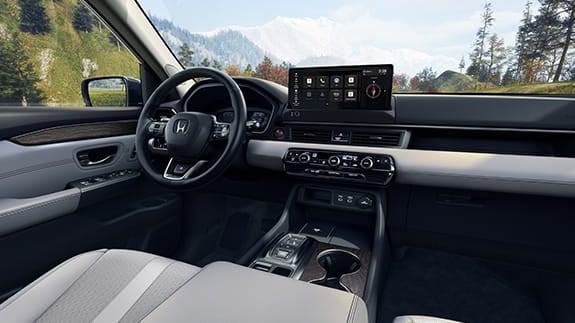
- Interior: Be on the alert for musty smells when you first open the door of the vehicle, as they can be an indicator of mildew caused by water leaking into the cabin. Check under the floormats for signs of moisture, too. Stains or sagging areas of the headliner can point to water intrusion as well.
Sit in each seat of the car and verify that all of the adjustments work properly. Before starting the engine, turn the ignition switch or button to the "on" position and verify that all of the warning lights on the instrument panel light up. Start the engine and make sure that all of those warning lights turn off.
Check to see if the air conditioning blows cold and the heater blows hot. Test any and all switchgear to confirm that all of the buttons operate normally. Test out the stereo and listen for signs of a muffled and crackling sound from one area of the interior, which may point to a blown speaker. If equipped, verify that the Bluetooth feature pairs with your phone properly. - On the test drive: Drive the vehicle in an area that allows you to evaluate it both at low speeds and on the highway. Note any odd sounds or vibrations, as these can be indicators of deferred maintenance. Check the gauges periodically during the drive, verifying that the temperature gauge stays near the middle of the indicated range and that no warning lights pop up. The transmission should shift smoothly, and if the vehicle is equipped with a 4WD mode, it should engage without any drama.
Checking these items will help you avoid any surprises down the road, and any discoveries that you make along the way could potentially increase your leverage at the bargaining table.
Ideally, though, a used car should be inspected by a qualified professional before negotiating a purchase. Most car buyers — even maintenance-savvy ones — simply cannot check a vehicle as comprehensively as an experienced mechanic can. Even if you have an exhaustive checklist at the ready, a professional inspection can reveal serious issues that might not be detectable while poking around the vehicle in a parking lot.
Most sellers will let you take the car for an inspection or agree to have a mobile inspection performed at their home or place of business. If the seller is hesitant to agree to this type of inspection, there's a strong possibility that the person is hiding important information about the vehicle, and you might want to consider walking away from the deal.