" d="M896 513c116 45.015 222 64 304 75V0H0v501c40 36.024 154 76 340 76s344-146.269 556-64Z"/%3E%3C/mask%3E%3Cg mask="url(%23b)"%3E%3Cpath fill="url(%23c)" d="M896 513c116 45.015 222 64 304 75V0H0v501c40 36.024 154 76 340 76s344-146.269 556-64Z"/%3E%3Cpath fill="url(%23d)" fill-opacity=".15" d="M581.718 62.893c42.993 1.53 86.281 5.888 129.704 13.204 311.828 52.485 552.538 242.016 657.698 483.656-149.97-147.971-450.891-226.33-789.375-232.079-338.534.839-640.434 74.572-792.746 220.292 108.75-240.047 352.255-425.97 664.832-473.803a1041.548 1041.548 0 0 1 129.887-11.27Z"/%3E%3Cpath fill="url(%23e)" fill-opacity=".5" d="M611.247 209.93a1458.84 1458.84 0 0 1 139.573 27.692c333.61 83.239 577.16 267.208 668.67 475.188-148.93-138.63-468.279-241.218-835.209-290.421-367.6-43.915-702.265-24.445-881.281 72.561 140.567-178.524 422.355-295.817 766.181-293.074 47.867.484 95.274 3.212 142.066 8.054Z"/%3E%3Cpath fill="url(%23f)" d="M735.039 879.394c48.524-6.62 97.023-16.967 145.3-31.2C1227.03 746.059 1475.76 472.327 1564.28 145c-151.17 209.633-482.23 344.436-865.05 388.31C315.515 568.571-35.93 504.564-227 330.342-73.333 632.61 226.169 849.617 586.429 878.604c50.15 3.871 99.74 4.07 148.61.79Z" opacity=".3"/%3E%3Cpath fill="url(%23g)" d="M694.222 783.712c50.956 12 103.317 20.27 156.946 24.578 385.102 31.013 738.232-146.76 952.062-439.434-231.22 151.216-613.24 158.795-1012.047 55.796C394.784 312.716 68.643 114.101-55.211-133c37.44 360.528 253.087 691.895 601.449 858.946 48.557 23.091 97.963 42.302 147.984 57.766Z" opacity=".9"/%3E%3Cpath fill="url(%23h)" fill-opacity=".5" d="M896 513c116 45.015 222 64 304 75V0H0v501c40 36.024 154 76 340 76s344-146.269 556-64Z"/%3E%3C/g%3E%3Cdefs%3E%3ClinearGradient id="a" x1="1005" x2="989.087" y1="23" y2="552.522" gradientUnits="userSpaceOnUse"%3E%3Cstop stop-color="%23007EE5"/%3E%3Cstop offset=".333" stop-color="%231561D4"/%3E%3Cstop offset="1" stop-color="%230A4AAB"/%3E%3C/linearGradient%3E%3ClinearGradient id="c" x1="1005" x2="989.087" y1="23" y2="552.522" gradientUnits="userSpaceOnUse"%3E%3Cstop stop-color="%23007EE5"/%3E%3Cstop offset=".334" stop-color="%231561D4"/%3E%3C/linearGradient%3E%3ClinearGradient id="d" x1="675.999" x2="879.999" y1="648.999" y2="120.999" gradientUnits="userSpaceOnUse"%3E%3Cstop stop-color="%23fff"/%3E%3Cstop offset="1" stop-color="%23fff" stop-opacity="0"/%3E%3C/linearGradient%3E%3ClinearGradient id="e" x1="656.5" x2="637.602" y1="213" y2="622.259" gradientUnits="userSpaceOnUse"%3E%3Cstop offset=".115" stop-color="%23fff" stop-opacity="0"/%3E%3Cstop offset=".944" stop-color="%23017D8D"/%3E%3C/linearGradient%3E%3ClinearGradient id="f" x1="398" x2="737" y1="599" y2="387" gradientUnits="userSpaceOnUse"%3E%3Cstop stop-color="%2300ABB5"/%3E%3Cstop offset="1" stop-color="%2300A0B5" stop-opacity="0"/%3E%3C/linearGradient%3E%3ClinearGradient id="g" x1="1051.5" x2="271" y1="567" y2="575" gradientUnits="userSpaceOnUse"%3E%3Cstop stop-color="%230098C2"/%3E%3Cstop offset="1" stop-color="%23033E96" stop-opacity="0"/%3E%3C/linearGradient%3E%3ClinearGradient id="h" x1="1005" x2="986.038" y1="23" y2="587.43" gradientUnits="userSpaceOnUse"%3E%3Cstop offset=".813" stop-opacity="0"/%3E%3Cstop offset=".972"/%3E%3C/linearGradient%3E%3C/defs%3E%3C/svg%3E)
2020 Toyota Tundra Review
Price Range: $31,998 - $60,998

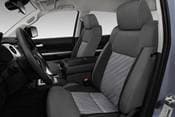
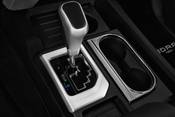
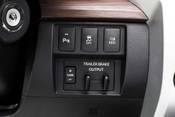
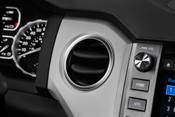
Used solely as a work truck, the 2020 Tundra has a lot to offer, including impressive standard towing capability and interior utility. But modern trucks are expected to be family transportation, too. From a refinement and feature standpoint, the Tundra falls behind almost all its major rivals.

Price & Payment
Changing year will take you to a new page
Average price: $44,876
$
to$
Price
Pros
- Standard V8 power
- Roomy rear seating
- Standard Toyota Safety Sense driver safety and assist system
- Highly capable off-road TRD models
Cons
- Below-average fuel economy
- Stiffer ride than other trucks
- Feels especially large when driven on tight and congested roads
- Not as many customization possibilities compared to rivals
What's new
- Upgraded audio system now includes Apple CarPlay and Android Auto
- Base 4.6-liter V8 no longer available
- TRD Pro now offered with either Double Cab or CrewMax cab
- Part of the second Tundra generation introduced for 2007
Overview

The Toyota Tundra has received some updates over the years, including a fresh new look and even an impressive list of modern safety equipment. But the reality is that the truck underneath is
more than a decade old. On one hand, this means the Tundra holds some appeal as a no-nonsense workhorse with a robust V8 engine. But if you're looking for the latest and greatest, you're not going to find it here.
For sale near Baton Rouge, LA
55 listings
- $37,750fair price$682 above market
- 84,724 miles
- 5'7” bed, 5.7l, 8cyl
- 62 mi away
Close
Located in Lafayette, LA
- Features and Specs:
- 14 Combined MPG (13 City/17 Highway)
- Listing Information:
- VIN:
- 5TFDY5F1XLX933911
- Stock:
- 13172
- Certified Pre-Owned:
- No
- Price Drop$54,990fair price$632 below market
- 23,818 miles
- 5'7” bed, 5.7l, 8cyl
- 812 mi away
- Home delivery*
Close
Located in Chicago, IL
At Carvana, we go miles beyond the extra mile. That's why we provide you with a convenient, fast, and hassle-free car buying experience that puts you ...
- Features and Specs:
- 14 Combined MPG (13 City/17 Highway)
- Listing Information:
- VIN:
- 5TFAY5F13LX903586
- Stock:
- 2004799681
- Certified Pre-Owned:
- No
- Listed since:
- 05-02-2026


For 2020, the Tundra now only offers one powertrain: a 5.7-liter V8. Last year, a 4.6-liter V8 was standard and the 5.7-liter optional, but Toyota has ditched the smaller engine for now. Inside, the Tundra gets Apple CarPlay and Android Auto for 2020. But there are still some disappointing cabin materials surrounding the infotainment interface, and the general cabin layout is dated.
If you're looking to tow or haul on the regular, the Tundra has you covered with the standard V8 and a standard 4.30 axle ratio — the combo lifts towing capacity right around 10,000 pounds on every trim level. Fuel economy suffers quite a bit, however, and virtually every rival has an optional towing package that will get you an even higher tow rating.
The Tundra is a capable truck, no doubt, and the TRD lineup offers some cool off-road options to choose from. But overall, we'd recommend taking a closer look at one of the Tundra's more recently redesigned rivals, including the Chevrolet Silverado 1500, Ford F-150 and Ram 1500.
2020 Toyota Tundra trim level differences
The 2020 Toyota Tundra is a full-size pickup available in five trim levels: SR, SR5, Limited, Platinum, 1794 Edition and TRD Pro. All 2020 Tundras come with a 5.7-liter V8 (381 hp, 401 lb-ft) paired with a six-speed automatic transmission. From there, you'll pick a body style (the regular Double Cab, crew cab or the extra-large CrewMax) and one of three bed lengths. Compare the 2020 Toyota Tundra trim levels in-depth.
Which Tundra trim does Edmunds recommend?
Available with a number of optional upgrades, but reasonably priced, we recommend the Tundra SR5. It might be just one rung above the base SR, but the SR5 adds an upgraded 8-inch infotainment interface and has access to a larger fuel tank (via the Upgrade package) as well as some off-road equipment via the TRD Sport package.

2026 Toyota RAV4 vs. Toyota Corolla Cross: Hybrid Toyota SUVs Compared

2026 Toyota Camry vs. Lexus ES Hybrid: Is Luxury Worth It?

A Real Improvement or Just as Boring as Ever? Edmunds Editors Debate the 2026 Toyota RAV4

Toyota RAV4 Hybrid: Should You Buy New or Used?
Reliability
The 2020 Toyota Tundra has a 3 years / 36,000 miles basic warranty and 5 recalls. RepairPal gives it a reliability rating of 3.5 out of 5, ranks it #6 out of 19 among Fullsize Trucks. Below you’ll find our owner reviews.
Reliability Rating by RepairPal
/5Above Average
#6 out of 19 among Fullsize Trucks
powered by RepairPal
Recalls
5 recalls foundWarranty
3 years / 36,000 miles Basic WarrantyToyota Tundra Reviews
Owner Reviews
5(71%)
4(20%)
3(0%)
2(7%)
1(2%)
Most Helpful Owner Reviews
Trying something new
James Y., 02/02/2020
2020 Toyota Tundra Limited 4dr CrewMax SB (5.7L 8cyl 6A)
Had 3 F150s with very few issues along the way, but the prices of the new ones are simply out of sight. So, I decided to give a Toyota a try this time around, given the lower price for similar equipment. I love the simplicity of the Toyota...no useless bling, baubles and eye candy...just a solid, good looking truck inside and out, with all the modern conveniences and a great … reliability track record. Yes, it feels a little dated and a bit less refined than some of its competitors, but it's a good, bulletproof, comfortable, capable, truck that does everything I need a truck to do. And, importantly, it was priced right. As someone else said, if you want bling and baubles, you won't find them here. I've had two trucks like that and found all the 'cool', whiz-bang, stuff to be interesting but largely unnecessary, overly complex, and certainly not worth the extra investment. They were solutions to problems I never had, and just added complexity, distraction, and often frustration. The Tundra has good, intuitive, easy to navigate features which add to my driving experience in meaningful ways. In addition, it's ridiculously off-road capable...far more than my other trucks. My only gripe is with the fuel mileage, but it's the price I'm willing to pay to drive a V8 with all the simplicity, torque and horsepower I prefer. Love the Tundra so far. It's different from what I'm used to, but not in bad ways. It's very off-road capable with all the bells and whistles I need to enjoy my commute and travels.
Durable/reliable
Russ, 06/02/2020
2020 Toyota Tundra Limited 4dr CrewMax 4WD SB (5.7L 8cyl 6A)
This is my 4th Tundra
I traded my 2007 for this 2020 because it will be my last truck and we will be doing alot of towing. The 2007 had 120000 miles on it and I was convinced it would go another 100k but my wife was nervous...
120k. No oil use between changes, u-joints still solid, NO problems at all. Towed a trailer from Tacoma to Cabo and back, Calgary and back and several trips tp … Death Valley with nary a whimper!,
Keep all your bells and whistles I need a reliable tow vehicle —the Tundra!
Exceeding My Expectations
Bob G., 12/27/2020
2020 Toyota Tundra SR5 4dr CrewMax 4WD SB (5.7L 8cyl 6A)
Approaching retirement, I set out on my mission to buy what I hope will be my last new truck. With a couple of fine son-in-laws and grandsons in the picture, my extended cab truck wasn't meeting our needs any more.
I spent the first 6 months of the year learning about all of the full sized 2020 pickup trucks. Allot of reading, visits to the dealerships, test drives and talking to owners … to see what they liked and disliked about their trucks. By July 4 my head was hurting from all of the intake, and I was done thinking about it.
I bought my 2020 Tundra SR5 Crew Cab that week, and it's been all good.
The most important things to me:
1. Reliability
2. Reliability
3. Reliability
4. Room for six 6' foot passengers
5. Power to pull a trailer full of dirt bikes and gear through the mountains
Over the years I have owned a couple of Chevrolet trucks, a Ford and then a Toyota Tacoma.
I sold my 2003 Tacoma only because I needed more cab room. The Tacoma was the best performing and most reliable vehicle I have owned. It was running (and looking) near new at 17 years and 120,000 miles.
That's why I chose to stay with Toyota, for the simplicity and reliability.
I keep a vehicle for 10 years and 150,000 miles or more. I just don't see engines with computerized cylinder deactivation, or turbo chargers, being as reliable as the simple fuel injected overhead cam engine that powers the Tundra.
Having driven the truck for 6 months, I am amazed at the value this base model truck offers. Much more than I was expecting.
The mechanical performance is impressive. There's plenty of power to get moving quickly when pulling onto a highway.
The torque is fantastic, pulling a trailer up a mountain is easy with the Tundra.
The seats are excellent, I have driven up to 5 hours on my longest trip, and we were all still comfortable. When someone jumps into the backseat, they always comment that they can't believe the amount of room they have.
4 Wheel drive system works really well. With all of the updated traction control features, it seems to be even more surefooted on snow and ice than my "go anywhere" Tacoma.
The ride comfort is what has surprised me the most. The smooth ride, the quiet cabin and the straight tracking of the steering all exceed what I expected. On a straight highway, you can let your hands off the steering, and it will track straight for a long ways. I'm used to my past trucks needing allot of mini-correction of the steering going down the road, but not the new Tundra.
The Technology features in my truck have all worked well, I have had no issues with any of the safety features, bluetooth system, or audio system. My truck does not have an onboard navigation system, but does pair with Android Auto via my phone, which works real well.
Fuel mileage is what it is. I knew it when I bought it, and am OK with less MPG for the simplicity and reliability that I am looking for. My truck has been averaging 15 mpg with my combination of around town and highway driving. On a highway trip with no trailer being towed, I had over 19 mpg. A tank of gas with all around town and no highway trips averages around 14.5 mpg.
Bottom line - I am really happy with my Tundra. It is a great truck, and I would recommend it without reservation,.
2020 Tundra
James C, 12/04/2019
2020 Toyota Tundra SR 4dr Double Cab 4WD SB (5.7L 8cyl 6A)
The 5.7 L engine runs great and is rated at 17 MPG highway but I've been averaging 18-19 MPG.
The 7" screen is easy to see and use as well as all the information items that can be checked (tire pressure, MPG etc.).
Just made a 1700 mile round trip and enjoyed the seats and overall vehicle response.