|
Women & Families
The Best Family Hauler: SUV, Wagon, Minivan, or Crossover?
By Joanne Helperin Email | Blog
OK, folks. The 2005 models are out and about, packed with an ever-expanding
array of safety and convenience features. Now it's time to face the music:
Will you choose a wagon, an SUV or a minivan? (For the basics about vehicle
types, check out our Buying Guides.)
That choice is getting tougher every day. It's enough to make your head
spin: Minivans and wagons are trying to adopt the SUV's cool look and taller
stance, while SUVs are trying to drive more like wagons and minivans. (Click
to see our Crossover graphic.) And everyone is trying to add more
configurable seats that fold down, flip up or hide in the floor. Perhaps your
decision will rest on the "carpool factor" — how many people are you
trying to carry? Only one thing is certain: The "type" of car you drive is no
longer defined by the number of cupholders.
SUVs: The Big Granddaddy
Many of the early SUVs, like the Jeep
Grand Cherokee and Nissan
Pathfinder weren't great people haulers. Backseats were typically cramped
and there often wasn't much seat-track travel up front. Built on pickup truck
platforms (body-on-frame construction), traditional SUVs such as the Chevy
Suburban and Toyota 4Runner
gained a reputation as macho off-roaders that were good at hauling stuff.
These early SUVs had pretty horrific gas mileage, and driving them on
pavement was neither easy nor fun. What's more, manufacturers discovered that
only 5 percent of SUVs were taken off-road: their low-range gearing was
largely going to waste as people used SUVs as cooler alternatives to the
minivan.
So why would you buy traditional SUVs like these? If you need off-road
performance, the SUV's raised suspension, all-wheel or four-wheel drive and
strong underpinnings are better for the task than any other type of car except
a pickup. Towing performance is another area where traditional SUVs excel.
Their larger engines and stout frames are better suited to cope with the
additional strains of pulling a trailer. There are plenty of folks who love
their Expeditions and
Suburbans simply because they can swallow up all the kids and their gear while
towing a ski boat in back. But as gas prices continue at record levels, the
large SUV option has become more of a luxury.
SUV/Wagon Crossovers: A Softer Touch
Spotting a need in the market, manufacturers began putting SUV bodies on
wagon/sedan platforms, the result is the so-called "crossover" SUV. By using
sedan underpinnings and SUV bodies, crossovers are able to offer carlike
handling while maintaining the size and practicality of SUVs. While they don't
tow (or often carry) as much as their traditional SUV brethren, they ride,
handle and park more like cars. (In fact, it's only in the last few years,
with the popularity of car-based SUVs, that traditional SUVs like the Jeep
were softened to become legitimate family haulers.)
Not all SUV/wagon crossovers are created equal — some are more
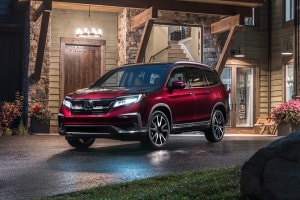
"SUV-like," and some are more "carlike." For example, the Honda
Pilot, Mitsubishi
Endeavor and Volvo XC90 are
closer to their traditional SUV cousins, as they are tough enough for light
off-road adventures. Vehicles like the BMW
X3 and X5, Nissan
Murano and Toyota
Highlander can tackle a gravel road but really are happiest when driven on
pavement. Even further in the wagon direction — but still in the
crossover category — are the Audi
allroad, Subaru Outback
and Volvo XC70. These cars
already look and drive like wagons (and basically that's what
they are), but due to their heavy-duty raised suspensions, they have as much
ground clearance as their car-based SUV competitors. In fact, the Outback is better
at off-roading than most of its peers.
Wagons: Reinventing the Wheel(s)
It's just a hop, skip and a jump from this last group of crossovers to
the true wagons. But even in this category, manufacturers are trying for the
SUV utility and look. (Don't call them "station wagons" — that image is
too stodgy. The phrase of the day is "sport wagon.") For example, the Pontiac
Vibe has seats that fold down flat and a wipe-clean plastic load floor in
the cargo area with adjustable tie-down points. Others, such as the Chevrolet
Malibu Maxx, Dodge Magnum, Mazda
6, Subaru Legacy, and Volkswagen
Passat, are closer to what we think of as "traditional" wagons. But even
they are starting to offer options like all-wheel drive and, in the case of
the Magnum, a reversible load floor. Additionally, the Malibu Maxx has rear
seats with adjustable seat tracks.
So why buy a traditional wagon when crossovers are available? Wagons
boast better fuel economy than the SUV/wagon crossovers and in many ways are
the more practical solution. Though they lack the "lifestyle" look that so
many SUV drivers crave, these are not your moms' station wagons. Today's
wagons offer strong performance (many with AWD), safety and handling far
superior to their predecessors.
Minivan/Wagon Crossovers: Best of Both Worlds
This leads us to the next crossover category, the minivan/wagon. While
everyone knows a minivan when they see it, the Chrysler
Pacifica tries to bring the most important minivan features to a more
attractive wagon frame. The Pacifica can be configured with second-row
fold-and-flip or captain's chairs and a third row that folds flat into the
floor — just like a minivan. The Ford
Freestyle, which has more cargo room than the Pacifica and has two-tone
sheet metal, actually is more of a category-busting SUV/minivan/wagon blend.
(All it lacks, unfortunately, is sufficient power.) The Pacifica and the
Freestyle give you a lot of the minivan goodies without the wishful thinking
that often accompanies the soccer mom stereotype.
Minivans: Desperately Seeking Style
The traditional minivans — Dodge
Grand Caravan, Honda Odyssey,
Toyota Sienna and so on still
lead the pack when it comes to total cargo and passenger volume (some models
hold eight people) and overall practicality. The redesigned Chrysler
Town & Country/Dodge Grand Caravan improves on the basic minivan
design with an industry first: Stow 'n Go seats that allow the first two rows
of seats to fold flush into the floor and provide convenient storage space
when the seats are upright. The ultramodern Nissan
Quest has innovative options like Skyview windows, which allows all three
rows of passengers to see through the roof, fold-down second-row seats
(although not as flat as the Dodge's) and a space-age-looking center console.
Other minivan makers are working hard to incorporate more SUV features, like
GM's new "crossover sport vans" (read: a slightly cooler-looking minivan),
which have more trucklike front ends and higher-sitting cabins. Still, a
minivan is a minivan is a minivan.
So why buy a traditional minivan if there are so many cool choices
available? Think about how they're used. If you're driving carpool, kids and
their backpacks can load and unload more quickly and easily than in SUVs.
Sliding doors make it easy to get in and out of, especially in tight parking
situations. Minivans generally have the best safety ratings, have flexible
interiors and great fuel economy. So what are the drawbacks? To be honest,
it's mostly a style issue. Nothing screams "soccer mom" more than a minivan.
SUV/Minivan: Trying to Have It All
We've come to the final crossover category, the SUV/minivan. How do you
do that? By building an SUV with minivan features. Like the Quest, the Buick
Rendezvous and the Pontiac
Aztek are built on a minivan platform and carry tons of cargo. Unlike the
Quest, though, these crossover vehicles have hinged rear doors. This will be
either a pro or a con depending whether you're looking for style or
practicality. The Honda Element
moves even further toward the SUV with its water-resistant seats and
wipe-clean interior panels. Unlike the others, it only seats four and has
reverse-hinged rear doors, which makes it a bit impractical. All these
vehicles have optional AWD, though none of them can tackle off-road trails
like true SUVs. Unfortunately, none of them quite lives up to their attempts
at being the perfect family car. It will be interesting to see if and how
import brands rise to this challenge.
The Crossover Continuum
As families become more demanding, manufacturers race to create the
perfect blend of fun, utility, practicality and safety, causing a historic
blurring of categories. (Click
to see our Crossover graphic.) They haven't quite hit their mark yet, but
they're getting closer. Cupholders are yesterday's news. Today's families only
want one thing: They want it all. The good news is, manufacturers are starting
to listen.
|