" d="M896 513c116 45.015 222 64 304 75V0H0v501c40 36.024 154 76 340 76s344-146.269 556-64Z"/%3E%3C/mask%3E%3Cg mask="url(%23b)"%3E%3Cpath fill="url(%23c)" d="M896 513c116 45.015 222 64 304 75V0H0v501c40 36.024 154 76 340 76s344-146.269 556-64Z"/%3E%3Cpath fill="url(%23d)" fill-opacity=".15" d="M581.718 62.893c42.993 1.53 86.281 5.888 129.704 13.204 311.828 52.485 552.538 242.016 657.698 483.656-149.97-147.971-450.891-226.33-789.375-232.079-338.534.839-640.434 74.572-792.746 220.292 108.75-240.047 352.255-425.97 664.832-473.803a1041.548 1041.548 0 0 1 129.887-11.27Z"/%3E%3Cpath fill="url(%23e)" fill-opacity=".5" d="M611.247 209.93a1458.84 1458.84 0 0 1 139.573 27.692c333.61 83.239 577.16 267.208 668.67 475.188-148.93-138.63-468.279-241.218-835.209-290.421-367.6-43.915-702.265-24.445-881.281 72.561 140.567-178.524 422.355-295.817 766.181-293.074 47.867.484 95.274 3.212 142.066 8.054Z"/%3E%3Cpath fill="url(%23f)" d="M735.039 879.394c48.524-6.62 97.023-16.967 145.3-31.2C1227.03 746.059 1475.76 472.327 1564.28 145c-151.17 209.633-482.23 344.436-865.05 388.31C315.515 568.571-35.93 504.564-227 330.342-73.333 632.61 226.169 849.617 586.429 878.604c50.15 3.871 99.74 4.07 148.61.79Z" opacity=".3"/%3E%3Cpath fill="url(%23g)" d="M694.222 783.712c50.956 12 103.317 20.27 156.946 24.578 385.102 31.013 738.232-146.76 952.062-439.434-231.22 151.216-613.24 158.795-1012.047 55.796C394.784 312.716 68.643 114.101-55.211-133c37.44 360.528 253.087 691.895 601.449 858.946 48.557 23.091 97.963 42.302 147.984 57.766Z" opacity=".9"/%3E%3Cpath fill="url(%23h)" fill-opacity=".5" d="M896 513c116 45.015 222 64 304 75V0H0v501c40 36.024 154 76 340 76s344-146.269 556-64Z"/%3E%3C/g%3E%3Cdefs%3E%3ClinearGradient id="a" x1="1005" x2="989.087" y1="23" y2="552.522" gradientUnits="userSpaceOnUse"%3E%3Cstop stop-color="%23007EE5"/%3E%3Cstop offset=".333" stop-color="%231561D4"/%3E%3Cstop offset="1" stop-color="%230A4AAB"/%3E%3C/linearGradient%3E%3ClinearGradient id="c" x1="1005" x2="989.087" y1="23" y2="552.522" gradientUnits="userSpaceOnUse"%3E%3Cstop stop-color="%23007EE5"/%3E%3Cstop offset=".334" stop-color="%231561D4"/%3E%3C/linearGradient%3E%3ClinearGradient id="d" x1="675.999" x2="879.999" y1="648.999" y2="120.999" gradientUnits="userSpaceOnUse"%3E%3Cstop stop-color="%23fff"/%3E%3Cstop offset="1" stop-color="%23fff" stop-opacity="0"/%3E%3C/linearGradient%3E%3ClinearGradient id="e" x1="656.5" x2="637.602" y1="213" y2="622.259" gradientUnits="userSpaceOnUse"%3E%3Cstop offset=".115" stop-color="%23fff" stop-opacity="0"/%3E%3Cstop offset=".944" stop-color="%23017D8D"/%3E%3C/linearGradient%3E%3ClinearGradient id="f" x1="398" x2="737" y1="599" y2="387" gradientUnits="userSpaceOnUse"%3E%3Cstop stop-color="%2300ABB5"/%3E%3Cstop offset="1" stop-color="%2300A0B5" stop-opacity="0"/%3E%3C/linearGradient%3E%3ClinearGradient id="g" x1="1051.5" x2="271" y1="567" y2="575" gradientUnits="userSpaceOnUse"%3E%3Cstop stop-color="%230098C2"/%3E%3Cstop offset="1" stop-color="%23033E96" stop-opacity="0"/%3E%3C/linearGradient%3E%3ClinearGradient id="h" x1="1005" x2="986.038" y1="23" y2="587.43" gradientUnits="userSpaceOnUse"%3E%3Cstop offset=".813" stop-opacity="0"/%3E%3Cstop offset=".972"/%3E%3C/linearGradient%3E%3C/defs%3E%3C/svg%3E)
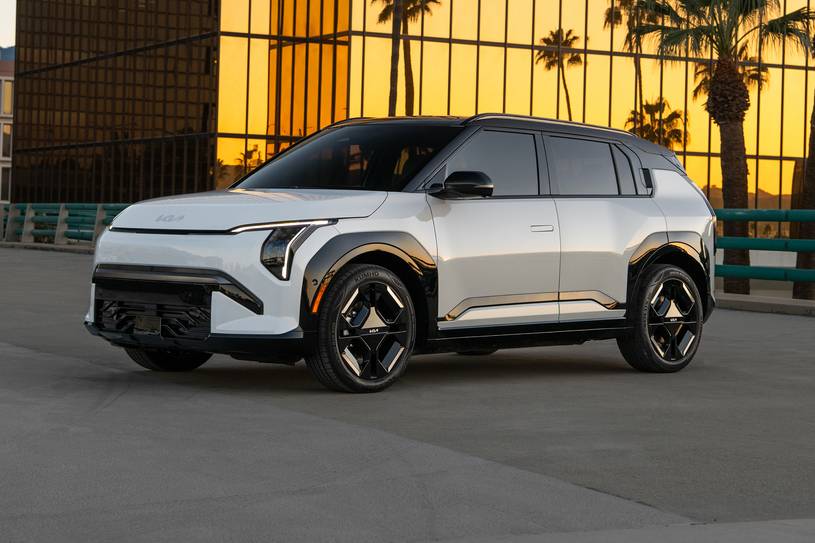


The 2027 Kia EV3 is the latest addition to Kia's electric vehicle lineup. Arriving in late 2026, the EV3 brings Kia's latest electric car technology and design into a package that is easier to park, easier to live with and more affordable than the brand's current EV6 and EV9 SUVs.
Dimensionally speaking, the EV3 is 169.3 inches long and 72.8 inches wide. That's approximately the same size as the Kia Niro EV. We're expecting Kia to discontinue the Niro EV after the 2026 model year, thereby making room for the EV3 as the brand's entry-level EV.
We initially expected the EV3 to start around the $35,000 mark, but Kia surprised us by setting the entry-level price at $31,385. With up to 321 miles of EPA-estimated range and a smaller size than other Kia EVs, the EV3 subcompact electric crossover will appeal to you if you've been waiting for a sensible electric vehicle. It will compete against the likes of the Chevrolet Bolt, Nissan Leaf and Toyota C-HR.
More than 300 miles of range
The EV3's powertrain lineup starts with the single-motor front-wheel-drive Light model, which has a modest 58.3-kWh battery pack that delivers up to 221 miles of range. Step up to the front-drive Wind or Land model, and you'll have the same 201-hp motor as in the Light, but the larger 81.4-kWh battery offers a more robust 321 miles of range. The Wind and Land are also available with a dual-motor all-wheel-drive layout that increases output to 261 hp but reduces range to 280 miles. The sporty GT-Line is equipped in this AWD configuration. At 288 hp, the range-topping GT has a bit more oomph than other AWD models, yet its range estimate is unchanged, at 280 miles.
Recharging the battery from 10% to 80% is supposed to take about 29 to 31 minutes, depending on battery size. The EV3 has a Tesla-style NACS charge port, which makes charging at Tesla's public Supercharger stations more convenient.
A smooth and comfortable driving experience
I first drove a front-wheel-drive EV3 Land and found the powertrain to be more than adequate, especially as a car for in-town use. There's enough power to merge onto the highway, and it's delivered smoothly, so I think I'd be satisfied with this mileage-maximizing configuration. The route I took didn't really stress-test range, so any insights there will have to wait until the EV3 is put through the Edmunds EV Range Test.
The other version I tried was a GT-Line, meaning it had the regular-strength all-wheel-drive powertrain. Its extra output was nice but ultimately felt unnecessary in a little vehicle like this. And while I'm sure the 288-hp GT will be good fun, I don't know that I could justify the added cost.
The EV3's suspension tuning proved comfortable in all but one specific scenario. Like other Kias, the EV3 rides a little on the firmer side without being punishing on suburban streets. But it was Kia's choice of roads, a coastal highway along the southwest tip of Vancouver Island, that highlighted a shortcoming. Traversing numerous relatively shallow frost heaves caused the rear axle to compress and then sharply spring up. When a heave corresponded with a curve in the road, this would easily unsettle the EV3 and knock it off course, making it feel surprisingly sketchy mid-corner. This is likely a result of compliance to filter out little bumps coupled with a lot of rebound to deal with an EV's extra weight. This could be a real annoyance if you frequently drive on choppy, undulating roads.
Also in the Kia vein is the EV3's steering, which is somewhat heavily weighted but doesn't give you much feel for the road. I found the car's Sport mode added too much heft to the steering wheel without any real benefit and preferred Normal and Eco for that reason. Note that the GT gets unique suspension and steering tuning, so it's possible that version would behave more favorably.
The EV3 debuts the company's i-Pedal 3.0 software, which means that Kia's one-pedal driving mode can now be used regardless of regen strength. Basically, that means you can keep higher or lower levels of regenerative braking as you wish, but the EV3 will still come to a complete stop without you having to touch the brake pedal, and it makes it easier to set up the EV3 to match your driving wants. There's also a new mode where the regenerative braking level is adaptive and "learns" a driver's habits, something we can't wait to test out when we get the vehicle for longer than a day.
A roomy interior considering the vehicle's small size
Inside, the EV3 looks more upscale than you might expect from Kia’s smallest EV. The dashboard is anchored by a wide panoramic display that combines a 12.3-inch digital instrument panel, a 5-inch climate screen and a 12.3-inch central touchscreen, giving the cabin much of the same high-tech vibe as the larger EV9. Wireless Apple CarPlay and Android Auto are standard, and available features include a head-up display, wireless phone charging, a Harman Kardon audio system, and Kia's latest AI voice assistant.
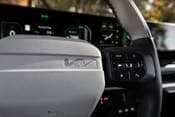
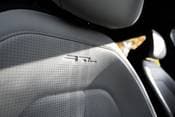
The rest of the cabin is aimed at everyday ease of use rather than flash. Some of the tricks include an open front layout, a flexible center console with retractable cupholders, and rear seats that recline for added comfort. Cargo space should be a strong selling point too, with up to 26.1 cubic feet behind the rear seats and 56.5 cubic feet with the rear seats folded, plus a small front trunk for charging cables or other loose items. Heated and ventilated front seats, dual-zone climate control, and ambient lighting will be available on select trims. The GT-Line and GT versions add sportier design touches, such as unique seats, trim, wheels, and steering-wheel details.
Kia has slimmed down the dashboard of the EV3 compared to the EV6 and that makes the front feel more expansive, even though the dimensions are technically smaller, thanks to all of that open space around your knees. And the visibility around the vehicle is excellent as well, thanks to those big windows all around.
How's the EV3's tech?
The EV3 comes with a 12-inch head-up display, and use the same 30-inch-wide dash-mounted screen as the EV9, with an updated version of the company's infotainment software. The big upgrade will be the inclusion of a generative AI voice assistant, which you can wake up by saying, "Hey, Kia," and then ask it, well, just about anything. The multimedia software will also include integrated streaming services — Netflix, YouTube, TikTok, etc. — so you can binge your favorite online series while you're sitting around at the EV charger.
The EV3 comes loaded with driver assistance technologies, including Kia's Highway Driving Assist 2 suite that combines lane keeping tech and adaptive cruise control.
A relative value
Pricing starts at $31,385, including destination, for the EV3 Light and its smaller battery, placing it just below the least expensive Nissan Leaf but almost two grand more than the base Chevrolet Bolt. The Light's range doesn't quite match the estimates of its main rivals, but opting for the $36,485 front-wheel-drive Wind and its larger battery net the best figure in the category.
One thing the Bolt and Leaf don't offer is all-wheel drive, but like the front-wheel-drive EV3, they'd do just fine in winter with the right tires. That said, if you simply want more power and are willing to take a small range hit, the EV3's two all-wheel-drive powertrains set it apart from the others. Range is less of an issue for someone looking for a city car, but recharging may be a challenge unless you have a dedicated garage.
The EV3 offers similar range and more modern styling than the old Niro EV for nearly $10,000 less. There are still trade-offs with EVs, but even with the end of federal incentives, you can get a lot for your money in this segment. Kia has done what it can to convince buyers that a small EV is worth having, and high gas prices certainly help its case. The EV3 should be a good test of whether Americans actually want the inexpensive, competitive EVs that have been promised for so long.
This article features additional reporting by David Gluckman
