" d="M896 513c116 45.015 222 64 304 75V0H0v501c40 36.024 154 76 340 76s344-146.269 556-64Z"/%3E%3C/mask%3E%3Cg mask="url(%23b)"%3E%3Cpath fill="url(%23c)" d="M896 513c116 45.015 222 64 304 75V0H0v501c40 36.024 154 76 340 76s344-146.269 556-64Z"/%3E%3Cpath fill="url(%23d)" fill-opacity=".15" d="M581.718 62.893c42.993 1.53 86.281 5.888 129.704 13.204 311.828 52.485 552.538 242.016 657.698 483.656-149.97-147.971-450.891-226.33-789.375-232.079-338.534.839-640.434 74.572-792.746 220.292 108.75-240.047 352.255-425.97 664.832-473.803a1041.548 1041.548 0 0 1 129.887-11.27Z"/%3E%3Cpath fill="url(%23e)" fill-opacity=".5" d="M611.247 209.93a1458.84 1458.84 0 0 1 139.573 27.692c333.61 83.239 577.16 267.208 668.67 475.188-148.93-138.63-468.279-241.218-835.209-290.421-367.6-43.915-702.265-24.445-881.281 72.561 140.567-178.524 422.355-295.817 766.181-293.074 47.867.484 95.274 3.212 142.066 8.054Z"/%3E%3Cpath fill="url(%23f)" d="M735.039 879.394c48.524-6.62 97.023-16.967 145.3-31.2C1227.03 746.059 1475.76 472.327 1564.28 145c-151.17 209.633-482.23 344.436-865.05 388.31C315.515 568.571-35.93 504.564-227 330.342-73.333 632.61 226.169 849.617 586.429 878.604c50.15 3.871 99.74 4.07 148.61.79Z" opacity=".3"/%3E%3Cpath fill="url(%23g)" d="M694.222 783.712c50.956 12 103.317 20.27 156.946 24.578 385.102 31.013 738.232-146.76 952.062-439.434-231.22 151.216-613.24 158.795-1012.047 55.796C394.784 312.716 68.643 114.101-55.211-133c37.44 360.528 253.087 691.895 601.449 858.946 48.557 23.091 97.963 42.302 147.984 57.766Z" opacity=".9"/%3E%3Cpath fill="url(%23h)" fill-opacity=".5" d="M896 513c116 45.015 222 64 304 75V0H0v501c40 36.024 154 76 340 76s344-146.269 556-64Z"/%3E%3C/g%3E%3Cdefs%3E%3ClinearGradient id="a" x1="1005" x2="989.087" y1="23" y2="552.522" gradientUnits="userSpaceOnUse"%3E%3Cstop stop-color="%23007EE5"/%3E%3Cstop offset=".333" stop-color="%231561D4"/%3E%3Cstop offset="1" stop-color="%230A4AAB"/%3E%3C/linearGradient%3E%3ClinearGradient id="c" x1="1005" x2="989.087" y1="23" y2="552.522" gradientUnits="userSpaceOnUse"%3E%3Cstop stop-color="%23007EE5"/%3E%3Cstop offset=".334" stop-color="%231561D4"/%3E%3C/linearGradient%3E%3ClinearGradient id="d" x1="675.999" x2="879.999" y1="648.999" y2="120.999" gradientUnits="userSpaceOnUse"%3E%3Cstop stop-color="%23fff"/%3E%3Cstop offset="1" stop-color="%23fff" stop-opacity="0"/%3E%3C/linearGradient%3E%3ClinearGradient id="e" x1="656.5" x2="637.602" y1="213" y2="622.259" gradientUnits="userSpaceOnUse"%3E%3Cstop offset=".115" stop-color="%23fff" stop-opacity="0"/%3E%3Cstop offset=".944" stop-color="%23017D8D"/%3E%3C/linearGradient%3E%3ClinearGradient id="f" x1="398" x2="737" y1="599" y2="387" gradientUnits="userSpaceOnUse"%3E%3Cstop stop-color="%2300ABB5"/%3E%3Cstop offset="1" stop-color="%2300A0B5" stop-opacity="0"/%3E%3C/linearGradient%3E%3ClinearGradient id="g" x1="1051.5" x2="271" y1="567" y2="575" gradientUnits="userSpaceOnUse"%3E%3Cstop stop-color="%230098C2"/%3E%3Cstop offset="1" stop-color="%23033E96" stop-opacity="0"/%3E%3C/linearGradient%3E%3ClinearGradient id="h" x1="1005" x2="986.038" y1="23" y2="587.43" gradientUnits="userSpaceOnUse"%3E%3Cstop offset=".813" stop-opacity="0"/%3E%3Cstop offset=".972"/%3E%3C/linearGradient%3E%3C/defs%3E%3C/svg%3E)
2010 Toyota Prius Review
Price Range: $6,500 - $14,990


Edmunds' Expert Review
Pros
- Unmatched fuel economy, space-efficient interior, quiet and comfortable ride, available high-tech luxury goodies.
Cons
- Awkward driving position, disappointing interior materials, overly busy gauge cluster, no factory iPod interface.
What’s new
The 2010 Toyota Prius has been fully redesigned. Key improvements for this third-generation model include more power, better fuel economy, enhanced steering feel, more conventional interior controls and sleeker styling.
Edmunds says
The Toyota Prius remains the most fuel-efficient and space-efficient hybrid on the market. A few flaws remain, but the changes made for 2010 generally make for a better Prius.
For sale near San Antonio, TX
21 listings
- $8,494good price
- 111,519 miles
- No accidents, 1 owner, personal use only
- 51 City / 48 Hwy MPG
- North Park Subaru (7 mi away)
- Home delivery*
Close
Located in San Antonio, TX
AutoCheck Vehicle History Summary
Accident Free Vehicle: Yes
Personal Use Only: Yes
History Provider: AutoCheck
Title Details: Clean Title
Salvage Vehicle: No
Frame Damage: No
Theft History: No
Lemon Status: No
Free History Report: No
Features and Specs:
50 Combined MPG (51 City/48 Highway)
Listing Information:
VIN: JTDKN3DU0A1011858
Stock: N1011858
Certified Pre-Owned: No
Listed since: 06-17-2025 - $6,991good price
- 129,205 miles
- No accidents, 2 owners, personal use only
- 51 City / 48 Hwy MPG
- Roger Beasley Mazda South (71 mi away)
Close
Located in Austin, TX
Clean CARFAX. Silver 2010 Toyota Prius I FWD CVT 1.8L 4-Cylinder DOHC 16V VVT-iNeed Financing? We have competitive financing terms available, with ...
AutoCheck Vehicle History Summary
Accident Free Vehicle: Yes
Personal Use Only: Yes
History Provider: AutoCheck
Title Details: Clean Title
Salvage Vehicle: No
Frame Damage: No
Theft History: No
Lemon Status: No
Free History Report: Yes
Features and Specs:
50 Combined MPG (51 City/48 Highway)
Listing Information:
VIN: JTDKN3DU3A1005634
Stock: JP988
Certified Pre-Owned: No
Listed since: 05-14-2025
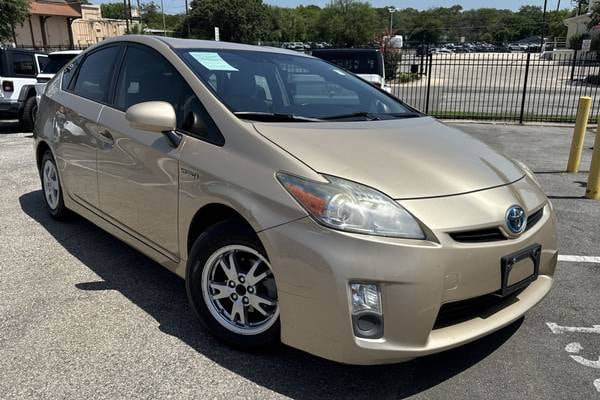

Vehicle overview
The last Toyota Prius flipped the automotive world on its head, changing the purchasing priorities of American car buyers seemingly overnight. Attracted to its sky-high fuel economy, practical body style and green image, consumers came to the Prius for many new car searches (regardless of their actual motoring needs). What was once an automotive oddity relegated to hemp-wearing greenies, the Prius grew to become the country's 13th-best-selling vehicle in 2008. Now there is the all-new 2010 Toyota Prius. It's poised to keep the hybrid revolution going, but with key changes to make it more appealing to an even wider audience.
A quick look at the 2010 Prius will reveal a familiar shape, but it's a little sleeker and a tad (dare we say) sportier than its predecessor. Visually, it looks smaller, but it's an optical illusion that creates a more streamlined appearance. Indeed, the 2010 Prius is less than an inch longer and wider than last year's model. The interior is a different story, as headroom has been reduced by a fraction of an inch. This wouldn't seem to be a big deal, but in our testing we found that taller rear seat occupants had their hair grazing the roof, and that wasn't the case before.
Under the hood resides a revised version of Toyota's Hybrid Synergy Drive. There's a larger and more powerful gasoline engine now, but instead of providing quicker off-the-line acceleration, it allows more effortless highway cruising. A smaller electric motor contributes less torque to the overall powertrain dance, but it improves efficiency. There are other mechanical changes, too, but the end result is a jump in fuel economy, from last year's EPA-estimated 48 mpg city/45 mpg highway to this year's 51/48 mpg.
Toyota has also addressed other previous Prius faults. A more rigid chassis and a revised electric-assist steering system help to improve steering feel and driver confidence -- the old Prius' steering had a disconnected, video-gamelike feel. While the Prius still isn't exactly fun to drive, its straight-line stability is a lot better now, and in general it feels more like a normal car.
The latest Prius might even seem like a small, ultra-efficient luxury sedan depending on how you equip it. Luxury-themed items like heated leather seats, a solar-powered sunroof (cools the interior when parked), a navigation system, radar-based adaptive cruise control (matches your speed to the car ahead), a pre-collision system (retracts seatbelts and applies the brakes if a crash is unavoidable) and a lane-departure warning system for inattentive drivers are all available. Also, the automated self-parking system you've seen in Lexus commercials makes its way onto the Prius' options sheet.
The Prius has been a huge success, and with such success comes added competition. The all-new Honda Insight looks similar to the Prius, has similar fuel efficiency and costs less, but it's smaller and less sophisticated. The Ford Fusion Hybrid's more traditional body style and more involving driving dynamics should appeal to those who want their hybrid to be a little more like a normal car. The Camry Hybrid is another possibility, as is the limited-availability Altima Hybrid. Regardless, when it comes to an ultra-practical, ultra-efficient automotive choice that, depending on equipment, can be anything from an economy car to a luxury car, the 2010 Toyota Prius cannot be beat.
Performance & mpg
The 2010 Toyota Prius is powered by Toyota's advanced gasoline-electric hybrid powertrain. A 1.8-liter four-cylinder engine combines with a pair of electric motors (one for propulsion, the other an electrical systems generator) through a planetary-type continuously variable transmission (CVT). The result is a total system output of 134 horsepower. In track testing, we clocked the Prius going from zero to 60 mph in 10.1 seconds, which is roughly the same as the old car and a few ticks quicker than the Honda Insight. The most important number, however, is fuel economy. The EPA estimates the 2010 Prius will return 51 mpg city/48 highway and 50 mpg combined. That's the best fuel efficiency of any mass-market vehicle sold with an internal combustion engine.
Safety
Every 2010 Toyota Prius comes standard with antilock disc brakes (the old car had rear drums), stability and traction control, front side airbags, side curtain airbags and a driver knee airbag. Optional equipment includes a pre-collision warning system and a lane-departure warning system. In brake testing, the Prius stopped from 60 mph in a short 118 feet, with less fade than the previous rear-drum-equipped car.
Driving
The 2010 Toyota Prius retains its hyper-quiet cabin, made possible by its part-time electric motivation and plenty of sound-deadening materials. The ride is also quite comfortable, and for 2010, the Prius' structure is tauter, resulting in a less flimsy feel when the car is driven over road imperfections. Another pleasant improvement is the electric steering system, which feels more substantial and better connected to the front tires while still being user-friendly in parking lots.
In regard to its hybrid powertrain, new driving modes (EV, eco, power and normal) allow the driver to decide how the car's powertrain should be configured for the driving scenario at hand. Eco is decidedly sluggish, but certainly gets the best fuel economy. You'll want to select power for freeway on-ramps or driving in hilly environments. The EV mode locks out the gasoline engine, but only up to 25 mph with at least a half-charged battery pack.
Interior
The 2010 Prius features straightforward climate and audio controls that jut out toward the driver in a "floating console" that provides a storage area underneath. This is an improvement over the convoluted touchscreen controls of the old Prius. Unfortunately, the materials used in the 2010 version are a step down, with harder and cheaper plastics throughout. The corduroy-like texturing on the climate and audio controls seems nice at first, but after only a few days, finger oils cause circular dark spots on most buttons. Another issue is the off-center digital gauge setup that buries the speedometer and fuel meter amidst a sea of less vital information.
In terms of versatility, though, the Prius is still a champ. The hatchback body style provides more cargo capacity than a typical midsize sedan, while its backseat provides lots of space (although headroom is a bit less now). The rear also seems to have less legroom than before, but that's because the front seats thankfully have more legroom. As for the front seats, the addition of driver height adjustment is a benefit for both short and tall drivers. Sadly, the latter still have to contend with a steering wheel that's placed too far away -- there's a telescoping column now, but it doesn't come out nearly far enough.
2010 Toyota Prius models
The 2010 Toyota Prius is available in four trim levels that should appeal to an ancient Roman's sensibilities: Prius II, Prius III, Prius IV and Prius V. The Prius I will be released later at a lower base price. Standard equipment on Prius II includes 15-inch alloy wheels, full power accessories, keyless ignition/entry, auto on/off headlights, cruise control, a height-adjustable driver seat, a tilt-telescoping steering column, a hybrid system display and a six-speaker stereo with CD player and auxiliary audio jack. The Prius III adds Bluetooth and an eight-speaker upgraded stereo with six-CD changer. The Prius IV has this equipment plus additional exterior locking buttons for keyless entry, leather upholstery, heated front seats, driver lumbar adjustment and an auto-dimming mirror. The loaded-up Prius V comes with 17-inch alloy wheels, foglamps and LED headlamps with auto-leveling and washers.

Compare 2010 Toyota Prius trim levels
Helpful trims summary and side-by-side comparison chart