" d="M896 513c116 45.015 222 64 304 75V0H0v501c40 36.024 154 76 340 76s344-146.269 556-64Z"/%3E%3C/mask%3E%3Cg mask="url(%23b)"%3E%3Cpath fill="url(%23c)" d="M896 513c116 45.015 222 64 304 75V0H0v501c40 36.024 154 76 340 76s344-146.269 556-64Z"/%3E%3Cpath fill="url(%23d)" fill-opacity=".15" d="M581.718 62.893c42.993 1.53 86.281 5.888 129.704 13.204 311.828 52.485 552.538 242.016 657.698 483.656-149.97-147.971-450.891-226.33-789.375-232.079-338.534.839-640.434 74.572-792.746 220.292 108.75-240.047 352.255-425.97 664.832-473.803a1041.548 1041.548 0 0 1 129.887-11.27Z"/%3E%3Cpath fill="url(%23e)" fill-opacity=".5" d="M611.247 209.93a1458.84 1458.84 0 0 1 139.573 27.692c333.61 83.239 577.16 267.208 668.67 475.188-148.93-138.63-468.279-241.218-835.209-290.421-367.6-43.915-702.265-24.445-881.281 72.561 140.567-178.524 422.355-295.817 766.181-293.074 47.867.484 95.274 3.212 142.066 8.054Z"/%3E%3Cpath fill="url(%23f)" d="M735.039 879.394c48.524-6.62 97.023-16.967 145.3-31.2C1227.03 746.059 1475.76 472.327 1564.28 145c-151.17 209.633-482.23 344.436-865.05 388.31C315.515 568.571-35.93 504.564-227 330.342-73.333 632.61 226.169 849.617 586.429 878.604c50.15 3.871 99.74 4.07 148.61.79Z" opacity=".3"/%3E%3Cpath fill="url(%23g)" d="M694.222 783.712c50.956 12 103.317 20.27 156.946 24.578 385.102 31.013 738.232-146.76 952.062-439.434-231.22 151.216-613.24 158.795-1012.047 55.796C394.784 312.716 68.643 114.101-55.211-133c37.44 360.528 253.087 691.895 601.449 858.946 48.557 23.091 97.963 42.302 147.984 57.766Z" opacity=".9"/%3E%3Cpath fill="url(%23h)" fill-opacity=".5" d="M896 513c116 45.015 222 64 304 75V0H0v501c40 36.024 154 76 340 76s344-146.269 556-64Z"/%3E%3C/g%3E%3Cdefs%3E%3ClinearGradient id="a" x1="1005" x2="989.087" y1="23" y2="552.522" gradientUnits="userSpaceOnUse"%3E%3Cstop stop-color="%23007EE5"/%3E%3Cstop offset=".333" stop-color="%231561D4"/%3E%3Cstop offset="1" stop-color="%230A4AAB"/%3E%3C/linearGradient%3E%3ClinearGradient id="c" x1="1005" x2="989.087" y1="23" y2="552.522" gradientUnits="userSpaceOnUse"%3E%3Cstop stop-color="%23007EE5"/%3E%3Cstop offset=".334" stop-color="%231561D4"/%3E%3C/linearGradient%3E%3ClinearGradient id="d" x1="675.999" x2="879.999" y1="648.999" y2="120.999" gradientUnits="userSpaceOnUse"%3E%3Cstop stop-color="%23fff"/%3E%3Cstop offset="1" stop-color="%23fff" stop-opacity="0"/%3E%3C/linearGradient%3E%3ClinearGradient id="e" x1="656.5" x2="637.602" y1="213" y2="622.259" gradientUnits="userSpaceOnUse"%3E%3Cstop offset=".115" stop-color="%23fff" stop-opacity="0"/%3E%3Cstop offset=".944" stop-color="%23017D8D"/%3E%3C/linearGradient%3E%3ClinearGradient id="f" x1="398" x2="737" y1="599" y2="387" gradientUnits="userSpaceOnUse"%3E%3Cstop stop-color="%2300ABB5"/%3E%3Cstop offset="1" stop-color="%2300A0B5" stop-opacity="0"/%3E%3C/linearGradient%3E%3ClinearGradient id="g" x1="1051.5" x2="271" y1="567" y2="575" gradientUnits="userSpaceOnUse"%3E%3Cstop stop-color="%230098C2"/%3E%3Cstop offset="1" stop-color="%23033E96" stop-opacity="0"/%3E%3C/linearGradient%3E%3ClinearGradient id="h" x1="1005" x2="986.038" y1="23" y2="587.43" gradientUnits="userSpaceOnUse"%3E%3Cstop offset=".813" stop-opacity="0"/%3E%3Cstop offset=".972"/%3E%3C/linearGradient%3E%3C/defs%3E%3C/svg%3E)
2011 Chevy Volt Review
Price: $9,995



Selling or Trading-In?
Know what your car is worth while you shop for your next vehicle.
By entering your License Plate or VIN, you'll get a more accurate appraisal that may raise your car's value.
Edmunds' Expert Review
Pros
- Low monthly fuel cost in normal driving
- useful 300-mile maximum range
- appealing standard features
- high-tech cabin.
Cons
- Questionable value
- small backseat for two people only
- touchy brakes
- no power front seats
- home charger is a necessity.
What’s new
The 2011 Chevrolet Volt is Chevy's much-anticipated new plug-in battery/gasoline hybrid, featuring an electric-only mode with a range of up to 40 miles.
Edmunds says
The 2011 Chevy Volt plug-in hybrid is arguably the most fuel-efficient car on the market, but it's pricey for what you get.
For sale near Laguna Hills, CA
18 listings
- 102,393 miles
- No accidents, 3 owners, personal use only
- 35 City / 40 Hwy MPG
- Quantum Auto Sales of Garden Grove (16 mi away)
Close
Located in Garden Grove, CA
Finding a reliable, honest used car dealership is as easy as coming to Quantum Auto Sales. Our knowledgeable sales staff at Quantum Auto Sales, can h...
AutoCheck Vehicle History Summary
Accident Free Vehicle: Yes
Personal Use Only: Yes
History Provider: AutoCheck
Title Details: Clean Title
Salvage Vehicle: No
Frame Damage: No
Theft History: No
Lemon Status: No
Free History Report: No
Features and Specs:
37 Combined MPG (35 City/40 Highway)
Listing Information:
VIN: 1G1RD6E49BU101200
Stock: 35239
Certified Pre-Owned: No
Listed since: 09-11-2025- 141,850 miles
- No accidents, 3 owners, corporate fleet vehicle
- 35 City / 40 Hwy MPG
- Las Torres Auto Sales (40 mi away)
Close
Located in Los Angeles, CA
AutoCheck Vehicle History Summary
Accident Free Vehicle: Yes
Personal Use Only: No
History Provider: AutoCheck
Title Details: Clean Title
Salvage Vehicle: No
Frame Damage: No
Theft History: No
Lemon Status: No
Free History Report: No
Features and Specs:
37 Combined MPG (35 City/40 Highway)
Listing Information:
VIN: 1G1RD6E42BU100311
Stock: BU100311
Certified Pre-Owned: No
Listed since: 04-02-2024

Vehicle overview
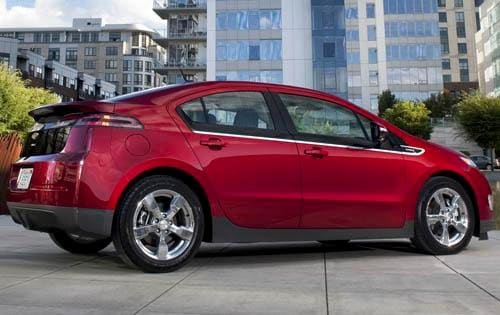
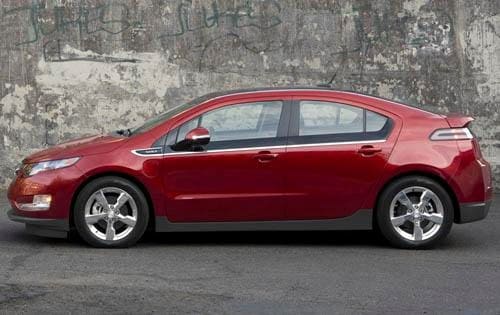
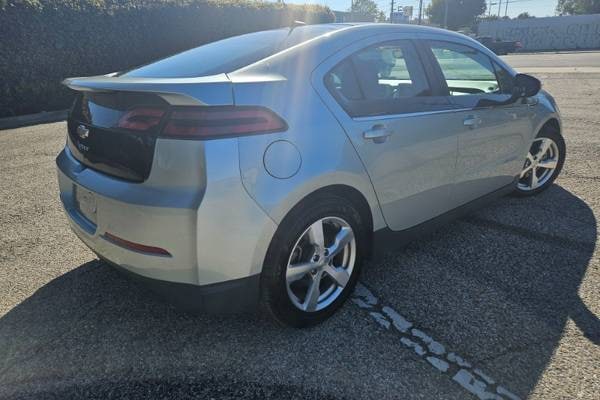
So what exactly is the 2011 Chevrolet Volt? It's a question we get all the time. A confusing array of claims and rumors have been swirling around this car since it debuted as a concept a few years back, so we're not surprised that people aren't clear on what the Volt is all about.
Here's the long and short of it: The Volt is a four-seat, four-door "series-parallel plug-in hybrid" hatchback with a lithium-ion battery pack that can power the car's 149-horsepower (111-kilowatt) electric motor by itself for an estimated 40 miles in the city. After that, the gasoline-powered inline-4 engine primarily supplies electricity to the motor for as many as 300 additional miles. All told, the Volt is the most advanced hybrid to date and quite possibly the most fuel-efficient car you will be able to buy.
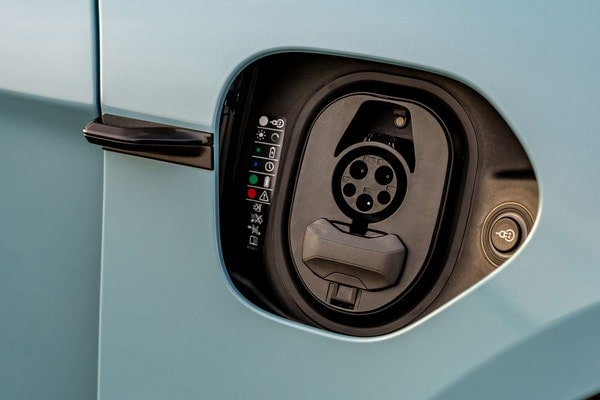
We say "quite possibly" because you can't measure the Volt's fuel economy in any standard fashion. It all depends on how you drive. Suppose you have a 20-mile round-trip commute, and you plug in your Volt every night when you get home (a full charge requires as few as 3 hours). Congratulations! Your fuel economy is infinity, because you'll never run the battery pack down all the way. But if you have a 100-mile commute, you'll be driving at least 60 miles a day under gasoline power, so you'll have to refuel on a regular basis. And in an Edmunds fuel economy test of a Volt with its battery depleted, the car returned only 31.4 mpg in mixed driving. That's far below the typical fuel economy provided by regular hybrid vehicles.
Obviously, how far you routinely drive will play a key role in how thrifty the Volt will be. We think most potential owners will be able to take advantage of its electric range. And electricity costs for recharging are but a fraction for the equivalent amount of gasoline. What's not clear is whether those savings are worth what you'll have to pay at the dealership. Even with a $7,500 federal tax credit, a base Volt will still cost $33,500 -- and that's without the home charging station that's essentially mandatory for a plug-in hybrid like the Volt. There's also a strong likelihood that dealers will try to gouge early customers with sky-high markups.
Still, there is no denying the Volt's technological promise. Most importantly, it has the ability to keep on going when its battery runs down (say, on a road trip), whereas an all-electric vehicle like 2011 Nissan's Leaf does not. If you want an intriguing yet practical taste of a greener automotive future, the 2011 Chevy Volt might be just what the General ordered.
Performance & mpg
The front-wheel-drive 2011 Volt is primarily powered by an electric motor rated at 149 hp (111 kilowatts) and 273 pound-feet of torque. This motor draws power from a lithium-ion battery pack until the battery charge is 70 percent depleted. At that point, the Volt's 1.4-liter four-cylinder internal combustion engine, which requires premium fuel, comes to life as a replacement power source for the electric motor. Under certain higher-speed conditions, the four-cylinder can also help power the wheels directly.
The battery can only be completely recharged through either a 120- or 240-volt outlet, but regenerative braking and the engine generator can replenish it slightly. In Edmunds range and fuel economy testing, we found the Volt had an electricity range of between 30 and 39 miles in mixed driving. When the battery is depleted, it returned 31.4 mpg. However, the term "your mileage may vary" has never been so true.
In Edmunds performance testing, the Volt went from zero to 60 mph in 9.2 seconds in electric mode and 9 seconds flat with the engine generator. Both are fairly quick times for the traditional hybrid segment.
Safety
Safety features on the 2011 Chevy Volt include antilock brakes, stability control, front side airbags, front knee airbags and full-length side curtain airbags. In Edmunds brake testing, the Volt came to a stop in a respectable 124 feet.
Driving
The 2011 Chevrolet Volt accelerates quickly from a standstill and is very responsive at moderate speeds as well; it's the kind of performance that's typical of electric vehicles.
In all-electric mode, the Volt is as quiet and smooth as any EV we've driven -- and it's still a competent vehicle when the engine-generator kicks in. The change-over from battery charge to generator power can be difficult to notice, though once you inevitably do, it may take a while to get used to the engine revving regardless of engine speed.
The Chevy Volt feels slightly nose-heavy when you bend it around a corner, but it makes its moves with little body roll. Indeed, from the compliance of its ride quality to the weight and response of the steering, this Chevy Volt drives more naturally and feels more substantial than hybrids like the Honda Insight and Toyota Prius. One problem area is the brake pedal. It is quite touchy and can be difficult to modulate, though stopping distances are good.
Interior
The 2011 Chevrolet Volt's distinctive center stack appears to have been modeled after various personal electronic devices with touch-sensitive buttons. It looks less like an automotive control panel than an oversized iPod, which we applaud; after all, if you're spending this much money on a vehicle, you'll likely expect a little something special inside. Overall interior quality is also high, with materials that seem to be the best yet from recently improved Chevrolet.
There's plenty of technology involved, too, including a standard color display with a built-in hard drive. In terms of functionality, the Volt's main controls are fairly intuitive, and the futuristic gauge readout is easy enough to read at a glance (though it washes out in sunlight). There's also a nice little ball -- sort of like the bubble in a water level -- that helps you stay in the most energy-efficient driving range. It's big and green when you are conserving fuel or battery energy and smaller and angry orange-yellow when you're not.
Space and comfort is a little disappointing. There is no power driver seat option, which limits adjustability and seems like an oversight in a car that costs $41,000. In back, there are just two seats, and they lack both headroom and legroom; adults will likely feel cramped.
The Volt's hatchback design is convenient for loading cargo, but the swooping rear roof line and battery pack location limit maximum luggage capacity to just 10.6 cubic feet with the back seats up. The rear seats fold down to expand cargo capacity, but overall practicality is below that of a Prius.
2011 Chevrolet Volt models
The 2011 Chevrolet Volt is a midsize five-door hatchback sedan with seating for four.


Compare 2011 Chevrolet Volt trim levels
Helpful trims summary and side-by-side comparison chart