

Best Hybrid Cars of 2025 and 2026
The Edmunds experts test drive hybrid contenders on our test track and in the real world. Our ratings assess performance, comfort, technology, utility, value and more. How we rank hybrids
Hybrid Buying Guide
We'll walk you through all the different kinds of hybrids and find the right one for you.
Best Hybrid cars
Today's hybrid cars have a lot to offer, pairing the drivability and convenience of regular cars with simply outstanding fuel economy.
1st

Redesigned in 2022
Read full review about2025 Honda Civic Hybrid
- Edmunds Rating
- 8.2/10
- MSRP
- $28,750 - $32,950
- Combined MPG
- 48 - 49
2nd

Redesigned in 2025
- Edmunds Rating
- 8.1/10
About Toyota CamryRead Summary Close Summary
The latest Toyota Camry now has an all-hybrid lineup and it makes perfect sense for this moment. Besides its great mpg, the Camry has a roomy and comfortable cabin, many helpful technology features, and just enough athleticism and style to make it not boring. It's a great pick for a midsize sedan.
- MSRP
- $28,700 - $36,425
- Combined MPG
- 44 - 51
3rd

Redesigned in 2023
- Edmunds Rating
- 8.0/10
About Toyota PriusRead Summary Close Summary
The latest Prius looks sleek and is considerably more powerful than earlier models. Fuel economy is still stellar — more than 50 mpg in real-world driving, most likely — but tradeoffs here include reduced utility and rear passenger comfort due to the car's new sweptback style.
- MSRP
- $28,350 - $36,765
- Combined MPG
- 49 - 57
Best Hybrid SUVs
A major drawback of traditional SUVs is their subpar fuel economy, so the appeal of hybrid SUVs is easy to see. Some even get better fuel economy than regular cars.
1st

Introduced in 2024
Read full review about2025 Toyota Grand Highlander Hybrid
- Edmunds Rating
- 8.4/10
- MSRP
- $44,210 - $58,775
- Combined MPG
- 27 - 36
2nd

Redesigned in 2022
- Edmunds Rating
- 8.4/10
About Hyundai Tucson HybridRead Summary Close Summary
The 2025 Hyundai Tucson Hybrid gets some key improvements that have made it an even more user-friendly and well-rounded SUV. This small SUV delivers good mpg, a comfortable ride, and lots of standard technology features. The Tucson Hybrid delivers more than you'd expect for its price and is an SUV we'd highly recommend.
- MSRP
- $33,465 - $41,295
- Combined MPG
- 35 - 38
3rd

Redesigned in 2023
- Edmunds Rating
- 8.4/10
About Kia Sportage HybridRead Summary Close Summary
The Kia Sportage Hybrid delivers on just about every front. The ride quality is excellent, the interior is spacious and the rear hatch opens to a massive cargo area. We have few complaints about this electrified compact crossover.
- MSRP
- $28,790 - $37,790
- Combined MPG
- 38 - 43


Best Plug-in hybrid cars
Plug-in hybrid electric vehicles, or PHEVs, feature a large battery pack that can be recharged by plugging it in. They offer a limited all-electric range and can also operate as normal hybrids.
Not enough vehicles yet to rank

Redesigned in 2025
Read full review about2025 Toyota Prius Plug-In Hybrid
- Edmunds Rating
- 8.1/10
- MSRP
- $33,375 - $40,070
- Combined MPG
- 48 - 52

$179/mo lease found!
This exceptionally rare deal is $236 below typical
Best Plug-in hybrid SUVs
PHEV SUVs tend to be heavier and less efficient than their car counterparts, but also they're higher-riding and more spacious.
1st

Redesigned in 2022
Read full review about2025 Hyundai Tucson Plug-In Hybrid
- Edmunds Rating
- 8.1/10
- MSRP
- $39,730 - $47,440
- Combined MPG
- 35
2nd

Redesigned in 2023
- Edmunds Rating
- 8.1/10
About Kia Niro Plug-In HybridRead Summary Close Summary
The Kia Niro Plug-In Hybrid makes the most of advances in batteries, electric motors and fuel efficiency to be a comfortable and frugal runabout. It's a great option for buyers looking to add a little electric mobility to their commute without committing to a fully electric vehicle.
- MSRP
- $34,490 - $40,790
- Combined MPG
- 48
3rd

Redesigned in 2023
- Edmunds Rating
- 8.0/10
About Mitsubishi Outlander PHEVRead Summary Close Summary
We think the Outlander PHEV is the best version of the Mitsubishi's largest and most comfortable model. This plug-in hybrid is considerably quicker than the standard Outlander but gives up no ground in ride quality and general comfort in the process. It has a second row that's still a bit smaller than those in other two-row SUVs of the same size, and the third row is for emergencies at best, but the Outlander PHEV is otherwise devoid of any real negatives.
- MSRP
- $40,445 - $50,445
- Combined MPG
- 26
Best Luxury hybrids
Luxury hybrids offer impressive fuel economy, of course, but healthy power from their electric motors can also make them quicker than their gas-powered counterparts.
Not enough vehicles yet to rank

Redesigned in 2024
Read full review about2025 Lexus ES 300h
- Edmunds Rating
- 8.1/10
- MSRP
- $43,540 - $52,430
- Combined MPG
- 44

Introduced in 2024
- Edmunds Rating
- 7.1/10
About Lexus UX 300hRead Summary Close Summary
The Lexus UX will appeal to you if you're seeking a fuel-efficient and upscale small vehicle. Its hybrid powertrain gets great mpg and makes enough power to move through traffic with ease. But the diminutive size of the UX takes a toll on interior room and cargo space, and its elevated price tag flirts with larger, more luxurious SUVs.
- MSRP
- $36,740 - $46,775
- Combined MPG
- 42 - 43
Best Luxury plug-in hybrid cars
Luxury PHEVs prioritize refinement, comfort and, in some cases, lots of extra torque from their electric motors. But you can expect impressive fuel economy, too.
1st

Redesigned in 2021
Read full review about2025 Mercedes-Benz S 580e hybrid
- Edmunds Rating
- 8.4/10
- MSRP
- $128,200
- Combined MPG
- 23
2nd

Redesigned in 2017
- Edmunds Rating
- 8.1/10
About Volvo S90 RechargeRead Summary Close Summary
The urbane Volvo S90 T8 plug-in hybrid has a combined 400 horsepower and all-wheel drive to accompany its impressive list of luxuries and, of course, safety features.
- MSRP
- $65,650 - $71,200
- Combined MPG
- 29
3rd

Redesigned in 2019
- Edmunds Rating
- 8.0/10
About Volvo S60 RechargeRead Summary Close Summary
The Volvo S60 Recharge provides a bridge between the worlds of gas and electric vehicles. Its electric motor is powerful enough to deliver a near full-EV experience for more than 40 miles of driving, while the interior features luxury-grade materials and very comfortable front seats.
- MSRP
- $52,100 - $58,100
- Combined MPG
- 31
Best Luxury plug-in hybrid SUVs
Luxury PHEV SUVs offer improved fuel efficiency and limited all-electric range in refined packages. These premium vehicles don't sacrifice comfort or acceleration to earn their green cred.
1st

Redesigned in 2020
Read full review about2025 Mercedes-Benz GLE 450e
- Edmunds Rating
- 8.3/10
- MSRP
- $71,350
- Combined MPG
- 23
2nd

Redesigned in 2018
- Edmunds Rating
- 8.2/10
About Volvo XC60Read Summary Close Summary
The XC60 is a small luxury SUV and Volvo's most popular model. The powerful T8 plug-in hybrid pairs elegant design and luxurious amenities with serious power and a useful 36 miles all-electric driving range. It's a top choice if you're looking for a luxury hybrid SUV.
- MSRP
- $58,050 - $68,950
- Combined MPG
- 28
3rd

Redesigned in 2019
- Edmunds Rating
- 8.1/10
About BMW X5 xDrive50eRead Summary Close Summary
The BMW X5 boasts a classy-looking cabin, plenty of upscale features and pleasing performance. A variety of engines are also available to appeal to the power-hungry and fuel-conscious alike. There are some drawbacks, such as controls that are difficult to use, but overall the X5 is one of the most appealing midsize luxury SUVs on the market.
- MSRP
- $75,200
Selected 0 vehicles for comparison
Video reviews
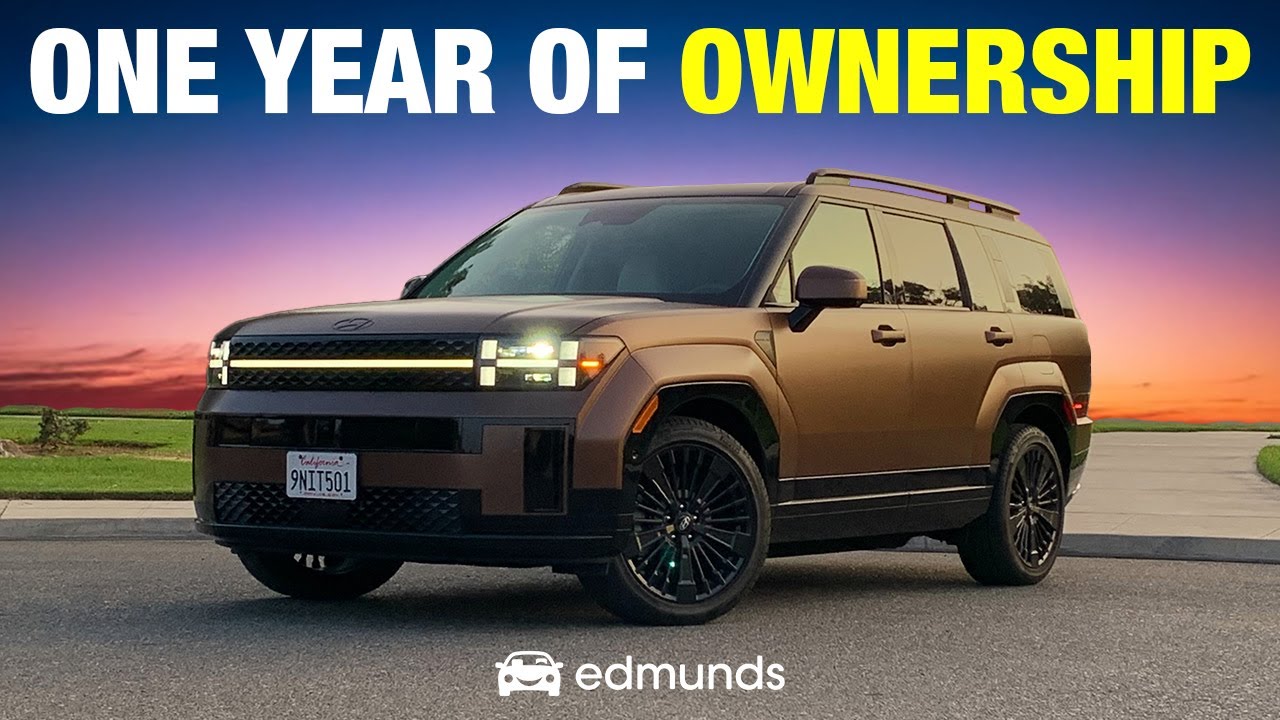
Owning the Hyundai Santa Fe Hybrid: One-Year Review
When the Hyundai Santa Fe got a massive redesign — and glow-up — for the 2024 model year, it excited us so much that we bought one of our very own to test for the next year. We've put nearly 20,000 miles on our Santa Fe Calligraphy Hybrid's odometer in that time, and we've learned a… lot throughout our time behind the wheel. In this video, Edmunds' Brian Wong and the editorial team dive into what we liked, what we didn't, maintenance costs and more.
 Owning the Hyundai Santa Fe Hybrid: One-Year Review
- Jeep Wrangler 392 vs. Wrangler 4xe Plug-in Hybrid: Which Is ...
- All-New 2026 Toyota RAV4 vs. The Competition: How It Stacks ...
- Honda CR-V Hybrid vs. Subaru Forester Hybrid: Which Is the B...
- The All-New 2026 Toyota RAV4 Bets Big on Hybrids | First Loo...
- Honda Civic Buyer's Guide: Everything You Need to Know | Spo...
- Honda CR-V Hybrid vs. Toyota RAV4 Hybrid vs. Mazda CX-50 Hyb...
- Kia K4 vs. Toyota Corolla Hybrid vs. Honda Civic Hybrid: Whi...
- Edmunds Top Rated 2025 | The Best Cars, Trucks and SUVs for ...
- 3 Years & 45,000 Miles in the Ford F-150 Hybrid | Long-Term ...
- Honda Civic Hybrid vs. Toyota Prius: Which is the Better Hyb...
- These Are the 2025 Cars, Trucks & SUVs We're Most Excited Fo...
- Hyundai Santa Fe vs. Toyota Highlander: 3-Row Hybrid SUV Bat...
- Our Top-Rated Hybrids | Best Hybrid Cars, SUVs, Trucks and M...
- Hybrid vs. Plug-in Hybrid: What's the Difference & Which One...
- 2025 Honda Civic Hybrid First Look | The Hybrid Is Back & Be...
- Honda CR-V vs. Kia Sportage vs. Toyota RAV4 | Compact Hybrid...
- Toyota Camry vs. Honda Accord vs. Hyundai Sonata: Midsize Hy...
- 2025 Mazda CX-70 First Look | Wait, That's Not a CX-90? | In...
- Edmunds Top Rated 2024 | The Best Cars, Trucks and SUVs for ...
FAQ
What are the best hybrids on the market?
If you're looking for stellar fuel economy in a refined vehicle, the Honda Civic is our top-rated hybrid. Our top-rated luxury hybrid is the Lexus ES, combining premium comfort with hybrid efficiency. Shoppers with access to a spot to plug in could benefit from a plug-in hybrid's all-electric driving capabilities. Our top pick for a PHEV is the undefined. Learn more
What is the top-rated hybrid for 2019?
In 2019, some excellent new hybrid vehicles launched. The Honda Insight nabbed the top spot in our hybrid rankings, offering a sophisticated experience along with up to 52 combined mpg. Toyota introduced the RAV4 Hybrid, which became our top-rated hybrid SUV for combining family-friendly practicality with 40 combined mpg. A new generation of Lexus ES 300h was our top-rated luxury hybrid for the year. Learn more
What is the top-rated hybrid for 2018?
2018's top-rated hybrid vehicle was the Toyota Prius, the car that started the hybrid craze. The fourth generation Prius is efficient, easy to drive, and comfortable. Honda launched the Honda Accord Hybrid in 2018 as well, improving the fuel economy of our top-rated midsize sedan and providing an excellent alternative to buyers who need a slightly larger family car. For luxury shoppers, the redesigned Volvo XC60 is a small SUV with big power and elegant design, and our top-rated luxury plug-in hybrid SUV. Learn more
What are the best used hybrids to buy?
Look for "CPO" or certified pre-owned vehicles if you're shopping for used trucks, and check how long the warranty on the vehicle's battery pack has left (a high-cost item should maintenance be required). Among lightly used hybrids likely to be available via CPO programs, we like the Honda Insight and the Toyota Prius. Buyers investigating a used plug-in hybrid should check out the Chevrolet Bolt. Learn more
Browse hybrid by brand
- Acura
- Audi
- BMW
- Buick
- Cadillac
- Chevrolet
- Chrysler
- Ford
- Honda
- Hyundai
- INFINITI
- Kia
- Lexus
- Lincoln
- Mercedes-Benz
- MINI
- Mitsubishi
- Nissan
- Porsche
- Subaru
- Toyota
- Volvo