" d="M896 513c116 45.015 222 64 304 75V0H0v501c40 36.024 154 76 340 76s344-146.269 556-64Z"/%3E%3C/mask%3E%3Cg mask="url(%23b)"%3E%3Cpath fill="url(%23c)" d="M896 513c116 45.015 222 64 304 75V0H0v501c40 36.024 154 76 340 76s344-146.269 556-64Z"/%3E%3Cpath fill="url(%23d)" fill-opacity=".15" d="M581.718 62.893c42.993 1.53 86.281 5.888 129.704 13.204 311.828 52.485 552.538 242.016 657.698 483.656-149.97-147.971-450.891-226.33-789.375-232.079-338.534.839-640.434 74.572-792.746 220.292 108.75-240.047 352.255-425.97 664.832-473.803a1041.548 1041.548 0 0 1 129.887-11.27Z"/%3E%3Cpath fill="url(%23e)" fill-opacity=".5" d="M611.247 209.93a1458.84 1458.84 0 0 1 139.573 27.692c333.61 83.239 577.16 267.208 668.67 475.188-148.93-138.63-468.279-241.218-835.209-290.421-367.6-43.915-702.265-24.445-881.281 72.561 140.567-178.524 422.355-295.817 766.181-293.074 47.867.484 95.274 3.212 142.066 8.054Z"/%3E%3Cpath fill="url(%23f)" d="M735.039 879.394c48.524-6.62 97.023-16.967 145.3-31.2C1227.03 746.059 1475.76 472.327 1564.28 145c-151.17 209.633-482.23 344.436-865.05 388.31C315.515 568.571-35.93 504.564-227 330.342-73.333 632.61 226.169 849.617 586.429 878.604c50.15 3.871 99.74 4.07 148.61.79Z" opacity=".3"/%3E%3Cpath fill="url(%23g)" d="M694.222 783.712c50.956 12 103.317 20.27 156.946 24.578 385.102 31.013 738.232-146.76 952.062-439.434-231.22 151.216-613.24 158.795-1012.047 55.796C394.784 312.716 68.643 114.101-55.211-133c37.44 360.528 253.087 691.895 601.449 858.946 48.557 23.091 97.963 42.302 147.984 57.766Z" opacity=".9"/%3E%3Cpath fill="url(%23h)" fill-opacity=".5" d="M896 513c116 45.015 222 64 304 75V0H0v501c40 36.024 154 76 340 76s344-146.269 556-64Z"/%3E%3C/g%3E%3Cdefs%3E%3ClinearGradient id="a" x1="1005" x2="989.087" y1="23" y2="552.522" gradientUnits="userSpaceOnUse"%3E%3Cstop stop-color="%23007EE5"/%3E%3Cstop offset=".333" stop-color="%231561D4"/%3E%3Cstop offset="1" stop-color="%230A4AAB"/%3E%3C/linearGradient%3E%3ClinearGradient id="c" x1="1005" x2="989.087" y1="23" y2="552.522" gradientUnits="userSpaceOnUse"%3E%3Cstop stop-color="%23007EE5"/%3E%3Cstop offset=".334" stop-color="%231561D4"/%3E%3C/linearGradient%3E%3ClinearGradient id="d" x1="675.999" x2="879.999" y1="648.999" y2="120.999" gradientUnits="userSpaceOnUse"%3E%3Cstop stop-color="%23fff"/%3E%3Cstop offset="1" stop-color="%23fff" stop-opacity="0"/%3E%3C/linearGradient%3E%3ClinearGradient id="e" x1="656.5" x2="637.602" y1="213" y2="622.259" gradientUnits="userSpaceOnUse"%3E%3Cstop offset=".115" stop-color="%23fff" stop-opacity="0"/%3E%3Cstop offset=".944" stop-color="%23017D8D"/%3E%3C/linearGradient%3E%3ClinearGradient id="f" x1="398" x2="737" y1="599" y2="387" gradientUnits="userSpaceOnUse"%3E%3Cstop stop-color="%2300ABB5"/%3E%3Cstop offset="1" stop-color="%2300A0B5" stop-opacity="0"/%3E%3C/linearGradient%3E%3ClinearGradient id="g" x1="1051.5" x2="271" y1="567" y2="575" gradientUnits="userSpaceOnUse"%3E%3Cstop stop-color="%230098C2"/%3E%3Cstop offset="1" stop-color="%23033E96" stop-opacity="0"/%3E%3C/linearGradient%3E%3ClinearGradient id="h" x1="1005" x2="986.038" y1="23" y2="587.43" gradientUnits="userSpaceOnUse"%3E%3Cstop offset=".813" stop-opacity="0"/%3E%3Cstop offset=".972"/%3E%3C/linearGradient%3E%3C/defs%3E%3C/svg%3E)
2025 Toyota 4Runner
Price Range: $41,270 - $67,400



Good
out of 10
edmunds TESTED
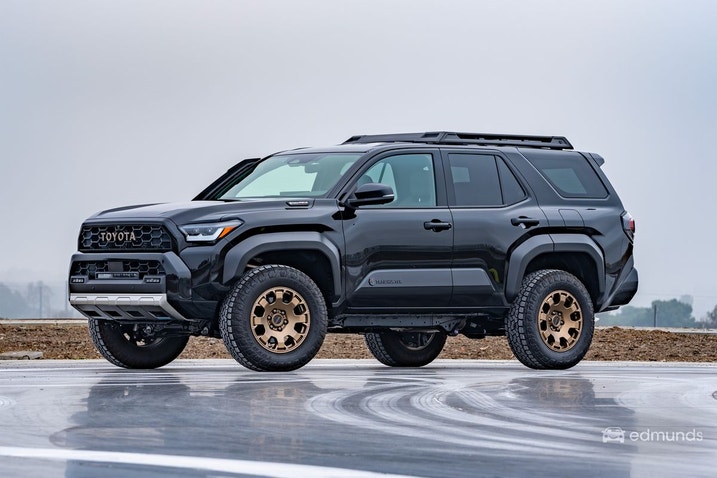
The new 2025 Toyota 4Runner is an unquestioned improvement over the old one, with better technology and improved powertrains. However, its poor ride quality, tight back seat, and high price tag are turnoffs as it lacks utility and value when compared to competitors.Read full review
See All for Sale
Shop 2025 Toyota 4Runner vehicles for sale nationwide
2025 Toyota 4Runner Review
Pros
- Impressive all-terrain capabilities
- Well mannered on pavement
- Slightly more fuel-efficient than rivals
- Many models to choose from
Cons
- Limited rear seat space
- Hybrid powertrain limits cargo capacity
- Not as comfortable as conventional SUVs
- Tiny third-row seat option
What's new
- The 4Runner is redesigned for 2025
- Turbocharged four-cylinder engine replaces previous V6
- Updated interior with new technology features
- 2025 model kicks off the sixth 4Runner generation
Overview

The wait is finally over. After 14 years, the Toyota 4Runner finally gets a redesign. The fundamentals are still the same — this is a midsize truck-based SUV with a rugged character and look — but just about everything else is new. It's a little bit bigger than before and has revised styling, an overhauled interior with Toyota's latest tech, a new engine, and even more versions to pick from. The 4Runner should appeal to you if you want something more adventurous than a typical crossover SUV but don't want to fully commit to a Ford Bronco or a Jeep Wrangler. Overall, we think the new 2025 4Runner is a huge step forward in its evolution.
Edmunds spotlight: A wide array of 4Runner choices
Toyota gives you a lot of choice when picking a 4Runner. The lineup has nine trim levels and two engine choices. The base SR5 doesn't come with a whole lot of features, but it's the way to go if you're on a tight budget. A few different TRD versions should appeal to the bulk of 4Runner buyers. More luxury-minded shoppers will likely be drawn into the well-equipped Limited and Platinum trims, while hard-core off-roaders will like the TRD Pro or the all-new Trailhunter. All 2025 4Runners come with a new turbocharged four-cylinder that replaces the previous V6. It gets better fuel economy and more low-end torque for quicker acceleration at low speeds. A hybrid version of the engine is also available. It makes even more power and a few more mpg to boot.
Competitors to consider
You could check out the Jeep Wrangler or Ford Bronco. They're both excellent off-roaders but require more sacrifices to comfort and refinement than the 4Runner. On the highway and in town, the 4Runner is much easier to live with and behaves more like a typical SUV. The Land Rover Defender is also worth consideration. Within the Toyota family, we recommend checking out the new Land Cruiser if you want a little more off-road cred and style or the Highlander or Grand Highlander for superior family-hauling capability.
Edmunds Expert Rating
edmunds TESTED

We drove the 2025 Toyota 4Runner on our test track and on real roads. Our Edmunds team conducts rigorous independent vehicle testing, driving 500,000 miles a year.
Which 4Runner does Edmunds recommend?
Because of a deep roster of choices, it's difficult to recommend one 4Runner to rule them all. The TRD Sport Premium might be the best choice if the majority of your driving is on pavement with some occasional light off-roading sprinkled in. More serious adventurers should consider the TRD Off-Road or TRD Pro.
Compare 2025 Toyota 4Runner trim levels
Helpful trims summary and side-by-side comparison chart
Helpful shopping links
2025 Toyota 4Runner videos
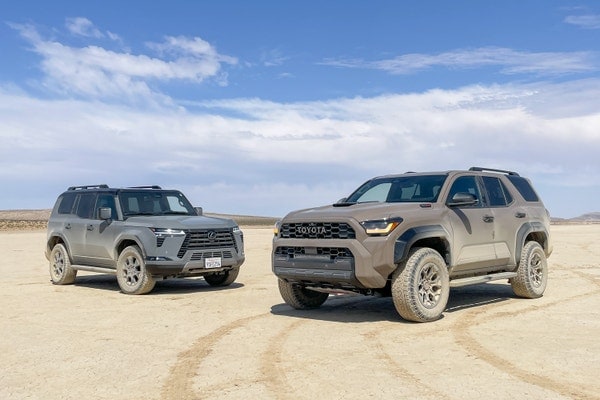
Lexus GX 550 Overtrail vs. Toyota 4Runner TRD Pro: Off-Road Comparison Test
They may share a platform, but the latest Lexus GX 550 and Toyota 4Runner take entirely different approaches to the world of rough-and-tough SUVs — and one is clearly superior. In this video, Edmunds’ Brian Wong takes each SUV through a series of off-road challenges to find out which one is the better rig.
 Lexus GX 550 Overtrail vs. Toyota 4Runner TRD Pro: Off-Road ...
- Toyota 4Runner TRD Pro vs. Honda Passport TrailSport: Off-Ro...
- Honda Passport vs. Toyota 4Runner vs. Jeep Grand Cherokee: T...
- Toyota 4Runner Trailhunter vs. Ford Bronco vs. Jeep Wrangler...
- Toyota 4Runner vs. Land Cruiser vs. Tacoma: Which One Comes ...
- These Are the 2025 Cars, Trucks & SUVs We’re Most Excited Fo...
- FIRST LOOK: ALL-NEW 2025 Toyota 4Runner! | A Redesigned Off-...
Compare the Toyota 4Runner
- Toyota 4Runner8
- Add any vehicle to compare


PRICE CHECKER™
Check a dealer's price
Bring back a dealer's quote, and we'll tell you if it's a good price!
Check your price quote
Price:
$ -
Graph shown is a sample only
FAQ
Is the Toyota 4Runner a good car?
The Edmunds experts tested the 2025 4Runner both on the road and at the track, giving it a 7.6 out of 10. Edmunds’ consumer reviews show that the 2025 4Runner gets an average rating of 4 stars out of 5 (based on 12 reviews) What about cargo capacity? When you're thinking about carrying stuff in your new car, keep in mind that carrying capacity for the 4Runner ranges from 42.6 to 48.4 cubic feet of trunk space. And then there's safety and reliability. Edmunds has all the latest NHTSA and IIHS crash-test scores, plus industry-leading expert and consumer reviews to help you understand what it's like to own and maintain a Toyota 4Runner. Learn more
What's new in the 2025 Toyota 4Runner?
According to Edmunds’ car experts, here’s what’s new for the 2025 Toyota 4Runner:
- The 4Runner is redesigned for 2025
- Turbocharged four-cylinder engine replaces previous V6
- Updated interior with new technology features
- 2025 model kicks off the sixth 4Runner generation
Is the Toyota 4Runner reliable?
To determine whether the Toyota 4Runner is reliable, read Edmunds' authentic consumer reviews, which come from real owners and reveal what it's like to live with the 4Runner. Look for specific complaints that keep popping up in the reviews, and be sure to compare the 4Runner's 4-star average consumer rating to that of competing vehicles. Learn more
Is the 2025 Toyota 4Runner a good car?
There's a lot to consider if you're wondering whether the 2025 Toyota 4Runner is a good car. Edmunds' expert testing team reviewed the 2025 4Runner and gave it a 7.6 out of 10. Our consumer reviews show that the 2025 4Runner gets an average rating of 4 stars out of 5 (based on 12 reviews). Safety scores, fuel economy, cargo capacity and feature availability should all be factors in determining whether the 2025 4Runner is a good car for you. Learn more
How much should I pay for a 2025 Toyota 4Runner?
The least-expensive 2025 Toyota 4Runner is the 2025 Toyota 4Runner SR5 4dr SUV (2.4L 4cyl Turbo 8A). Including destination charge, it arrives with a Manufacturer's Suggested Retail Price (MSRP) of about $41,270.
Other versions include:
- SR5 4dr SUV (2.4L 4cyl Turbo 8A) which starts at $41,270
- SR5 4dr SUV 4WD (2.4L 4cyl Turbo 8A) which starts at $43,270
- TRD Sport 4dr SUV (2.4L 4cyl Turbo 8A) which starts at $47,750
- TRD Off-Road 4dr SUV 4WD (2.4L 4cyl Turbo 8A) which starts at $49,690
- TRD Sport 4dr SUV 4WD (2.4L 4cyl Turbo 8A) which starts at $49,750
- TRD Off-Road 4dr SUV 4WD (2.4L 4cyl Turbo gas/electric hybrid 8A) which starts at $52,490
- TRD Sport Premium 4dr SUV (2.4L 4cyl Turbo 8A) which starts at $53,110
- TRD Sport Premium 4dr SUV 4WD (2.4L 4cyl Turbo 8A) which starts at $55,110
- TRD Off-Road Premium 4dr SUV 4WD (2.4L 4cyl Turbo 8A) which starts at $55,470
- Limited 4dr SUV (2.4L 4cyl Turbo 8A) which starts at $55,900
- Limited 4dr SUV 4WD (2.4L 4cyl Turbo 8A) which starts at $57,900
- TRD Off-Road Premium 4dr SUV 4WD (2.4L 4cyl Turbo gas/electric hybrid 8A) which starts at $58,270
- Limited 4dr SUV 4WD (2.4L 4cyl Turbo gas/electric hybrid 8A) which starts at $60,700
- Platinum 4dr SUV 4WD (2.4L 4cyl Turbo gas/electric hybrid 8A) which starts at $63,360
- Trailhunter 4dr SUV 4WD (2.4L 4cyl Turbo gas/electric hybrid 8A) which starts at $67,400
- TRD Pro 4dr SUV 4WD (2.4L 4cyl Turbo gas/electric hybrid 8A) which starts at $67,400
What are the different models of Toyota 4Runner?
If you're interested in the Toyota 4Runner, the next question is, which 4Runner model is right for you? 4Runner variants include SR5 4dr SUV (2.4L 4cyl Turbo 8A), SR5 4dr SUV 4WD (2.4L 4cyl Turbo 8A), TRD Sport 4dr SUV (2.4L 4cyl Turbo 8A), and TRD Off-Road 4dr SUV 4WD (2.4L 4cyl Turbo 8A). For a full list of 4Runner models, check out Edmunds’ Features & Specs page. Learn more
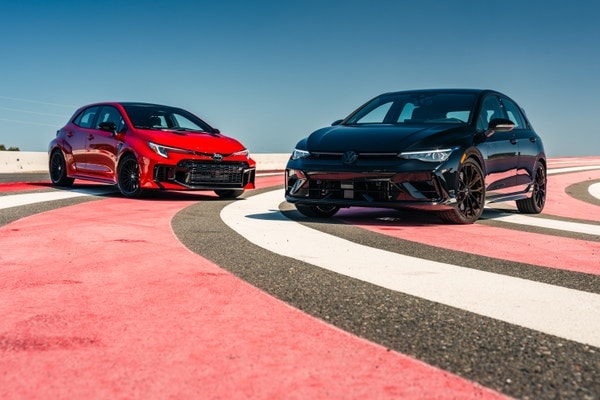
2025 Toyota GR Corolla vs. 2025 Volkswagen Golf R: Hot Hatch Showdown on Track
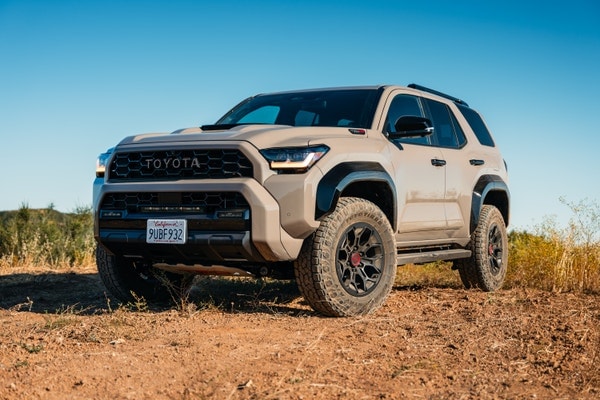
2025 Toyota 4Runner TRD Pro: We're Living With One for a Year
Toyota Tacoma XtraCab Cargo Test: How Much Luggage Fits in the Truck?
Toyota 4Runner TRD Pro vs. Lexus GX 550 Overtrail: The Off-Road Battle