" d="M896 513c116 45.015 222 64 304 75V0H0v501c40 36.024 154 76 340 76s344-146.269 556-64Z"/%3E%3C/mask%3E%3Cg mask="url(%23b)"%3E%3Cpath fill="url(%23c)" d="M896 513c116 45.015 222 64 304 75V0H0v501c40 36.024 154 76 340 76s344-146.269 556-64Z"/%3E%3Cpath fill="url(%23d)" fill-opacity=".15" d="M581.718 62.893c42.993 1.53 86.281 5.888 129.704 13.204 311.828 52.485 552.538 242.016 657.698 483.656-149.97-147.971-450.891-226.33-789.375-232.079-338.534.839-640.434 74.572-792.746 220.292 108.75-240.047 352.255-425.97 664.832-473.803a1041.548 1041.548 0 0 1 129.887-11.27Z"/%3E%3Cpath fill="url(%23e)" fill-opacity=".5" d="M611.247 209.93a1458.84 1458.84 0 0 1 139.573 27.692c333.61 83.239 577.16 267.208 668.67 475.188-148.93-138.63-468.279-241.218-835.209-290.421-367.6-43.915-702.265-24.445-881.281 72.561 140.567-178.524 422.355-295.817 766.181-293.074 47.867.484 95.274 3.212 142.066 8.054Z"/%3E%3Cpath fill="url(%23f)" d="M735.039 879.394c48.524-6.62 97.023-16.967 145.3-31.2C1227.03 746.059 1475.76 472.327 1564.28 145c-151.17 209.633-482.23 344.436-865.05 388.31C315.515 568.571-35.93 504.564-227 330.342-73.333 632.61 226.169 849.617 586.429 878.604c50.15 3.871 99.74 4.07 148.61.79Z" opacity=".3"/%3E%3Cpath fill="url(%23g)" d="M694.222 783.712c50.956 12 103.317 20.27 156.946 24.578 385.102 31.013 738.232-146.76 952.062-439.434-231.22 151.216-613.24 158.795-1012.047 55.796C394.784 312.716 68.643 114.101-55.211-133c37.44 360.528 253.087 691.895 601.449 858.946 48.557 23.091 97.963 42.302 147.984 57.766Z" opacity=".9"/%3E%3Cpath fill="url(%23h)" fill-opacity=".5" d="M896 513c116 45.015 222 64 304 75V0H0v501c40 36.024 154 76 340 76s344-146.269 556-64Z"/%3E%3C/g%3E%3Cdefs%3E%3ClinearGradient id="a" x1="1005" x2="989.087" y1="23" y2="552.522" gradientUnits="userSpaceOnUse"%3E%3Cstop stop-color="%23007EE5"/%3E%3Cstop offset=".333" stop-color="%231561D4"/%3E%3Cstop offset="1" stop-color="%230A4AAB"/%3E%3C/linearGradient%3E%3ClinearGradient id="c" x1="1005" x2="989.087" y1="23" y2="552.522" gradientUnits="userSpaceOnUse"%3E%3Cstop stop-color="%23007EE5"/%3E%3Cstop offset=".334" stop-color="%231561D4"/%3E%3C/linearGradient%3E%3ClinearGradient id="d" x1="675.999" x2="879.999" y1="648.999" y2="120.999" gradientUnits="userSpaceOnUse"%3E%3Cstop stop-color="%23fff"/%3E%3Cstop offset="1" stop-color="%23fff" stop-opacity="0"/%3E%3C/linearGradient%3E%3ClinearGradient id="e" x1="656.5" x2="637.602" y1="213" y2="622.259" gradientUnits="userSpaceOnUse"%3E%3Cstop offset=".115" stop-color="%23fff" stop-opacity="0"/%3E%3Cstop offset=".944" stop-color="%23017D8D"/%3E%3C/linearGradient%3E%3ClinearGradient id="f" x1="398" x2="737" y1="599" y2="387" gradientUnits="userSpaceOnUse"%3E%3Cstop stop-color="%2300ABB5"/%3E%3Cstop offset="1" stop-color="%2300A0B5" stop-opacity="0"/%3E%3C/linearGradient%3E%3ClinearGradient id="g" x1="1051.5" x2="271" y1="567" y2="575" gradientUnits="userSpaceOnUse"%3E%3Cstop stop-color="%230098C2"/%3E%3Cstop offset="1" stop-color="%23033E96" stop-opacity="0"/%3E%3C/linearGradient%3E%3ClinearGradient id="h" x1="1005" x2="986.038" y1="23" y2="587.43" gradientUnits="userSpaceOnUse"%3E%3Cstop offset=".813" stop-opacity="0"/%3E%3Cstop offset=".972"/%3E%3C/linearGradient%3E%3C/defs%3E%3C/svg%3E)
2011 Kia Optima Review
Price: $11,990


Edmunds' Expert Review
Pros
- Powerful and fuel-efficient engines
- good ride/handling balance
- handsome cabin
- copious features
- top safety scores
- impressive value
- lengthy warranty.
Cons
- Can be tight on headroom
- disappointing real-world fuel economy and driving experience for hybrid
- numb steering.
What’s new
The Kia Optima is a completely redesigned model for 2011.
Edmunds says
From anonymous also-ran to eye-catching class leader, the 2011 Kia Optima is a must-drive family sedan.
For sale near Boydton, VA
97 listings
 Photos not available$7,500
- 144,950 miles
- No accidents, 6 owners, personal use only
- 24 City / 34 Hwy MPG
- Urban Exchange Auto (77 mi away)
Close
Located in Richmond, VA
AutoCheck Vehicle History Summary
Accident Free Vehicle: Yes
Personal Use Only: Yes
History Provider: AutoCheck
Title Details: Clean Title
Salvage Vehicle: No
Frame Damage: No
Theft History: No
Lemon Status: No
Free History Report: No
Features and Specs:
27 Combined MPG (24 City/34 Highway)
Listing Information:
VIN: KNAGM4A74B5154168
Stock: 154168
Certified Pre-Owned: No
Listed since: 05-20-2024- New Listing
- 115,735 miles
- Scrap vehicle reported, 4 owners, personal use
- 34 City / 39 Hwy MPG
- 518 Auto Sales (120 mi away)
Close
Located in Norfolk, VA
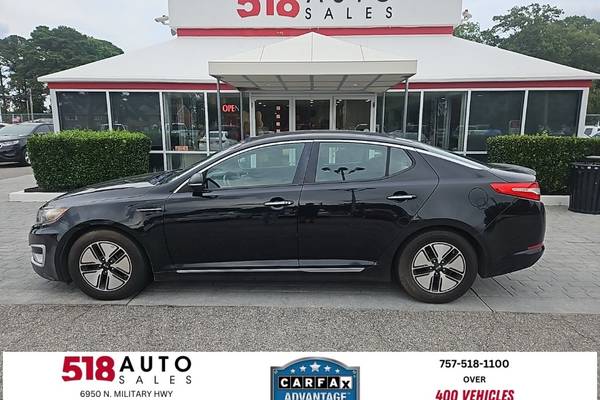
*150 POINT INSPECTION*, *3 MO 3000 MILE SERVICE CONTRACT ON MOST CARS SEE SALES FOR DETAILS*, *518AUTO.COM*, *CALL ALEX NOW 757-518-1100 FOR BEST DAIL...
AutoCheck Vehicle History Summary
Accident Free Vehicle: No
Personal Use Only: Yes
History Provider: AutoCheck
Title Details: Issue reported
Salvage Vehicle: No
Frame Damage: No
Theft History: No
Lemon Status: No
Free History Report: No
Features and Specs:
36 Combined MPG (34 City/39 Highway)
Listing Information:
VIN: KNAGM4AD0B5000546
Stock: 11506
Certified Pre-Owned: No
Listed since: 05-15-2025
Vehicle overview
Today on Extreme Makeover: Automotive Edition is a homely Korean midsize sedan best known for, well, nothing at all. Previously, the Optima has been so nondescript in both styling and attitude that you would have thought Kia designed it specifically for rental fleets or maybe even the witness protection program. But thanks to an extreme makeover, the 2011 Kia Optima has emerged from its anonymous cocoon to be a striking butterfly of a family sedan. With sleek styling, substantial power and plenty of value, the latest Optima is an instant standout among its many rivals.
The redesigned Optima is based on the same platform used for the equally made-over Hyundai Sonata. While Kia tuned the suspension and steering to its own sportier specification, the Sonata's engines have carried over into the Optima virtually unchanged. That's just fine by us, as it's an all-star cast. The 200-horsepower four-cylinder achieves an estimated 34 mpg on the highway while the 274-hp turbo-4 incredibly gets the same highway figure. Meanwhile, the 206-hp 2011 Optima Hybrid model gets superior fuel economy, though not quite as excellent as its 35 mpg/40 mpg highway EPA estimates would indicate.
Unless you've read up on the Optima and Sonata relationship, you probably wouldn't suspect the two are related. Each car's design (both exterior and interior) is unique, with the Kia taking a more premium, European look. And when you take a look around the Optima's interior, you'll find yourself thinking you're in a more expensive car.
Despite this extreme makeover, the 2011 Kia Optima has maintained the previous Optima's lengthy warranty and strong value. The Optima packs in a ton of features for a price that undercuts most competitors, while offering things that others do not such as ventilated front seats, heated rear seats and a heated steering wheel. All together, the Optima has been transformed from an anonymous also-ran for bargain hunters and rental fleets into one of the best (and best-looking) midsize family sedans. Ty Pennington would be proud.
Performance & mpg
The 2011 Kia Optima LX and EX are powered by a 2.4-liter four-cylinder that produces 200 hp and 186 pound-feet of torque. A six-speed manual is standard on the LX Manual, while a six-speed automatic is standard on all other Optimas. In California-emissions states, the Optima has a Super Ultra Low Emissions rating (versus Ultra-Low elsewhere) resulting in a lower power output of 192 hp and 181 lb-ft.
In performance testing, a loaded Optima EX in SULEV form went from zero to 60 mph in 8.9 seconds -- the ULEV Optima will be a bit quicker, but either way, the car is on par with other vehicles in the class. EPA-estimated fuel economy is 24 mpg city/34 mpg highway and 27 mpg combined with the automatic. The manual gets you 24/35/28.
The EX Turbo and SX get a 2.0-liter turbocharged four-cylinder that produces 274 hp and 269 lb-ft of torque. We tested a Sonata SX and clocked a quick 0-60-mph time of 6.5 seconds. The Optima Turbo's EPA-estimated fuel economy is 22/34/26 -- outstanding for a car with this much power.
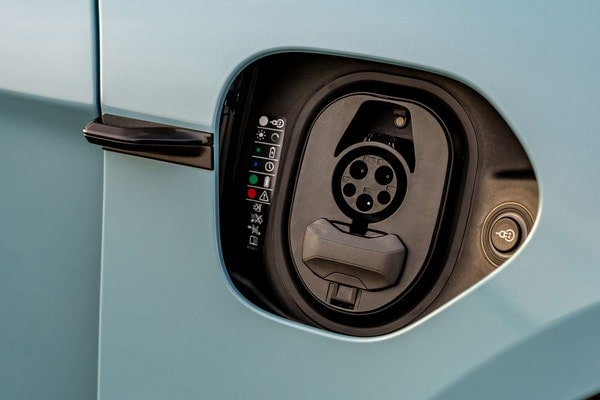
The 2011 Kia Optima Hybrid is powered by a 2.4-liter four-cylinder gasoline engine generating 166 hp and 154 pound-feet of torque paired with an electric motor making 40 hp. Combined, the two power units are good for 206 peak hp and 193 lb-ft of torque. A six-speed automatic is again standard.
In Edmunds performance testing, the Optima Hybrid accelerated from zero to 60 mph in 8.9 seconds, which is reasonably quick for a hybrid. The EPA estimates the Optima Hybrid fuel economy at 35 mpg city/40 mpg highway and 38 combined. However, in extensive real-world testing, we've found the Hybrid often struggles to match those numbers.
Safety
The 2011 Kia Optima comes standard with four-wheel antilock disc brakes, traction and stability control, side airbags, side curtain airbags and hill start assist. A rearview camera is optional.
In government crash tests, the Optima earned a top five-star rating for overall safety performance, with five stars awarded for both frontal and side-impact tests. The Insurance Institute for Highway Safety has similarly awarded its top "Good" rating to the Optima for its performance in frontal-offset and side-impact tests. In Edmunds brake testing, an Optima EX came to a stop from 60 mph in 121 feet -- a good performance.
Driving
The 2011 Kia Optima has a composed ride that's comfortable without being isolating. The same can't be said of the steering -- it's pretty numb -- but at least it has firmer, more responsive weighting than its more comfort-tuned Sonata cousin. Overall handling for the Optima is hardly memorable, but it's certainly pleasant and better than average for the segment.
Both of the regular four-cylinder engines are impressive. They produce best-in-class power and are paired with responsive and smooth-shifting transmissions. The truly impressive fuel economy is an ample slab of icing on the cake.
Less impressive is the Optima Hybrid. Its electric motor makes accelerating from a dead stop a smooth affair, and at highway cruising speeds the electric motor can aid quick bursts of acceleration that makes the engine almost feel turbocharged. However, in low-speed driving or quickly changing traffic conditions, the Hybrid shudders and lurches while deciding which gear it wants. It is similarly unpredictable under braking.
Interior
The Kia Optima's cabin has a vaguely Audi look to it, which isn't surprising since its designer used to work for the German luxury carmaker. While its quality isn't up to the standards of Audi, the abundance of soft-touch materials, precise switchgear and pleasingly grained plastics make this one of the nicest interiors in its class. Cover up the Kia badge and your passengers are likely to think you're driving a European car.
Unique to the Hybrid is a special gauge cluster that displays, among other things, hybrid power flow and overall driving style efficiency. Also special to the Hybrid is Kia's new Uvo electronics interface system -- the regular Optima doesn't get it until 2012. Utilizing the same technology as Ford's Sync system, Uvo provides voice control of cell phones and MP3 players as well as other services such as turn-by-turn navigation. In our limited testing of Uvo, we found it to work quite well.
The Optima has a fairly spacious cabin with comfortable seats and a solid amount of legroom front and rear. Headroom (particularly in back) is a bit tight due to the car's rakish, coupelike roof line. Taller folks should definitely think twice about the optional panoramic sunroof, as it significantly decreases headroom further. The Optima has 15.4 cubic feet of trunk space, which is about average for its class. Because of its battery pack, the Hybrid drops to 9.9 cubic feet.
2011 Kia Optima models
The 2011 Kia Optima is a midsize sedan available in five trim levels: LX, EX, EX Turbo, SX and Hybrid.



Compare 2011 Kia Optima trim levels
Helpful trims summary and side-by-side comparison chart