Skip to FiltersReport abuse
337 listings
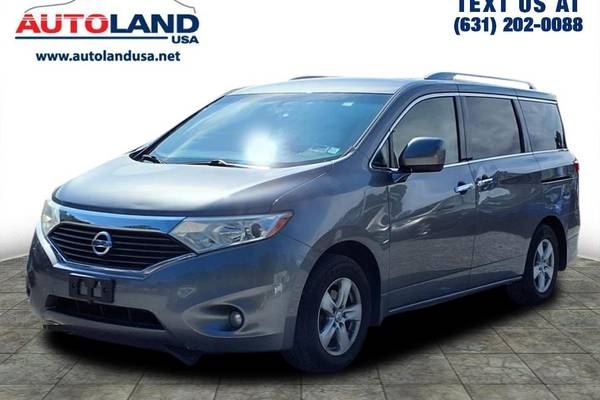
- $7,195good price$2,101 below market
- 110,743 miles
- 1 accident, 2 owners, personal use only
- 7 Seats, 19 City / 25 Hwy MPG
- Autoland USA (Selden, NY)
Close
Located in Selden, NY / 1,529 miles away from Woodson, TX
This vehicle is a 2014 Nissan Quest SV with a 3.5 liter 6 cylinder engine and fuel injection. It has 110,743 miles and is FWD, making it an economical...
AutoCheck Vehicle History Summary
Accident Free Vehicle: No
Personal Use Only: Yes
History Provider: AutoCheck
Title Details: Clean Title
Salvage Vehicle: No
Frame Damage: No
Theft History: No
Lemon Status: No
Free History Report: No
Features and Specs:
21 Combined MPG (19 City/25 Highway)
Listing Information:
VIN: JN8AE2KP9E9105509
Stock: 9452A
Certified Pre-Owned: No
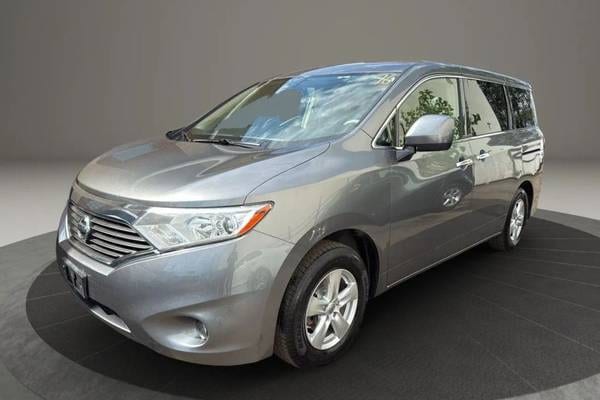
Listed since: 07-08-2025 - $8,499good price$2,113 below market
- 86,327 miles
- 2 accidents, 2 owners, personal use only
- 7 Seats, 20 City / 27 Hwy MPG
- Auto Spot (Wood-Ridge, NJ)
Close
Located in Wood-Ridge, NJ / 1,475 miles away from Woodson, TX
Price includes all costs to be paid by consumer, except for licensing costs, registration fees, retail package, title and taxes. Any monetary discount...
AutoCheck Vehicle History Summary
Accident Free Vehicle: No
Personal Use Only: Yes
History Provider: AutoCheck
Title Details: Clean Title
Salvage Vehicle: No
Frame Damage: No
Theft History: No
Lemon Status: No
Free History Report: No
Features and Specs:
22 Combined MPG (20 City/27 Highway)
Listing Information:
VIN: JN8AE2KP5F9123376
Stock: 123376-76
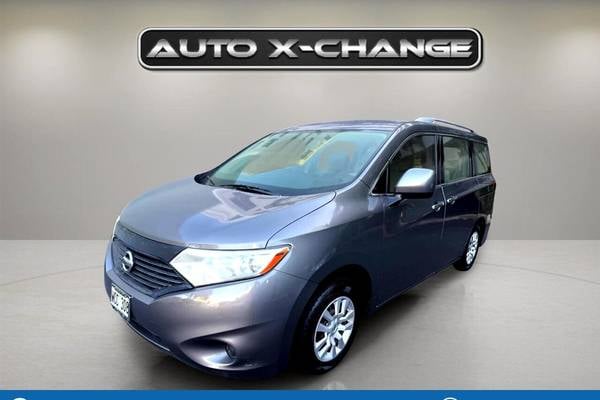
Certified Pre-Owned: No - $11,900good price$1,442 below market
- 91,388 miles
- No accidents, 4 owners, corporate fleet vehicle
- 7 Seats, 20 City / 27 Hwy MPG
- Auto X-Change (Honolulu, HI)
Close
Located in Honolulu, HI / 3,657 miles away from Woodson, TX
Step into luxury with this sleek and stylish 2015 Nissan Quest. With a powerful 3.5 Liter DOHC 6-Cylinder engine under the hood and a smooth Xtronic C...
AutoCheck Vehicle History Summary
Accident Free Vehicle: Yes
Personal Use Only: No
History Provider: AutoCheck
Title Details: Clean Title
Salvage Vehicle: No
Frame Damage: No
Theft History: No
Lemon Status: No
Free History Report: No
Features and Specs:
22 Combined MPG (20 City/27 Highway)
Listing Information:
VIN: JN8AE2KP0F9130896
Stock: 30896
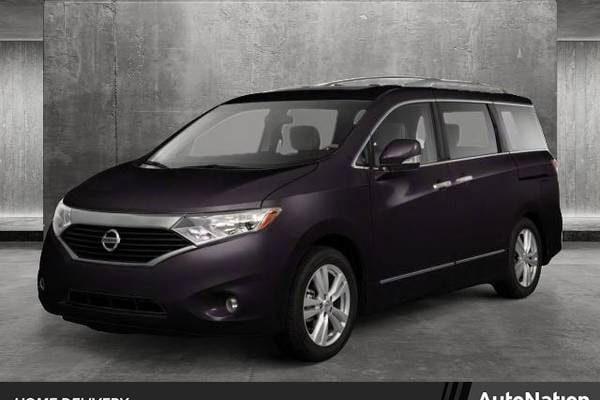
Certified Pre-Owned: No - $6,949fair price$804 below market
- 95,005 miles
- No accidents, 3 owners, personal use only
- 7 Seats, 19 City / 24 Hwy MPG
- AutoNation USA Phoenix (Phoenix, AZ)
Close
Located in Phoenix, AZ / 755 miles away from Woodson, TX
[H01] Dvd Entertainment SystemLeather Seats3rd Row Seat[B94] Roof Rack Cross Bars[L92] Carpeted Floor Mats For 1St; 2Nd; 3Rd RowsKeyless StartRe...
AutoCheck Vehicle History Summary
Accident Free Vehicle: Yes
Personal Use Only: Yes
History Provider: AutoCheck
Title Details: Clean Title
Salvage Vehicle: No
Frame Damage: No
Theft History: No
Lemon Status: No
Free History Report: No
Features and Specs:
21 Combined MPG (19 City/24 Highway)
Listing Information:
VIN: JN8AE2KP7B9007123
Stock: B9007123
Certified Pre-Owned: No
Listed since: 06-08-2025 - New Listing$6,995good price$1,440 below market
- 119,833 miles
- 2 accidents, 2 owners, corporate fleet vehicle
- 7 Seats, 19 City / 24 Hwy MPG
- CarsNowUSA (Monroe, MI)
Close
Located in Monroe, MI / 1,051 miles away from Woodson, TX
GUARANTEED CREDIT The paint is in great shape and condition. The interior was well maintained and is extra clean. The exterior was well maintained and...
AutoCheck Vehicle History Summary
Accident Free Vehicle: No
Personal Use Only: No
History Provider: AutoCheck
Title Details: Clean Title
Salvage Vehicle: No
Frame Damage: No
Theft History: No
Lemon Status: No
Free History Report: No
Features and Specs:
21 Combined MPG (19 City/24 Highway)
Listing Information:
VIN: JN8AE2KP4C9032224
Stock: 1294
Certified Pre-Owned: No
Listed since: 09-17-2024 - Price Drop$10,399good price$1,585 below market
- 89,792 miles
- 1 accident, 2 owners, personal use only
- 7 Seats, 19 City / 25 Hwy MPG
- Bedrock Motors (Rogers, MN)
Close
Located in Rogers, MN / 892 miles away from Woodson, TX
Established in 1975, Bedrock Motors is the Upper Midwest's Largest automobile wholesaler. In the 35 years since we opened our doors, we have developed...
AutoCheck Vehicle History Summary
Accident Free Vehicle: No
Personal Use Only: Yes
History Provider: AutoCheck
Title Details: Clean Title
Salvage Vehicle: No
Frame Damage: No
Theft History: No
Lemon Status: No
Free History Report: Yes
Features and Specs:
21 Combined MPG (19 City/25 Highway)
Listing Information:
VIN: JN8AE2KP0E9104958
Stock: 13487
Certified Pre-Owned: No
Listed since: 06-13-2025 - $3,000good price$2,261 below market
- 149,483 miles
- 1 accident, 4 owners, personal use only
- 7 Seats, 19 City / 24 Hwy MPG
- 518 Auto Sales (Norfolk, VA)
Close
Located in Norfolk, VA / 1,317 miles away from Woodson, TX
*150 POINT INSPECTION*, *3 MO 3000 MILE SERVICE CONTRACT ON MOST CARS SEE SALES FOR DETAILS*, *518AUTO.COM*, *CALL ALEX NOW 757-518-1100 FOR BEST DAIL...
AutoCheck Vehicle History Summary
Accident Free Vehicle: No
Personal Use Only: Yes
History Provider: AutoCheck
Title Details: Clean Title
Salvage Vehicle: No
Frame Damage: No
Theft History: No
Lemon Status: No
Free History Report: No
Features and Specs:
21 Combined MPG (19 City/24 Highway)
Listing Information:
VIN: JN8AE2KPXB9005737
Stock: 8596A
Certified Pre-Owned: No
Listed since: 12-18-2023 - $6,985fair price$225 below market
- 162,672 miles
- No accidents, 1 owner, personal use only
- 7 Seats, 19 City / 25 Hwy MPG
- West Hills Chrysler Dodge Jeep Ram (Bremerton, WA)
Close
Located in Bremerton, WA / 1,589 miles away from Woodson, TX
West Hills Chrysler Jeep is delighted to offer this beautiful-looking 2013 Nissan Quest 3.5 SV. Titanium Beige FWDAt West Hills CJDR, we offer a div...
AutoCheck Vehicle History Summary
Accident Free Vehicle: Yes
Personal Use Only: Yes
History Provider: AutoCheck
Title Details: Clean Title
Salvage Vehicle: No
Frame Damage: No
Theft History: No
Lemon Status: No
Free History Report: No
Features and Specs:
21 Combined MPG (19 City/25 Highway)
Listing Information:
VIN: JN8AE2KP2D9061531
Stock: XJ10779B
Certified Pre-Owned: No
Listed since: 07-27-2025 - New Listing$8,995fair price$215 below market
- 118,000 miles
- No accidents, 3 owners, rental vehicle
- 7 Seats, 20 City / 27 Hwy MPG
- EEE Auto Service & Sales (Cincinnati, OH)
Close
Located in Cincinnati, OH / 918 miles away from Woodson, TX
WWW.EEEAUTOSALES.NET *** 2017 NISSAN QUEST MINIVAN*** CLEAN TITLE; NO ACCIDENTS REPORTED*** BACKUP CAMERA*** VERY CLEAN INTERIOR WITH AM/FM/CD RADIO, ...
AutoCheck Vehicle History Summary
Accident Free Vehicle: Yes
Personal Use Only: No
History Provider: AutoCheck
Title Details: Clean Title
Salvage Vehicle: No
Frame Damage: No
Theft History: No
Lemon Status: No
Free History Report: No
Features and Specs:
22 Combined MPG (20 City/27 Highway)
Listing Information:
VIN: JN8AE2KPXH9165870
Stock: 165870
Certified Pre-Owned: No
Listed since: 04-28-2025 - $8,965fair price$625 below market
- 82,230 miles
- 1 accident, 1 owner, personal use only
- 7 Seats, 19 City / 24 Hwy MPG
- Bruce Bennett Nissan of Danbury (Danbury, CT)
Close
Located in Danbury, CT / 1,515 miles away from Woodson, TX
BACK UP CAMERA, ONE OWNER, 3rd row seats: split-bench, AM/FM/CD Audio System, Fully automatic headlights, Heated front seats, Leather Appointed Seat T...
AutoCheck Vehicle History Summary
Accident Free Vehicle: No
Personal Use Only: Yes
History Provider: AutoCheck
Title Details: Clean Title
Salvage Vehicle: No
Frame Damage: No
Theft History: No
Lemon Status: No
Free History Report: No
Features and Specs:
21 Combined MPG (19 City/24 Highway)
Listing Information:
VIN: JN8AE2KPXC9047343
Stock: SW423060A
Certified Pre-Owned: No
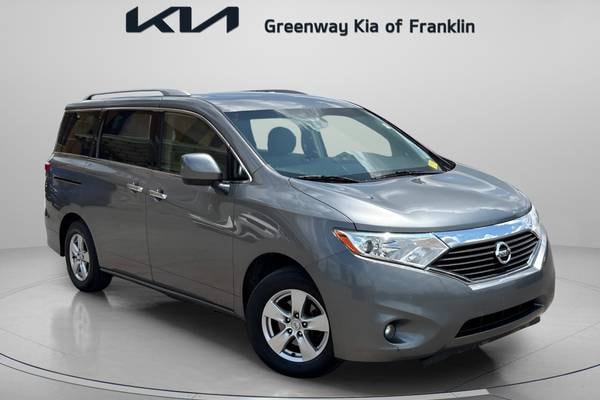
Listed since: 05-31-2025 - Price Drop$9,700fair price$331 above market
- 111,622 miles
- No accidents, 2 owners, rental vehicle
- 7 Seats, 20 City / 27 Hwy MPG
- Greenway Kia of Franklin (Franklin, TN)
Close
Located in Franklin, TN / 725 miles away from Woodson, TX
Clean Carfax. 2017 Nissan Quest 3.5 SV Gun MetallicClean CARFAX.Call 615-224-7973 for your best deal today! This vehicle has been through an extensive...
AutoCheck Vehicle History Summary
Accident Free Vehicle: Yes
Personal Use Only: No
History Provider: AutoCheck
Title Details: Clean Title
Salvage Vehicle: No
Frame Damage: No
Theft History: No
Lemon Status: No
Free History Report: No
Features and Specs:
22 Combined MPG (20 City/27 Highway)
Listing Information:
VIN: JN8AE2KP3H9168884
Stock: H9168884
Certified Pre-Owned: No
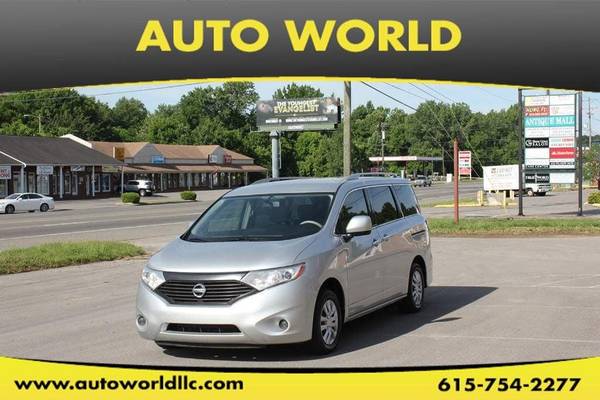
Listed since: 07-28-2025 - $11,950fair price$904 above market
- 89,002 miles
- 1 accident, 3 owners, corporate fleet vehicle
- 7 Seats, 20 City / 27 Hwy MPG
- Auto World of Nashville (Old Hickory, TN)
Close
Located in Old Hickory, TN / 742 miles away from Woodson, TX
This 2016 Nissan Quest 4dr 4dr S features a 3.5L V6 DOHC 24V 6cyl Gasoline engine. It is equipped with a Automatic transmission. The vehicle is Brilli...
AutoCheck Vehicle History Summary
Accident Free Vehicle: No
Personal Use Only: No
History Provider: AutoCheck
Title Details: Clean Title
Salvage Vehicle: No
Frame Damage: No
Theft History: No
Lemon Status: No
Free History Report: No
Features and Specs:
23 Combined MPG (20 City/27 Highway)
Listing Information:
VIN: JN8AE2KP7G9151391
Stock: 151391
Certified Pre-Owned: No
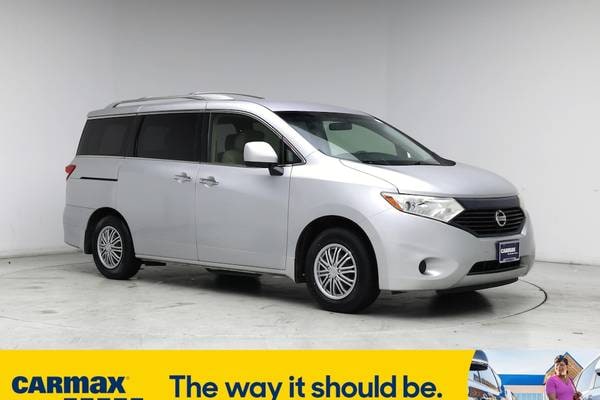
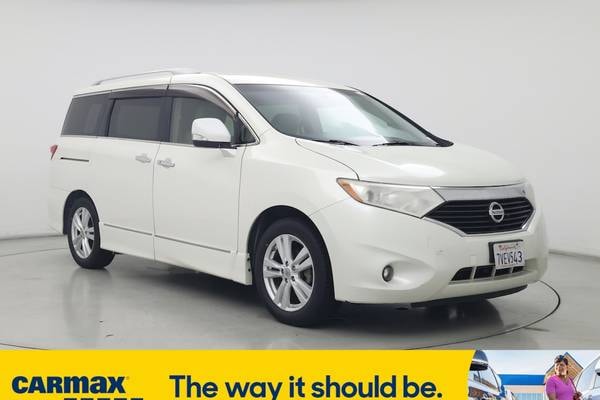
Listed since: 06-04-2022 - New Listing$14,998fair price$541 above market
- 81,570 miles
- 1 accident, 3 owners, corporate fleet vehicle
- 7 Seats, 20 City / 27 Hwy MPG
- CarMax Renton (Renton, WA)
Close
Located in Renton, WA / 1,566 miles away from Woodson, TX
CarMax values transparency and wants you to love your next car, not settle on it. Certain vehicles may have unrepaired safety recalls. Check nhtsa.gov...
AutoCheck Vehicle History Summary
Accident Free Vehicle: No
Personal Use Only: No
History Provider: AutoCheck
Title Details: Clean Title
Salvage Vehicle: No
Frame Damage: No
Theft History: No
Lemon Status: No
Free History Report: No
Features and Specs:
22 Combined MPG (20 City/27 Highway)
Listing Information:
VIN: JN8AE2KP4F9128066
Stock: 27195663
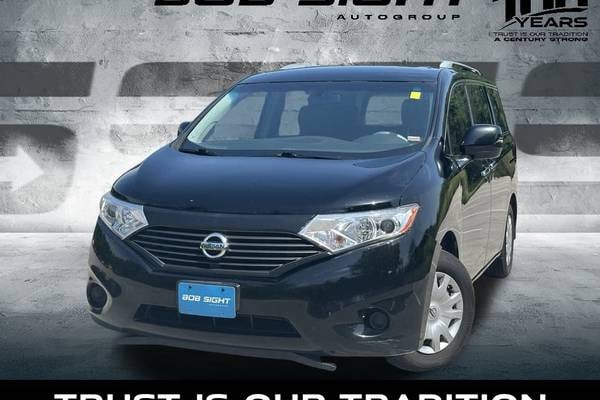
Certified Pre-Owned: No - 186,907 miles
- No accidents, 2 owners, personal use only
- 7 Seats, 19 City / 25 Hwy MPG
- Bob Sight Independence Kia (Independence, MO)
Close
Located in Independence, MO / 492 miles away from Woodson, TX
Super Black 2014 Nissan Quest 3.5 S FWD CVT 3.5L V6 DOHC 24V CLEAN VEHICLE HISTORY, LOCAL TRADE IN, PUSH TO START, REAR CLIMATE PACKAGE, 16" x 6.5" St...
AutoCheck Vehicle History Summary
Accident Free Vehicle: Yes
Personal Use Only: Yes
History Provider: AutoCheck
Title Details: Clean Title
Salvage Vehicle: No
Frame Damage: No
Theft History: No
Lemon Status: No
Free History Report: Yes
Features and Specs:
21 Combined MPG (19 City/25 Highway)
Listing Information:
VIN: JN8AE2KP7E9101183
Stock: 772229A
Certified Pre-Owned: No
Listed since: 06-30-2025- 82,983 miles
- Frame damage reported, 5 owners, corporate fleet vehicle
- 7 Seats, 20 City / 27 Hwy MPG
- Drive Simple NJ (South Plainfield, NJ)
Close
Located in South Plainfield, NJ / 1,454 miles away from Woodson, TX
2016 Nissan Quest SV 118.1"" WB 82,983 MilesHigh Value Options 3rd Row Seat Back-up Camera Bluetooth Connection Climate Control Fog Lamps Key...
AutoCheck Vehicle History Summary
Accident Free Vehicle: No
Personal Use Only: No
History Provider: AutoCheck
Title Details: Issue reported
Salvage Vehicle: No
Frame Damage: Yes
Theft History: No
Lemon Status: No
Free History Report: No
Features and Specs:
23 Combined MPG (20 City/27 Highway)
Listing Information:
VIN: JN8AE2KP9G9153756
Stock: 1851
Certified Pre-Owned: No
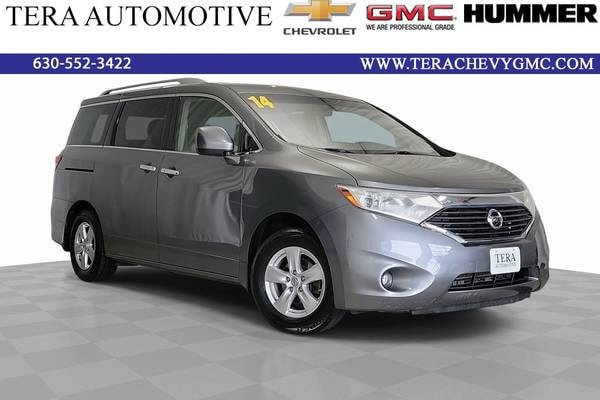
Listed since: 10-10-2024- 117,027 miles
- No accidents, 2 owners, corporate fleet vehicle
- 7 Seats, 19 City / 25 Hwy MPG
- Gjovik Chevrolet Buick GMC (Sandwich, IL)
Close
Located in Sandwich, IL / 827 miles away from Woodson, TX
Recent Arrival! 2014 Nissan Quest 3.5 SV Gun Metallic *BLUETOOTH, USB PORT, Clean CARFAX, 3rd row seats: split-bench, 4-Wheel Disc Brakes, 6 Speakers,...
AutoCheck Vehicle History Summary
Accident Free Vehicle: Yes
Personal Use Only: No
History Provider: AutoCheck
Title Details: Clean Title
Salvage Vehicle: No
Frame Damage: No
Theft History: No
Lemon Status: No
Free History Report: No
Features and Specs:
21 Combined MPG (19 City/25 Highway)
Listing Information:
VIN: JN8AE2KP6E9103894
Stock: P7337A
Certified Pre-Owned: No
Listed since: 07-23-2025- 113,313 miles
- No accidents, 2 owners, rental vehicle
- 7 Seats, 20 City / 27 Hwy MPG
- KWS Auto Sales (San Antonio, TX)
Close
Located in San Antonio, TX / 242 miles away from Woodson, TX
SPACIOUS VAN- FOLD- AWAY THIRD ROW!! Alloy Wheels, Bluetooth Technology, Cloth Seats, Quad Seats, Rear Air Conditioning, Rear View Camera, ABS Brakes,...
AutoCheck Vehicle History Summary
Accident Free Vehicle: Yes
Personal Use Only: No
History Provider: AutoCheck
Title Details: Clean Title
Salvage Vehicle: No
Frame Damage: No
Theft History: No
Lemon Status: No
Free History Report: No
Features and Specs:
22 Combined MPG (20 City/27 Highway)
Listing Information:
VIN: JN8AE2KPXH9169773
Stock: 10673
Certified Pre-Owned: No
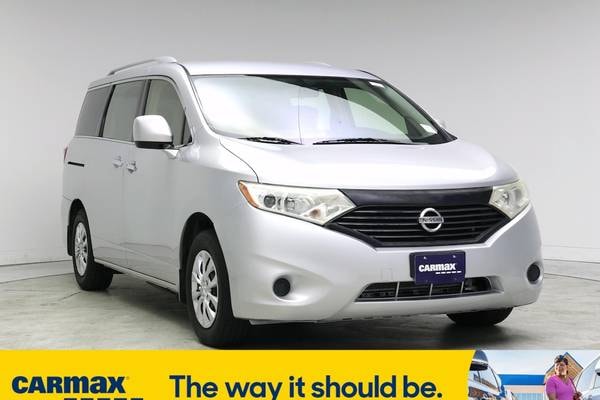
Listed since: 04-14-2025- 84,901 miles
- No accidents, 3 owners, personal use only
- 7 Seats, 19 City / 25 Hwy MPG
- CarMax Riverside (Riverside, CA)
Close
Located in Riverside, CA / 1,058 miles away from Woodson, TX
CarMax values transparency and wants you to love your next car, not settle on it. Certain vehicles may have unrepaired safety recalls. Check nhtsa.gov...
AutoCheck Vehicle History Summary
Accident Free Vehicle: Yes
Personal Use Only: Yes
History Provider: AutoCheck
Title Details: Clean Title
Salvage Vehicle: No
Frame Damage: No
Theft History: No
Lemon Status: No
Free History Report: Yes
Features and Specs:
21 Combined MPG (19 City/25 Highway)
Listing Information:
VIN: JN8AE2KP0E9107407
Stock: 27675498
Certified Pre-Owned: No- 51,902 miles
- No accidents, 2 owners, personal use only
- 7 Seats, 19 City / 25 Hwy MPG
- CarMax Murrieta (Murrieta, CA)
Close
Located in Murrieta, CA / 1,047 miles away from Woodson, TX
CarMax values transparency and wants you to love your next car, not settle on it. Certain vehicles may have unrepaired safety recalls. Check nhtsa.gov...
AutoCheck Vehicle History Summary
Accident Free Vehicle: Yes
Personal Use Only: Yes
History Provider: AutoCheck
Title Details: Clean Title
Salvage Vehicle: No
Frame Damage: No
Theft History: No
Lemon Status: No
Free History Report: Yes
Features and Specs:
21 Combined MPG (19 City/25 Highway)
Listing Information:
VIN: JN8AE2KP4E9108334
Stock: 27455735
Certified Pre-Owned: No- New Listing
- 60,810 miles
- No accidents, personal use only
- 7 Seats, 20 City / 27 Hwy MPG
- CarMax Brandywine (Brandywine, MD)
Close
Located in Brandywine, MD / 1,299 miles away from Woodson, TX
CarMax values transparency and wants you to love your next car, not settle on it. Certain vehicles may have unrepaired safety recalls. Check nhtsa.gov...
AutoCheck Vehicle History Summary
Accident Free Vehicle: Yes
Personal Use Only: Yes
History Provider: AutoCheck
Title Details: Clean Title
Salvage Vehicle: No
Frame Damage: No
Theft History: No
Lemon Status: No
Free History Report: Yes
Features and Specs:
22 Combined MPG (20 City/27 Highway)
Listing Information:
VIN: JN8AE2KP1F9134147
Stock: 27517658
Certified Pre-Owned: No - Price Drop
- 61,591 miles
- No accidents, 3 owners, corporate fleet vehicle
- 7 Seats, 20 City / 27 Hwy MPG
- GB Auto (Portland, OR)
Close
Located in Portland, OR / 1,523 miles away from Woodson, TX
2015 NISSAN QUEST 3.5 SV - Spacious, Comfortable, Family-Ready VanVIN: JN8AE2KP6F9126237Body Style: MinivanEngine: 3.5L V6 DOHC 24V - GasolineDrivetra...
AutoCheck Vehicle History Summary
Accident Free Vehicle: Yes
Personal Use Only: No
History Provider: AutoCheck
Title Details: Clean Title
Salvage Vehicle: No
Frame Damage: No
Theft History: No
Lemon Status: No
Free History Report: No
Features and Specs:
22 Combined MPG (20 City/27 Highway)
Listing Information:
VIN: JN8AE2KP6F9126237
Stock: 126237
Certified Pre-Owned: No







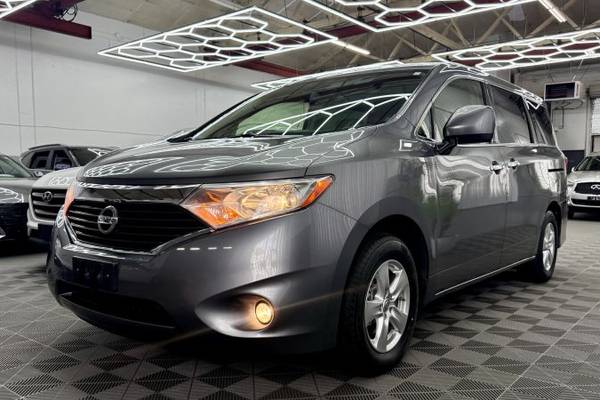
Showing 1 - 21 out of 337 listings
Consumer Reviews for the Nissan Quest
Read recent reviews for the Nissan Quest
Great van
Katie Sockey, 01/14/2025
2017 Nissan Quest
Although often classified as a mini van it has as much room as the old full size vans I have owned. The 2017 has lots of room. Gets great gas mileage for a big van. Have never had any major problems in the 125,000 miles I have driven it.
More about the Nissan Quest
Edmunds has 337 Used Nissan Quests for sale near you, including a 2011 Quest S Minivan and a 2015 Quest SV Minivan ranging in price from $3,000 to $17,998.
How much is the used Nissan Quest?
- There are 337 used Nissan Quest vehicles for sale near you, with an average cost of $10,091.Edmunds found one or more Good deals on a used Nissan Quest near you, starting at $3,000.That's $7,091 less than the average price of a used Quest near you.
Is the used Nissan Quest a good car?
- The used Nissan Quest received an average score of 4.3 out of 5 based on 1,118 consumer reviews at Edmunds. If you want to learn more about the Nissan Quest, read Edmunds' expert review.