


PHOTOS
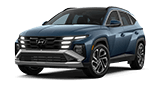
2007 Dodge Caliber
(Enlarge photo)
The '07 Dodge Caliber features some of the newest safety technology available, including EARS, a system that makes it easier for emergency workers to get to you in the event of an accident. (Photo courtesy of Dodge/DaimlerChrysler Corporation)

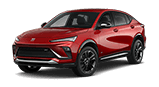
2006 Porsche Cayenne
(Enlarge photo)
Standard equipment on every Porsche, including the Cayenne, includes occupant- and weight-sensing airbags. They are designed for safer deployment when the seat is occupied with a smaller adult or child. (Photo courtesy of Porsche Cars North America, Inc.)

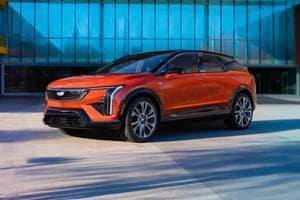
Mercedes-Benz
(Enlarge photo)
Mercedes-Benz offers Active Curve Illumination Bi-Xenon headlights as standard technology on the S-Class (and optional on other models), which changes the shape of the light beam for improved vision around curves. (Photo courtesy of Mercedes-Benz)

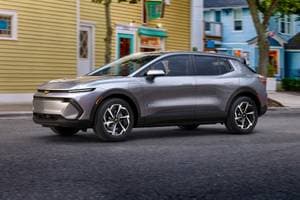
Audi Q7
(Enlarge photo)
The Audi Q7 4.2 Side Assist has radar sensors that keep an eye on the side and rear. It warns you of an approaching vehicle when changing lanes via a flashing light in the exterior mirror. (Photo courtesy of Audi USA)

Volvo XC90
(Enlarge photo)
Early Volvo crash testing. The Roll-Over Protection System was developed as a standard feature for the XC90, which works in conjunction with stability and traction control to lessen the possibility of a rollover. (Photo courtesy of Volvo Cars/Ford Motor Company)

BMW
(Enlarge photo)
The BMW night-vision system uses a high-contrast image (Far Infra-Red technology, or FIR) to detect people and animals, possibly giving you up to 5 seconds of warning at a speed of 62 mph. (Photo courtesy of BMW North America, Inc.)

Top 10 Lists

Top 10 High-Tech Car Safety Technologies
By Tori Tellem, Contributor
Email

It's just a fact of life — we are living longer. And it's not just because of tofu, sunscreen and medical breakthroughs. Automakers are to thank (or curse) for this as much as doctors, since they are competitively blending performance and creature comforts with cutting-edge safety technology that tries to stay one step ahead of you — and everyone else on the road.

While pedestrian-friendly bumpers and cars that can drive themselves may seem like the faraway future of automotive safety, so did many of the features that are now industry standards for this year's models. It makes us wonder if the Jeep Grand Cherokee Concierge concept from 2002 — with an integrated heart defibrillator — might catch on as part of the next wave of safety.

Below are our top 10 choices for safety technologies.

  1. Tire-pressure monitoring
    The National Highway Traffic Safety Administration has required that all U.S. passenger vehicles weighing 10,000 pounds or less be equipped with a tire-pressure monitoring system by the 2008 model year. But it's already a safety feature in most new autos. (For example, BMW offers this as standard equipment on all of its models.) Sensors at the wheels are able to alert you if the air pressure is too low by an audible warning, a light on the instrument panel, or both. You may also see more cars with run-flat tires (the Corvette, among the current offerings), which allow a vehicle to continue to run at a relatively high rate of speed for 50-plus miles.

  2. Adaptive cruise control/collision mitigation
    Modern cruise control goes beyond just maintaining a constant speed. Thanks to sensors and the use of radar, cruise control can now adjust the throttle and brakes to keep a safe distance from the vehicle in front of you if there are changes in traffic speed or if a slowpoke cuts in. If the system senses a potential collision, it typically will brake hard and tighten the seatbelts. Once it knows the lane is clear or traffic has sped up, it will return your car to its original cruising speed, all without your input. Of course, you may override the system by touching the brakes. The Mercedes-Benz and Maybach systems go by a less obvious name: Distronic.

  3. Blind-spot detection/side assist/collision warning
    This technology is designed to alert you to cars or objects in your blind spot during driving or parking, or both. Usually it will respond when you put on your turn signal; if it detects something in the way, it may flash a light in your mirror, cause the seat or steering wheel to vibrate, or sound an alarm. This is more of a short-range detection system.

  4. Lane-departure warning/wake-you-up safety
    This is similar to blind-spot/side-assist technology but with more range. It judges an approaching vehicle's speed and distance to warn you of potential danger if you change lanes. It can also warn if it determines your car is wandering out of the lane, which could be useful if you become distracted. This could come in the form of a vibration through the seat or steering wheel, or an alarm. Down the road expect lane-departure warning to even be able to monitor body posture, head position and eye activity to decide if the driver is falling asleep and the vehicle is behaving erratically. At that point, the system may even be capable of slowing the car down and engaging stability control. Just in case.

  5. Rollover prevention/mitigation
    Most automakers offer an electronic stability control system, and some offer a preparation system (seatbelts tighten, rollbars extend). However, what we're talking about is more intelligent than that. If the system senses a potential rollover (such as if you whip around a corner too fast or swerve sharply), it will apply the brakes and modulate throttle as needed to help you maintain control. DaimlerChrysler calls it Electronic Roll Mitigation, Ford named it Roll Stability Control, and GM's is Proactive Roll Avoidance. Range Rover's is Active Roll Mitigation, while Volvo's is called Roll-Over Protection System. But they all have the same goal.

  6. Occupant-sensitive/dual-stage airbags
    All humans are not created equal, and airbags are evolving to compensate in the form of low-risk, multistage and occupant-sensitive deployment. Technology can now sense the different sizes and weights of occupants as well as seatbelt usage, abnormal seating position (such as reaching for the radio or bending to pick something off the floor), rear-facing child seats and even vehicle speed. While driver, passenger and side curtain airbags are nothing new, sensing airbags are popping up (so to speak) everywhere.

  7. Emergency brake assist/collision mitigation
    This brake technology is different from an antilock braking system or electronic brakeforce distribution, in that it recognizes when the driver makes a panic stop (a quick shift from gas to brake pedal) and will apply additional brake pressure to help shorten the stopping distance. It may also work in conjunction with the smart cruise control or stability control system in some vehicles if it senses a potential collision. It is often called brake assist, although BMW, for example, refers to it as Dynamic Brake Control.

  8. Adaptive headlights and/or night-vision assist
    Night vision can be executed in different forms, such as infrared headlamps or thermal-imaging cameras. But no matter the science, the goal is the same: to help you see farther down the road and to spot animals, people or trees in the path — even at nearly 1,000 feet away. An image is generated through a cockpit display, brightening the objects that are hard to see with the naked eye. Adaptive headlights follow the direction of the vehicle (bending the light as you go around corners). They may also be speed-sensitive (changing beam length or height), or compensate for ambient light.

  9. Rearview camera
    Rearview cameras not only protect your car, but also protect children and animals from accidental back-overs. Backing up your car has graduated from side mirrors tilting down or causing chirps and beeps to real-time viewing. New-school tech involves a camera that works with the navigation system to provide a wide-open shot of what's happening behind you to help with parking or hooking up a trailer.

  10. Emergency response
    There are a variety of ways vehicles now and in the future will handle an emergency situation. For example, DaimlerChrysler's Enhanced Accident Response System (EARS) turns on interior lighting, unlocks doors and shuts off fuel when airbags deploy, while Volkswagen's also switches on the hazards and disconnects the battery terminal from the alternator. In addition, GM's OnStar and BMW Assist both alert their respective response centers of the accident and make crash details available to emergency personnel.


Advertisement

Advertisement