
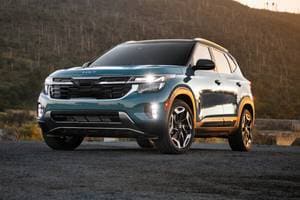
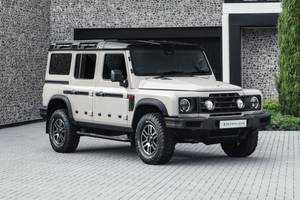
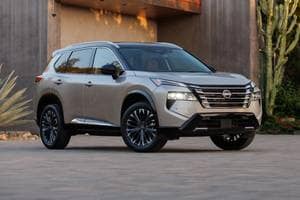
They are the best of vehicles, they are the worst of vehicles. Perhaps at no other time in automotive history has a means of transportation been subject to such polarized views. The quasi-religious fanatical defense that inevitably arises from champions supposedly defines a lifestyle; spittle-flying vilification by detractors further characterizes an identity.
We're talking, of course, about sport utility vehicles. At some point in the last decade it became a citizenship requirement to own one; sales have trebled since 1990. Frankly, I blame O.J. That low-speed chase did more than any governmental crash test to convince America of a hypothetical sense of invulnerability that the occupants of an SUV enjoy.
Love 'em or hate 'em, SUVs comprised approximately one-fifth of all new vehicle purchases in 1999, and the trend barely seems to show signs of dissipating. Car companies love 'em -- light trucks are the biggest profit makers in the industry. Purchase an Expedition and you've just plunked about $7,000 into Ford's gorged pockets; they're not gonna stop building SUVs anytime soon, no matter how much Bill Ford Jr. hates them. You're going to have to share the road with them, so you can either bitterly complain or join in the fun.
For the edification of the latter, we gathered up eight of the best-selling trucks in the mid-sized category (defined by Edmunds.com as having 70-90 cubic feet of cargo space with the rear seat folded) selling for under $40,000 MSRP: the Chevy Blazer, the Dodge Durango, the Ford Explorer, the Honda Passport, the Jeep Grand Cherokee, the Mitsubishi Montero Sport, the Nissan Pathfinder and the Toyota 4Runner. Luxury-brand vehicles were not considered for this test. Some are stalwarts in the class, while others are newcomers. Most had a six-cylinder powerplant, with the exception of the V8 in the Dodge Durango. All had 4WD capabilities and anti-lock brakes. Depending on availability, they had various trim levels, ranging from the acetic to the sumptuous. The Grand Cherokee and the Durango were not even press vehicles; they were rented from our friends at Event Vehicles because Chrysler was unable to provide us with press vehicles the week of our test. All are 2000 models with the exception of the 2001 Pathfinder, but as none of the others are getting any major changes for 2001, we felt that it was still a fair comparison.
We pondered upon the qualities that comprise a good SUV. First and foremost, we considered their seminal utilitarian purposes: their ground clearance, their towing ability, their cargo space, their 4WD capabilities. However, as consumers are increasingly using SUVs as their primary mode of transportation, it was also necessary to take into account the handling, ride and comfort characteristics of the vehicles in order to gauge their everyday livability. While a truck's configuration and bulk will never equal the nimbleness and agility of a car, we believe that some are more command-friendly than others.
We subjected the trucks to a multi-faceted evaluation process, including a 55-mile test loop covering various street surfaces and elevations, crashworthiness, whether or not they have the features that we consider important in an SUV, the truck's appeal to the editors as personal buys or something they would recommend to a friend or family member, and the value they provide for the money doled out. We also spent a day at a designated off-road park testing their rock-crawling prowess. To get more details on each vehicle's off-pavement performance, click on the link at the bottom of the review.
While we were unable to perform any snow-treading or trail-hauling evaluations, we feel that our test fairly evaluates the trucks for the purposes of the vast majority of consumers who purchase SUVs.
In the end, we've determined that the best SUVs successfully mate a functionality that belies their utilitarian nature while sacrificing few of the comforts of driving a car. We found that there could be a harmonious relationship between the two, and in this respect, we had a clear winner, and some clear losers.