Skip to FiltersReport abuse
26,451 listings
- $2,450good price$1,824 below market
- 272,185 miles
- 1 accident, 5 owners, personal use only
- 21 City / 27 Hwy MPG, Manual
- Tim's Truck Capital (Epsom, NH)
Close
Located in Epsom, NH / 1,294 miles away from Rutland, ND
** WHOLESALE SPECIAL ** Check out this Great Deal at " AS - IS " Wholesale Pricing!! We need to make room and for a Select Time, Limited Amounts of ou...
AutoCheck Vehicle History Summary
Accident Free Vehicle: No
Personal Use Only: Yes
History Provider: AutoCheck
Title Details: Clean Title
Salvage Vehicle: No
Frame Damage: No
Theft History: No
Lemon Status: No
Free History Report: No
Features and Specs:
23 Combined MPG (21 City/27 Highway)
Listing Information:
VIN: JT3GP10V6Y0048596
Stock: ZC3625B
Certified Pre-Owned: No
Listed since: 06-18-2025 - New Listing$7,988fair price
- 126,133 miles
- No accidents, 3 owners, personal use only
- 21 City / 27 Hwy MPG, Manual
- AutoNation Hyundai Corpus Christi (Corpus Christi, TX)
Close
Located in Corpus Christi, TX / 1,268 miles away from Rutland, ND
This vehicle includes a Money-Back Guarantee* and passed our precise inspection process. Best of all the price you see is the price you pay. No haggli...
AutoCheck Vehicle History Summary
Accident Free Vehicle: Yes
Personal Use Only: Yes
History Provider: AutoCheck
Title Details: Clean Title
Salvage Vehicle: No
Frame Damage: No
Theft History: No
Lemon Status: No
Free History Report: No
Features and Specs:
23 Combined MPG (21 City/27 Highway)
Listing Information:
VIN: JT3GP10V7Y0052026
Stock: Y0052026
Certified Pre-Owned: No
Listed since: 07-05-2025 - 186,793 miles
- 2 accidents, 5 owners, personal use only
- 5 Seats, 21 City / 26 Hwy MPG
- Autosource Hawaii (Honolulu, HI)
Close
Located in Honolulu, HI / 3,762 miles away from Rutland, ND
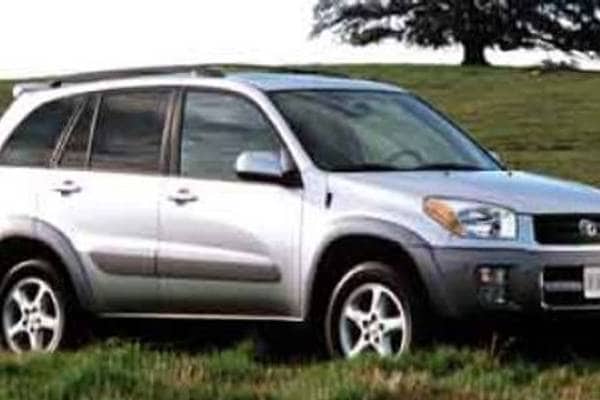
Step into the world of reliability and versatility with this classic 2001 Toyota RAV4 Base, a compact SUV that has stood the test of time, offering th...
AutoCheck Vehicle History Summary
Accident Free Vehicle: No
Personal Use Only: Yes
History Provider: AutoCheck
Title Details: Clean Title
Salvage Vehicle: No
Frame Damage: No
Theft History: No
Lemon Status: No
Free History Report: No
Features and Specs:
23 Combined MPG (21 City/26 Highway)
Listing Information:
VIN: JTEGH20VX10020798
Stock: A000864
Certified Pre-Owned: No- Not Priced
- 326,533 miles
- No accidents, 4 owners, personal use only
- 21 City / 27 Hwy MPG, Manual
- A & R Used Cars (Clayton, NJ)
Close
Located in Clayton, NJ / 1,212 miles away from Rutland, ND
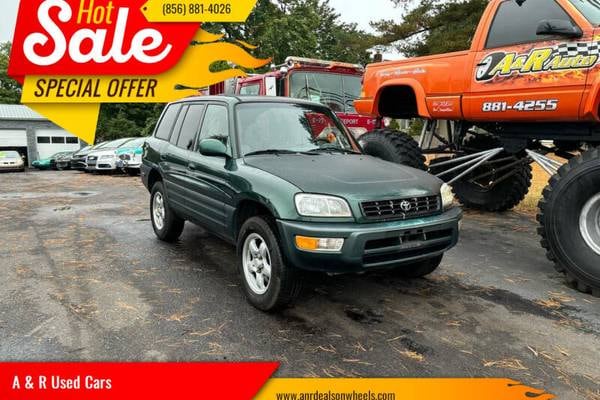
WELCOME TO COME SEE! PLEASE READ BEFORE-CONTACTING A&R WE DO NOT OFFER ANY FINANCING ONLY CASH / DEBIT CARD / CREDIT CARD 2000 TOYOTA RAV4 VIN: JT3GP1...
AutoCheck Vehicle History Summary
Accident Free Vehicle: Yes
Personal Use Only: Yes
History Provider: AutoCheck
Title Details: Clean Title
Salvage Vehicle: No
Frame Damage: No
Theft History: No
Lemon Status: No
Free History Report: No
Features and Specs:
23 Combined MPG (21 City/27 Highway)
Listing Information:
VIN: JT3GP10V1Y7068083
Stock: 068083
Certified Pre-Owned: No
Listed since: 09-10-2024 - New Listing
- 161,549 miles
- No accidents, 1 owner, personal use only
- 19 City / 23 Hwy MPG, Manual
- Good Guys Used Cars (Olympia, WA)
Close
Located in Olympia, WA / 1,202 miles away from Rutland, ND
*** ONE-OWNER VEHICLE *** Every vehicle is safety inspected by ASE certified mechanics, and professionally steam cleaned. We buy local trade-ins from ...
AutoCheck Vehicle History Summary
Accident Free Vehicle: Yes
Personal Use Only: Yes
History Provider: AutoCheck
Title Details: Clean Title
Salvage Vehicle: No
Frame Damage: No
Theft History: No
Lemon Status: No
Free History Report: No
Features and Specs:
21 Combined MPG (19 City/23 Highway)
Listing Information:
VIN: JT3HP10V2Y0235337
Stock: 235337
Certified Pre-Owned: No
Listed since: 07-01-2025 - Not Priced
- 132,754 miles
- No accidents, 3 owners, personal use only
- 5 Seats, 20 City / 25 Hwy MPG
- Mt Morris Auto Sales (Mt Morris, MI)
Close
Located in Mt Morris, MI / 708 miles away from Rutland, ND
If you want a small-to-mid-size sport utility vehicle that combines car-like performance, ride, handling and fuel economy with four-wheel drive and ro...
AutoCheck Vehicle History Summary
Accident Free Vehicle: Yes
Personal Use Only: Yes
History Provider: AutoCheck
Title Details: Clean Title
Salvage Vehicle: No
Frame Damage: No
Theft History: No
Lemon Status: No
Free History Report: No
Features and Specs:
22 Combined MPG (20 City/25 Highway)
Listing Information:
VIN: JTEHH20V916008868
Stock: 008868
Certified Pre-Owned: No
Listed since: 05-30-2025 - $3,488good price$1,131 below market
- 220,000 miles
- No accidents, 2 owners, personal use only
- 5 Seats, 21 City / 26 Hwy MPG
- Pinellas Auto Brokers (Saint Petersburg, FL)
Close
Located in Saint Petersburg, FL / 1,496 miles away from Rutland, ND
**STUNNING AND SPORTY!**** THIS RAV4 IS AMAZING!*****LOADED WITH TONS OF POWER FEATURES!****ICE COLD AC!***FANTASTIC "CUSTOM JVC" FLAT-SCREEN SOUND...
AutoCheck Vehicle History Summary
Accident Free Vehicle: Yes
Personal Use Only: Yes
History Provider: AutoCheck
Title Details: Clean Title
Salvage Vehicle: No
Frame Damage: No
Theft History: No
Lemon Status: No
Free History Report: No
Features and Specs:
23 Combined MPG (21 City/26 Highway)
Listing Information:
VIN: JTEGH20V510028839
Stock: 028839
Certified Pre-Owned: No
Listed since: 06-14-2025 - $4,550fair price$1,294 below market
- 165,711 miles
- No accidents, 2 owners, personal use
- 21 City / 27 Hwy MPG, Manual
- Hi5 Auto (Fremont, CA)
Close
Located in Fremont, CA / 1,385 miles away from Rutland, ND
1999 Toyota RAV4 *Clean Title *Mileage: 165,711 Miles *Runs Excellent *Smog Just Passed *Made In Japan It Features: -4-Cly, 2.0 Liter Engine -Automa...
AutoCheck Vehicle History Summary
Accident Free Vehicle: Yes
Personal Use Only: Yes
History Provider: AutoCheck
Title Details: Clean Title
Salvage Vehicle: No
Frame Damage: No
Theft History: No
Lemon Status: No
Free History Report: No
Features and Specs:
23 Combined MPG (21 City/27 Highway)
Listing Information:
VIN: JT3GP10V5X0039855
Stock: 039855
Certified Pre-Owned: No
Listed since: 06-22-2025 - $4,500fair price$197 below market
- 211,499 miles
- 1 accident, 9 owners, personal use only
- 5 Seats, 20 City / 25 Hwy MPG
- Driver's Source (Kentwood, MI)
Close
Located in Kentwood, MI / 623 miles away from Rutland, ND
2001 Toyota RAV4 Sport Utility 4D211,499 MILESDRIVER'S SOURCE, LLC 4822 Division Ave S, Kentwood, MI 49548(6**) 8**-3***
AutoCheck Vehicle History Summary
Accident Free Vehicle: No
Personal Use Only: Yes
History Provider: AutoCheck
Title Details: Clean Title
Salvage Vehicle: No
Frame Damage: No
Theft History: No
Lemon Status: No
Free History Report: No
Features and Specs:
22 Combined MPG (20 City/25 Highway)
Listing Information:
VIN: JTEHH20V810055652
Stock: K1137
Certified Pre-Owned: No
Listed since: 11-01-2024 - $10,500
- 78,956 miles
- No accidents, 1 owner, personal use only
- 5 Seats, 20 City / 25 Hwy MPG
- www.411carline.com (Hopkins, MN)
Close
Located in Hopkins, MN / 212 miles away from Rutland, ND
We are open for normal business hours 10:30AM to 6PM Monday through Friday and 10:30AM to 3PM Saturdays. We are by appointment during those hours so p...
AutoCheck Vehicle History Summary
Accident Free Vehicle: Yes
Personal Use Only: Yes
History Provider: AutoCheck
Title Details: Clean Title
Salvage Vehicle: No
Frame Damage: No
Theft History: No
Lemon Status: No
Free History Report: No
Features and Specs:
22 Combined MPG (20 City/25 Highway)
Listing Information:
VIN: JTEHH20VX10103152
Stock: 24412
Certified Pre-Owned: No
Listed since: 04-23-2025 - 160,784 miles
- No accidents, 3 owners, personal use only
- 5 Seats, 20 City / 25 Hwy MPG, Manual
- RossCo Auto Sales (Cedar Rapids, IA)
Close
Located in Cedar Rapids, IA / 403 miles away from Rutland, ND
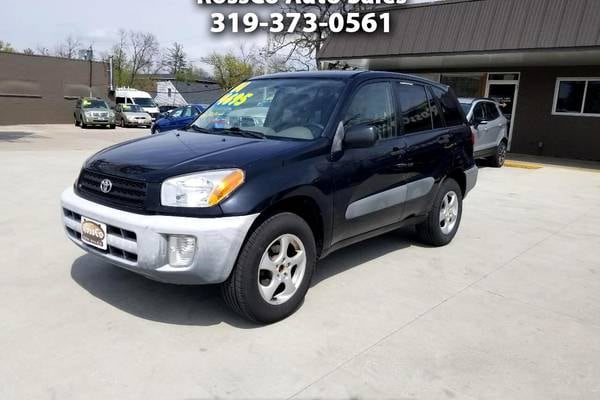
Free Carfax Reports on all of our Vehicles! Visit RossCo Auto Sales online at www.rosscoautosales.com to view more photos and information about this...
AutoCheck Vehicle History Summary
Accident Free Vehicle: Yes
Personal Use Only: Yes
History Provider: AutoCheck
Title Details: Clean Title
Salvage Vehicle: No
Frame Damage: No
Theft History: No
Lemon Status: No
Free History Report: No
Features and Specs:
22 Combined MPG (20 City/25 Highway)
Listing Information:
VIN: JTEHH20V510035570
Stock: 11291
Certified Pre-Owned: No
Listed since: 04-23-2025- 246,033 miles
- No accidents, 4 owners, personal use only
- 19 City / 24 Hwy MPG, Manual
- Empire Auto Sales (SD) (Sioux Falls, SD)
Close
Located in Sioux Falls, SD / 178 miles away from Rutland, ND
Highway miles on this Older Rav-4 AWD, but it drives and runs great. It's a low price for a good smaller SUV, and it's a Toyota! Has a Sunroof and all...
AutoCheck Vehicle History Summary
Accident Free Vehicle: Yes
Personal Use Only: Yes
History Provider: AutoCheck
Title Details: Clean Title
Salvage Vehicle: No
Frame Damage: No
Theft History: No
Lemon Status: No
Free History Report: No
Features and Specs:
21 Combined MPG (19 City/24 Highway)
Listing Information:
VIN: JT3HP10V7V7067066
Stock: 3246
Certified Pre-Owned: No
Listed since: 06-21-2025- $12,990
- 153,140 miles
- No accidents, 1 owner, personal use only
- 5 Seats, 20 City / 25 Hwy MPG, Manual
- Urban Motors Blue (Denver, CO)
Close
Located in Denver, CO / 576 miles away from Rutland, ND
2003 Toyota Rav4 Sport 4WD w/ 5-Spd Manual. Only 1 Colorado Owner! No Accident Carfax History. Sunroof/Moonroof. Passed 105-Point Comprehensive Insp...
AutoCheck Vehicle History Summary
Accident Free Vehicle: Yes
Personal Use Only: Yes
History Provider: AutoCheck
Title Details: Clean Title
Salvage Vehicle: No
Frame Damage: No
Theft History: No
Lemon Status: No
Free History Report: No
Features and Specs:
22 Combined MPG (20 City/25 Highway)
Listing Information:
VIN: JTEHH20V130251676
Stock: 54521
Certified Pre-Owned: No
Listed since: 03-06-2025 - 185,621 miles
- No accidents, 5 owners, corporate fleet vehicle
- 5 Seats, 20 City / 25 Hwy MPG
- 6 Stars Auto Sales (Chicago, IL)
Close
Located in Chicago, IL / 563 miles away from Rutland, ND
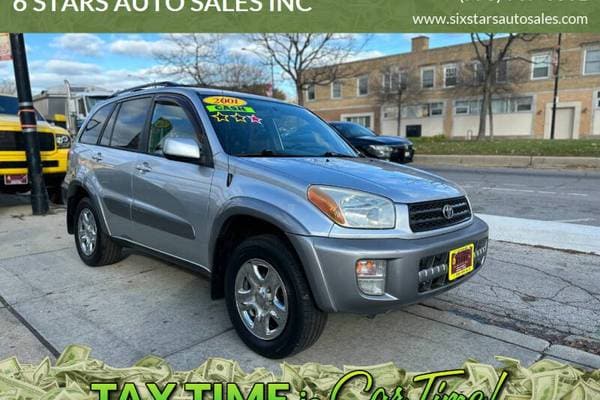
5 Owners clean title, 2001 Toyota Rav4 awd. Engine and Transmission work great with 3,000 miles / 3 Months powertrain warranty. Power windows, power l...
AutoCheck Vehicle History Summary
Accident Free Vehicle: Yes
Personal Use Only: No
History Provider: AutoCheck
Title Details: Clean Title
Salvage Vehicle: No
Frame Damage: No
Theft History: No
Lemon Status: No
Free History Report: No
Features and Specs:
22 Combined MPG (20 City/25 Highway)
Listing Information:
VIN: JTEHH20V210045330
Stock: 045330
Certified Pre-Owned: No
Listed since: 03-18-2025- 166,547 miles
- No accidents, 3 owners, personal use only
- 21 City / 27 Hwy MPG, Manual
- Right Choice Automotive (Phoenix, AZ)
Close
Located in Phoenix, AZ / 1,158 miles away from Rutland, ND
Check out this 1999 Toyota RAV4 FWD in Natural White with a Gray cloth interior! This reliable SUV is powered by a 2.0L NA I4 DOHC 16V engine paired w...
AutoCheck Vehicle History Summary
Accident Free Vehicle: Yes
Personal Use Only: Yes
History Provider: AutoCheck
Title Details: Clean Title
Salvage Vehicle: No
Frame Damage: No
Theft History: No
Lemon Status: No
Free History Report: No
Features and Specs:
23 Combined MPG (21 City/27 Highway)
Listing Information:
VIN: JT3GP10V5X0040116
Stock: 12557
Certified Pre-Owned: No
Listed since: 03-22-2025- 191,375 miles
- No accidents, 3 owners, personal use only
- 5 Seats, 21 City / 26 Hwy MPG
- Vancouver Toyota (Vancouver, WA)
Close
Located in Vancouver, WA / 1,201 miles away from Rutland, ND
RAV4 trim, Titanium Metallic exterior and GRAY interior. FUEL EFFICIENT 29 MPG Hwy/24 MPG City! QUICK-ORDER PKG, PRIVACY GLASS, ROOF RACK, AUTO-DIMMIN...
AutoCheck Vehicle History Summary
Accident Free Vehicle: Yes
Personal Use Only: Yes
History Provider: AutoCheck
Title Details: Clean Title
Salvage Vehicle: No
Frame Damage: No
Theft History: No
Lemon Status: No
Free History Report: No
Features and Specs:
23 Combined MPG (21 City/26 Highway)
Listing Information:
VIN: JTEGH20V130100431
Stock: B20503A
Certified Pre-Owned: No
Listed since: 06-30-2025- 201,108 miles
- 2 accidents, 3 owners, personal use only
- 5 Seats, 20 City / 25 Hwy MPG
- Pacific Motors (Hillsboro, OR)
Close
Located in Hillsboro, OR / 1,224 miles away from Rutland, ND
CLEAN TITLE * 2-OWNER* *2001 TOYOTA RAV4 RAV 4 * AWD* MOON ROOF* FOUR WHEEL DRIVE* 33 SERVICE HISTORY RECORDS* Presented by: Pacific Motors LLC -- (9*...
AutoCheck Vehicle History Summary
Accident Free Vehicle: No
Personal Use Only: Yes
History Provider: AutoCheck
Title Details: Clean Title
Salvage Vehicle: No
Frame Damage: No
Theft History: No
Lemon Status: No
Free History Report: No
Features and Specs:
22 Combined MPG (20 City/25 Highway)
Listing Information:
VIN: JTEHH20V410121369
Stock: 121369
Certified Pre-Owned: No
Listed since: 05-28-2025- 97,483 miles
- 1 accident, 2 owners, personal use
- 5 Seats, 21 City / 26 Hwy MPG
- Grayson Subaru (Knoxville, TN)
Close
Located in Knoxville, TN / 988 miles away from Rutland, ND
Spectra Blue Mica exterior and GRAY interior. PRIVACY GLASS, QUICK-ORDER PKG. CLICK ME!KEY FEATURES INCLUDE. Child Safety Locks, Bucket Seats, Fron...
AutoCheck Vehicle History Summary
Accident Free Vehicle: No
Personal Use Only: Yes
History Provider: AutoCheck
Title Details: Clean Title
Salvage Vehicle: No
Frame Damage: No
Theft History: No
Lemon Status: No
Free History Report: No
Features and Specs:
23 Combined MPG (21 City/26 Highway)
Listing Information:
VIN: JTEGH20V430085536
Stock: 139091H
Certified Pre-Owned: No
Listed since: 06-25-2025- $3,995great price$2,003 below market
- 155,716 miles
- No accidents, 5 owners, personal use only
- 5 Seats, 21 City / 26 Hwy MPG
- Adams Auto Sales (Kansas City, MO)
Close
Located in Kansas City, MO / 507 miles away from Rutland, ND
DEPENDABLE TRANSPORTATION, GAS SAVER, POWER WINDOWS AND LOCKS, COLD A/C, SCHEDULE YOUR TEST DRIVE TODAY!!!
AutoCheck Vehicle History Summary
Accident Free Vehicle: Yes
Personal Use Only: Yes
History Provider: AutoCheck
Title Details: Clean Title
Salvage Vehicle: No
Frame Damage: No
Theft History: No
Lemon Status: No
Free History Report: No
Features and Specs:
23 Combined MPG (21 City/26 Highway)
Listing Information:
VIN: JTEGH20V320059220
Stock: 1016
Certified Pre-Owned: No
Listed since: 04-25-2024 - $5,599great price$3,299 below market
- 99,182 miles
- 1 accident, 3 owners, personal use
- 5 Seats, 20 City / 25 Hwy MPG
- Safe Ride Autos (Tallmadge, OH)
Close
Located in Tallmadge, OH / 871 miles away from Rutland, ND
Visit Safe Ride Autos online at saferideautosales.com to see more pictures of this vehicle or call us at 3**-7**-7*** today to schedule your test driv...
AutoCheck Vehicle History Summary
Accident Free Vehicle: No
Personal Use Only: Yes
History Provider: AutoCheck
Title Details: Clean Title
Salvage Vehicle: No
Frame Damage: No
Theft History: No
Lemon Status: No
Free History Report: No
Features and Specs:
22 Combined MPG (20 City/25 Highway)
Listing Information:
VIN: JTEHH20V126066118
Stock: 23-184
Certified Pre-Owned: No
Listed since: 03-29-2025 - $4,100great price$2,714 below market
- 161,987 miles
- 1 accident, 6 owners, personal use only
- 5 Seats, 20 City / 25 Hwy MPG
- 1450 Auto Sales (Stoughton, MA)
Close
Located in Stoughton, MA / 1,332 miles away from Rutland, ND
This is a legendary unique generation Rav4Absolutely amazing mechanical conditionClean title clean interior and exteriorGood tires Japan madeLeather s...
AutoCheck Vehicle History Summary
Accident Free Vehicle: No
Personal Use Only: Yes
History Provider: AutoCheck
Title Details: Clean Title
Salvage Vehicle: No
Frame Damage: No
Theft History: No
Lemon Status: No
Free History Report: No
Features and Specs:
22 Combined MPG (20 City/25 Highway)
Listing Information:
VIN: JTEHH20V526066509
Stock: 906
Certified Pre-Owned: No
Listed since: 05-24-2025








Showing 1 - 21 out of 26,451 listings
Consumer Reviews for the Toyota RAV4
Read recent reviews for the Toyota RAV4
Great SUV!!!
crashondown, 11/10/2012
2000 Toyota RAV4 4dr SUV AWD
Just bought my 2000 Toyota Rav4 (I know it is a little old) it had 87,000 miles on it when I bought it and wanted something that is good on gas and I could carry my kids in (truck was a gas gussler). This little car so far has given me no trouble. I hit a deer driving down the interstate the other night and dented up the front quarter panel and tore off a piece of the back bumper. Much … to my suprise the little guy took it like a champ no mechanical issues and didnt really mess it up all that bad. Meeting with the Inurance guy on Monday to see about getting her fixed up. Like I said the only thing bad that happedned was some minor cosmetic issues. This little guy is a mini Sherman Tank lol.
Filters
Skip to Results