Skip to FiltersReport abuse
523 listings
- Price Drop$12,500good price$3,980 below market
- 54,720 miles
- No accidents, 3 owners, personal use only
- 8cyl automatic
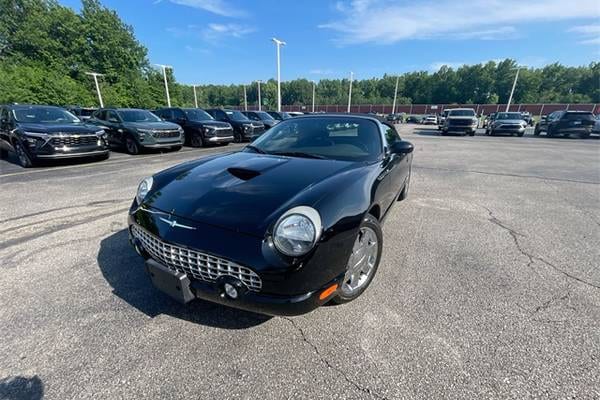
- Koons Ford of Falls Church (Falls Church, VA)
Close
Located in Falls Church, VA / 1,145 miles away from Rutland, ND
2002 Ford Thunderbird Base 2D Convertible 5-Speed Automatic 17/23 City/Highway MPG 2002 Clean CARFAX. Black RWD Ford Thunderbird
AutoCheck Vehicle History Summary
Accident Free Vehicle: Yes
Personal Use Only: Yes
History Provider: AutoCheck
Title Details: Clean Title
Salvage Vehicle: No
Frame Damage: No
Theft History: No
Lemon Status: No
Free History Report: Yes
Features and Specs:
17 Combined MPG (15 City/22 Highway)
Listing Information:
VIN: 1FAHP60A82Y101145
Stock: PB03344
Certified Pre-Owned: No
Listed since: 06-24-2025 - $9,876great price$5,083 below market
- 65,401 miles
- No accidents, 1 owner, personal use only
- 8cyl automatic
- 1st Auto Gallery (Stafford, VA)
Close
Located in Stafford, VA / 1,149 miles away from Rutland, ND
AutoCheck Vehicle History Summary
Accident Free Vehicle: Yes
Personal Use Only: Yes
History Provider: AutoCheck
Title Details: Clean Title
Salvage Vehicle: No
Frame Damage: No
Theft History: No
Lemon Status: No
Free History Report: No
Features and Specs:
17 Combined MPG (15 City/22 Highway)
Listing Information:
VIN: 1FAHP60AX2Y125690
Stock: AG-130
Certified Pre-Owned: No - $9,988great price$2,295 below market
- 93,511 miles
- No accidents, 4 owners, personal use only
- 8cyl automatic
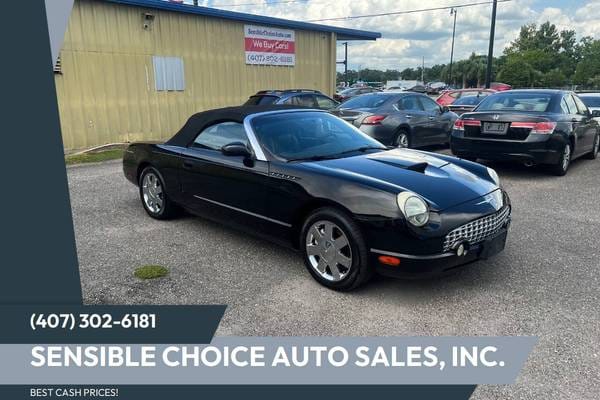
- Sensible Choice Auto Sales (Longwood, FL)
Close
Located in Longwood, FL / 1,485 miles away from Rutland, ND
Introducing the 2002 Ford Thunderbird Deluxe, a powerful and stylish car that will take your driving experience to the next level. With its 3.9L V8 en...
AutoCheck Vehicle History Summary
Accident Free Vehicle: Yes
Personal Use Only: Yes
History Provider: AutoCheck
Title Details: Clean Title
Salvage Vehicle: No
Frame Damage: No
Theft History: No
Lemon Status: No
Free History Report: No
Features and Specs:
17 Combined MPG (15 City/22 Highway)
Listing Information:
VIN: 1FAHP60A02Y127030
Stock: K0456
Certified Pre-Owned: No
Listed since: 06-14-2025 Appraise
my carGet the Edmunds appraisal report and a no-obligation offer for your car
See my car’s value
- New Listing$14,995good price$3,413 below market
- 52,227 miles
- No accidents, 1 owner, corporate fleet vehicle
- 8cyl automatic
- Edd Rogers Chevrolet (Sparta, TN)
Close
Located in Sparta, TN / 937 miles away from Rutland, ND
Shop from the comfort of your home! Contact us today and schedule an at-home test drive. We will deliver to you! Edd Rogers Chevrolet Buick is a conve...
AutoCheck Vehicle History Summary
Accident Free Vehicle: Yes
Personal Use Only: No
History Provider: AutoCheck
Title Details: Clean Title
Salvage Vehicle: No
Frame Damage: No
Theft History: No
Lemon Status: No
Free History Report: No
Features and Specs:
17 Combined MPG (15 City/22 Highway)
Listing Information:
VIN: 1FAHP60A82Y114865
Stock: 5138
Certified Pre-Owned: No
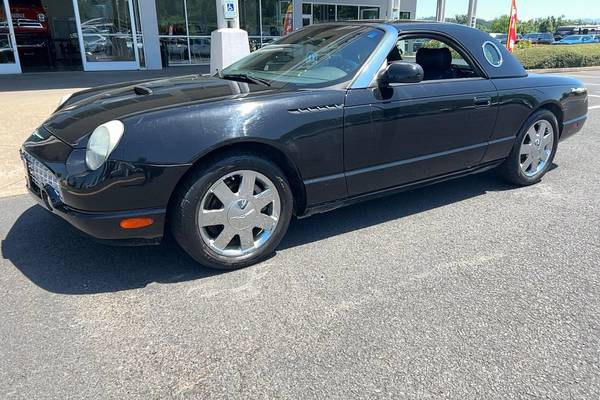
Listed since: 03-25-2024 - Price Drop$14,990good price$3,223 below market
- 53,187 miles
- No accidents, 2 owners, personal use only
- 8cyl automatic
- Mark Wahlberg Chevrolet of Avon (Avon, OH)
Close
Located in Avon, OH / 832 miles away from Rutland, ND
2002 Evening Black Thunderbird RWD 5-Speed Automatic 3.9L V8 DOHC 32V 17/23 City/Highway MPG
AutoCheck Vehicle History Summary
Accident Free Vehicle: Yes
Personal Use Only: Yes
History Provider: AutoCheck
Title Details: Clean Title
Salvage Vehicle: No
Frame Damage: No
Theft History: No
Lemon Status: No
Free History Report: No
Features and Specs:
17 Combined MPG (15 City/22 Highway)
Listing Information:
VIN: 1FAHP60A42Y111364
Stock: AF4C109491B
Certified Pre-Owned: No
Listed since: 06-09-2025 - $8,999great price$2,608 below market
- 87,358 miles
- 1 accident, 6 owners, personal use only
- 8cyl automatic
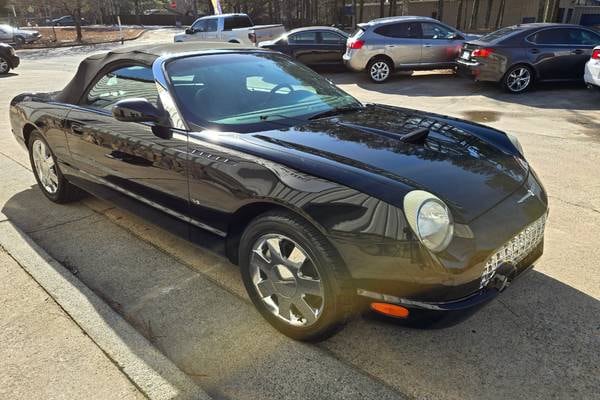
- Smart Cars (Acworth, GA)
Close
Located in Acworth, GA / 1,069 miles away from Rutland, ND
2002 Ford Thunderbird DeluxeColor: Black / Black Leather BEST COLOR COMBOMiles: 87,358Transmission: AutomaticCondition: Clean CARFAX, Runs and drives ...
AutoCheck Vehicle History Summary
Accident Free Vehicle: No
Personal Use Only: Yes
History Provider: AutoCheck
Title Details: Clean Title
Salvage Vehicle: No
Frame Damage: No
Theft History: No
Lemon Status: No
Free History Report: No
Features and Specs:
17 Combined MPG (15 City/22 Highway)
Listing Information:
VIN: 1FAHP60A12Y101567
Stock: GM162
Certified Pre-Owned: No - $17,980good price$2,526 below market
- 19,319 miles
- No accidents, 3 owners, personal use only
- 8cyl automatic
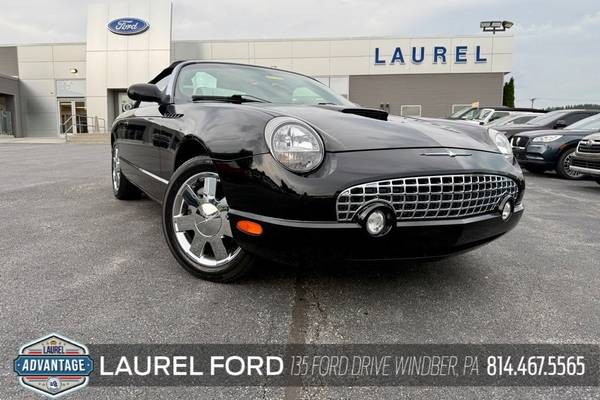
- Laurel Ford Lincoln (Windber, PA)
Close
Located in Windber, PA / 1,020 miles away from Rutland, ND
Come test drive this 2002 Ford Thunderbird! Enjoy the outdoors from inside this car! Top features include a power convertible top, leather upholstery,...
AutoCheck Vehicle History Summary
Accident Free Vehicle: Yes
Personal Use Only: Yes
History Provider: AutoCheck
Title Details: Clean Title
Salvage Vehicle: No
Frame Damage: No
Theft History: No
Lemon Status: No
Free History Report: No
Features and Specs:
17 Combined MPG (15 City/22 Highway)
Listing Information:
VIN: 1FAHP60A32Y111288
Stock: UA111288
Certified Pre-Owned: No
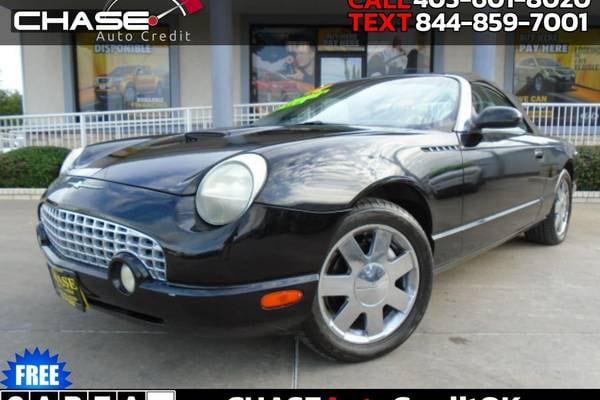
Listed since: 05-11-2025 - $10,450fair price$1,231 below market
- 102,773 miles
- No accidents, 1 owner, personal use only
- 8cyl automatic
- Chase Auto Credit (Oklahoma City, OK)
Close
Located in Oklahoma City, OK / 729 miles away from Rutland, ND
** WE LOVE WHAT WE DO , AND WE WANT YOU TO LOVE YOUR NEXT VEHICLE ** ...
AutoCheck Vehicle History Summary
Accident Free Vehicle: Yes
Personal Use Only: Yes
History Provider: AutoCheck
Title Details: Clean Title
Salvage Vehicle: No
Frame Damage: No
Theft History: No
Lemon Status: No
Free History Report: No
Features and Specs:
17 Combined MPG (15 City/22 Highway)
Listing Information:
VIN: 1FAHP60A92Y126765
Stock: 1481
Certified Pre-Owned: No - $14,002good price$2,476 below market
- 51,621 miles
- No accidents, 3 owners, personal use only
- 8cyl automatic
- Coggin Nissan on Atlantic (Jacksonville, FL)
Close
Located in Jacksonville, FL / 1,385 miles away from Rutland, ND
RECALL NOTICE: Some vehicles offered for sale may be subject to unrepaired manufacturer safety recalls. To determine the recall status of a vehicle, v...
AutoCheck Vehicle History Summary
Accident Free Vehicle: Yes
Personal Use Only: Yes
History Provider: AutoCheck
Title Details: Clean Title
Salvage Vehicle: No
Frame Damage: No
Theft History: No
Lemon Status: No
Free History Report: No
Features and Specs:
17 Combined MPG (15 City/22 Highway)
Listing Information:
VIN: 1FAHP60A82Y112548
Stock: 112548
Certified Pre-Owned: No
Listed since: 08-21-2025 - $19,995fair price$2,732 below market
- 30,915 miles
- No accidents, 3 owners, personal use only
- 8cyl automatic
- Westfield Ford (Countryside, IL)
Close
Located in Countryside, IL / 563 miles away from Rutland, ND
Come see this 2002 Ford Thunderbird before it's too late! You Can't Beat the Price with These Options Windshield-mounted antenna, Visor vanity mirror...
AutoCheck Vehicle History Summary
Accident Free Vehicle: Yes
Personal Use Only: Yes
History Provider: AutoCheck
Title Details: Clean Title
Salvage Vehicle: No
Frame Damage: No
Theft History: No
Lemon Status: No
Free History Report: No
Features and Specs:
17 Combined MPG (15 City/22 Highway)
Listing Information:
VIN: 1FAHP60AX2Y105018
Stock: 52625
Certified Pre-Owned: No
Listed since: 06-11-2025 - Price Drop$10,488good price$1,661 below market
- 95,104 miles
- No accidents, 4 owners, personal use only
- 8cyl automatic
- Bedrock Motors Blaine (Blaine, MN)
Close
Located in Blaine, MN / 216 miles away from Rutland, ND
Alloy Wheels, Keyless Entry, Leather Seats, Power Driver Seat, Audiophile Electronic AM/FM Stereo w/6 CD.Clean CARFAX.*** BLAINE LOCATION *** 9901 Cen...
AutoCheck Vehicle History Summary
Accident Free Vehicle: Yes
Personal Use Only: Yes
History Provider: AutoCheck
Title Details: Clean Title
Salvage Vehicle: No
Frame Damage: No
Theft History: No
Lemon Status: No
Free History Report: No
Features and Specs:
17 Combined MPG (15 City/22 Highway)
Listing Information:
VIN: 1FAHP60A22Y125828
Stock: C3192A
Certified Pre-Owned: No
Listed since: 04-25-2024 - New Listing$20,995fair price$2,122 below market
- 28,987 miles
- No accidents, 2 owners, personal use only
- 8cyl automatic
- Hyman Bros INFINITI of Richmond (Midlothian, VA)
Close
Located in Midlothian, VA / 1,178 miles away from Rutland, ND
~EXCEPTIONAL CONDITION~ CLEAN CARFAX~
AutoCheck Vehicle History Summary
Accident Free Vehicle: Yes
Personal Use Only: Yes
History Provider: AutoCheck
Title Details: Clean Title
Salvage Vehicle: No
Frame Damage: No
Theft History: No
Lemon Status: No
Free History Report: No
Features and Specs:
17 Combined MPG (15 City/22 Highway)
Listing Information:
VIN: 1FAHP60A22Y116918
Stock: P30774
Certified Pre-Owned: No
Listed since: 06-24-2025 - $15,881good price$2,811 below market
- 38,406 miles
- 1 accident, 6 owners, personal use only
- 8cyl automatic
- Apple Chevrolet (Tinley Park, IL)
Close
Located in Tinley Park, IL / 571 miles away from Rutland, ND
** Leather Seats, RARE BIRD!!!, GOOD BRAKES, GOOD TIRES, LOW MILES, ABS brakes, Audiophile Electronic AM/FM Stereo w/6 CD, Automatic temperature contr...
AutoCheck Vehicle History Summary
Accident Free Vehicle: No
Personal Use Only: Yes
History Provider: AutoCheck
Title Details: Clean Title
Salvage Vehicle: No
Frame Damage: No
Theft History: No
Lemon Status: No
Free History Report: No
Features and Specs:
17 Combined MPG (15 City/22 Highway)
Listing Information:
VIN: 1FAHP60A42Y101112
Stock: 66435
Certified Pre-Owned: No
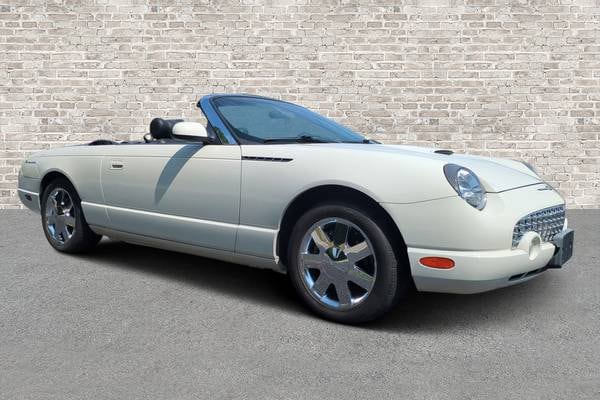
Listed since: 04-23-2025 - $13,000fair price$326 above market
- 90,909 miles
- No accidents, 4 owners, personal use only
- 8cyl automatic
- Pearson Hyundai (Richmond, VA)
Close
Located in Richmond, VA / 1,178 miles away from Rutland, ND
2002 Ford Thunderbird Base White RWD 3.9L V8 DOHC 32V 5-Speed Automatic **SIGHT UNSEEN APPRAISAL**, **ONLINE CREDIT APP**, **CONTACT US TO SCHEDULE A ...
AutoCheck Vehicle History Summary
Accident Free Vehicle: Yes
Personal Use Only: Yes
History Provider: AutoCheck
Title Details: Clean Title
Salvage Vehicle: No
Frame Damage: No
Theft History: No
Lemon Status: No
Free History Report: No
Features and Specs:
17 Combined MPG (15 City/22 Highway)
Listing Information:
VIN: 1FAHP60A92Y110033
Stock: C14736
Certified Pre-Owned: No
Listed since: 06-03-2025 - $14,995fair price$273 below market
- 65,109 miles
- No accidents, 3 owners, personal use only
- 8cyl automatic
- Audi of Orange Park (Jacksonville, FL)
Close
Located in Jacksonville, FL / 1,384 miles away from Rutland, ND
Used 2002 Ford Thunderbird For sale In Jacksonville Florida.Turquoise RWD 5-Speed Automatic 3.9L V8 DOHC 32V Passed Rigorous Safety Inspection Perform...
AutoCheck Vehicle History Summary
Accident Free Vehicle: Yes
Personal Use Only: Yes
History Provider: AutoCheck
Title Details: Clean Title
Salvage Vehicle: No
Frame Damage: No
Theft History: No
Lemon Status: No
Free History Report: No
Features and Specs:
17 Combined MPG (15 City/22 Highway)
Listing Information:
VIN: 1FAHP60A92Y122506
Stock: 2Y122506P
Certified Pre-Owned: No
Listed since: 07-15-2025 - New Listing$8,991good price$1,754 below market
- 115,340 miles
- No accidents, 2 owners, personal use only
- 8cyl automatic
- APX Auto Brokers (Edmonds, WA)
Close
Located in Edmonds, WA / 1,173 miles away from Rutland, ND
2002 FORD THUNDERBIRD DELUXE AUTOMATIC TRANSMISSION **29 SERVICE HISTORY RECORDS** Two owner clean title clean Carfax, 29 service history records, a...
AutoCheck Vehicle History Summary
Accident Free Vehicle: Yes
Personal Use Only: Yes
History Provider: AutoCheck
Title Details: Clean Title
Salvage Vehicle: No
Frame Damage: No
Theft History: No
Lemon Status: No
Free History Report: No
Features and Specs:
17 Combined MPG (15 City/22 Highway)
Listing Information:
VIN: 1FAHP60A42Y109047
Stock: 109047
Certified Pre-Owned: No
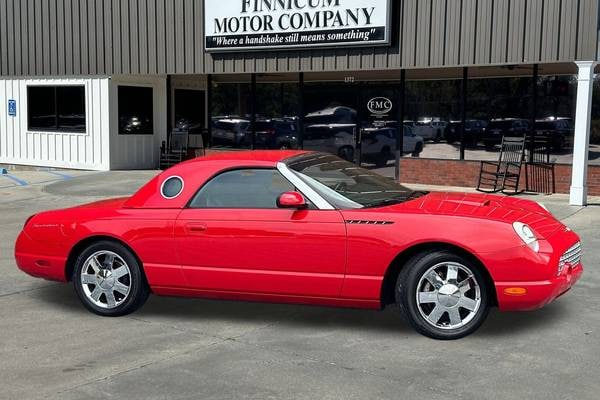
Listed since: 07-15-2025 - Price Drop$14,477fair price$591 below market
- 66,910 miles
- No accidents, 3 owners, corporate fleet vehicle
- 8cyl automatic
- Finnicum Motor Company (Leesburg, GA)
Close
Located in Leesburg, GA / 1,223 miles away from Rutland, ND
Odometer is 4975 miles below market average! Clean CARFAX.2D Convertible, 3.9L V8 DOHC 32V, 5-Speed Automatic, RWD, Torch Red, Torch Red w/Reclinin...
AutoCheck Vehicle History Summary
Accident Free Vehicle: Yes
Personal Use Only: No
History Provider: AutoCheck
Title Details: Clean Title
Salvage Vehicle: No
Frame Damage: No
Theft History: No
Lemon Status: No
Free History Report: No
Features and Specs:
17 Combined MPG (15 City/22 Highway)
Listing Information:
VIN: 1FAHP60A42Y106732
Stock: C06732
Certified Pre-Owned: No
Listed since: 07-22-2025 - Price Drop$14,294fair price$322 above market
- 75,063 miles
- No accidents, 4 owners, personal use only
- 8cyl automatic
- Zeigler Honda of Racine (Mount Pleasant, WI)
Close
Located in Mount Pleasant, WI / 524 miles away from Rutland, ND
CLEAN CARFAX!KEYLESS ENTRY, 4-Wheel Disc Brakes, 8 Speakers, ABS brakes, Air Conditioning, AM/FM radio, Audiophile Electronic AM/FM Stereo w/6 CD, ...
AutoCheck Vehicle History Summary
Accident Free Vehicle: Yes
Personal Use Only: Yes
History Provider: AutoCheck
Title Details: Clean Title
Salvage Vehicle: No
Frame Damage: No
Theft History: No
Lemon Status: No
Free History Report: No
Features and Specs:
17 Combined MPG (15 City/22 Highway)
Listing Information:
VIN: 1FAHP60A32Y101862
Stock: P12654A
Certified Pre-Owned: No
Listed since: 08-09-2025 - $13,995good price$4,271 below market
- 40,576 miles
- 1 accident, 3 owners, personal use only
- 8cyl automatic
- So Cal Performance (San Diego, CA)
Close
Located in San Diego, CA / 1,383 miles away from Rutland, ND
MUST SEE THIS IMPRESSIVE 2002 FORD THUNDERBIRD DELUXE EDITION!!! ALL SERVICES ARE UP TO DATE, FULLY LOADED, ONE OF THE NICEST IN TOWN AND PRICED WAY B...
AutoCheck Vehicle History Summary
Accident Free Vehicle: No
Personal Use Only: Yes
History Provider: AutoCheck
Title Details: Clean Title
Salvage Vehicle: No
Frame Damage: No
Theft History: No
Lemon Status: No
Free History Report: No
Features and Specs:
17 Combined MPG (15 City/22 Highway)
Listing Information:
VIN: 1FAHP60A82Y115241
Stock: 5471
Certified Pre-Owned: No
Listed since: 07-28-2025 - $24,998fair price$1,473 above market
- 26,975 miles
- No accidents, 2 owners, personal use only
- 8cyl automatic
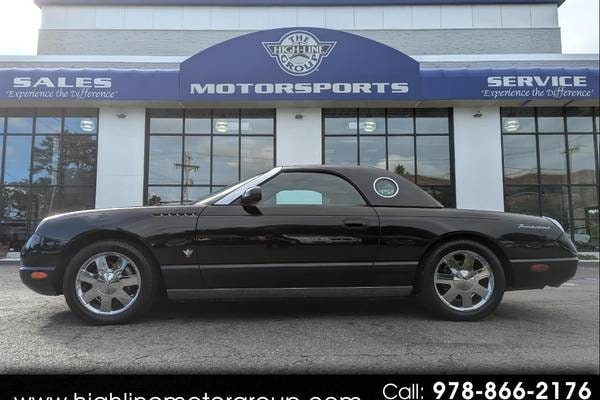
- The Highline Group (Lowell, MA)
Close
Located in Lowell, MA / 1,307 miles away from Rutland, ND
Clean CARFAX. 2002 Ford Thunderbird Evening Black RWD 5-Speed Automatic 3.9L V8 DOHC 32V Full Interior Color Accent Package. Welcome to High-line Mot...
AutoCheck Vehicle History Summary
Accident Free Vehicle: Yes
Personal Use Only: Yes
History Provider: AutoCheck
Title Details: Clean Title
Salvage Vehicle: No
Frame Damage: No
Theft History: No
Lemon Status: No
Free History Report: Yes
Features and Specs:
17 Combined MPG (15 City/22 Highway)
Listing Information:
VIN: 1FAHP60A62Y125542
Stock: 25-299
Certified Pre-Owned: No - Price Drop$19,477fair price$1,242 above market
- 41,566 miles
- No accidents, 2 owners, corporate fleet vehicle
- 8cyl automatic
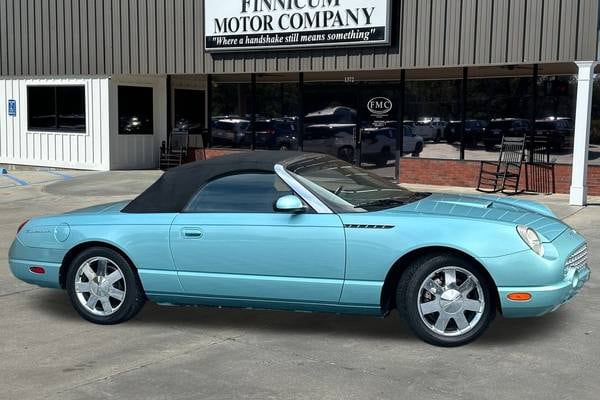
- Finnicum Motor Company (Leesburg, GA)
Close
Located in Leesburg, GA / 1,223 miles away from Rutland, ND
Clean CARFAX.2D Convertible, 3.9L V8 DOHC 32V, 5-Speed Automatic, RWD, Thunderbird Blue, Thunderbird Blue w/Reclining Front Leather Bucket Seats....
AutoCheck Vehicle History Summary
Accident Free Vehicle: Yes
Personal Use Only: No
History Provider: AutoCheck
Title Details: Clean Title
Salvage Vehicle: No
Frame Damage: No
Theft History: No
Lemon Status: No
Free History Report: No
Features and Specs:
17 Combined MPG (15 City/22 Highway)
Listing Information:
VIN: 1FAHP60A32Y114093
Stock: C14093
Certified Pre-Owned: No
Listed since: 07-22-2025








Showing 1 - 21 out of 523 listings
Consumer Reviews for the Ford Thunderbird
Read recent reviews for the Ford Thunderbird
Still loving it
fred154, 08/27/2011
2002 Ford Thunderbird Premium 2dr Convertible w/Removable Hard Top (3.9L 8cyl 5A)
I've owned this car for nearly nine years now, and I (and everyone else who sees it) still consider it a new car.
It looks great and drives just as smoothly after 32,500 miles as it did when new.
No problems with car whatsoever.
I replaced the battery simply because I had a Firestone rebate that had to be used.
This isn't a family car for daily use, but it is a great toy that still makes … an old man feel like a kid again!
Filters
Skip to Results