" d="M896 513c116 45.015 222 64 304 75V0H0v501c40 36.024 154 76 340 76s344-146.269 556-64Z"/%3E%3C/mask%3E%3Cg mask="url(%23b)"%3E%3Cpath fill="url(%23c)" d="M896 513c116 45.015 222 64 304 75V0H0v501c40 36.024 154 76 340 76s344-146.269 556-64Z"/%3E%3Cpath fill="url(%23d)" fill-opacity=".15" d="M581.718 62.893c42.993 1.53 86.281 5.888 129.704 13.204 311.828 52.485 552.538 242.016 657.698 483.656-149.97-147.971-450.891-226.33-789.375-232.079-338.534.839-640.434 74.572-792.746 220.292 108.75-240.047 352.255-425.97 664.832-473.803a1041.548 1041.548 0 0 1 129.887-11.27Z"/%3E%3Cpath fill="url(%23e)" fill-opacity=".5" d="M611.247 209.93a1458.84 1458.84 0 0 1 139.573 27.692c333.61 83.239 577.16 267.208 668.67 475.188-148.93-138.63-468.279-241.218-835.209-290.421-367.6-43.915-702.265-24.445-881.281 72.561 140.567-178.524 422.355-295.817 766.181-293.074 47.867.484 95.274 3.212 142.066 8.054Z"/%3E%3Cpath fill="url(%23f)" d="M735.039 879.394c48.524-6.62 97.023-16.967 145.3-31.2C1227.03 746.059 1475.76 472.327 1564.28 145c-151.17 209.633-482.23 344.436-865.05 388.31C315.515 568.571-35.93 504.564-227 330.342-73.333 632.61 226.169 849.617 586.429 878.604c50.15 3.871 99.74 4.07 148.61.79Z" opacity=".3"/%3E%3Cpath fill="url(%23g)" d="M694.222 783.712c50.956 12 103.317 20.27 156.946 24.578 385.102 31.013 738.232-146.76 952.062-439.434-231.22 151.216-613.24 158.795-1012.047 55.796C394.784 312.716 68.643 114.101-55.211-133c37.44 360.528 253.087 691.895 601.449 858.946 48.557 23.091 97.963 42.302 147.984 57.766Z" opacity=".9"/%3E%3Cpath fill="url(%23h)" fill-opacity=".5" d="M896 513c116 45.015 222 64 304 75V0H0v501c40 36.024 154 76 340 76s344-146.269 556-64Z"/%3E%3C/g%3E%3Cdefs%3E%3ClinearGradient id="a" x1="1005" x2="989.087" y1="23" y2="552.522" gradientUnits="userSpaceOnUse"%3E%3Cstop stop-color="%23007EE5"/%3E%3Cstop offset=".333" stop-color="%231561D4"/%3E%3Cstop offset="1" stop-color="%230A4AAB"/%3E%3C/linearGradient%3E%3ClinearGradient id="c" x1="1005" x2="989.087" y1="23" y2="552.522" gradientUnits="userSpaceOnUse"%3E%3Cstop stop-color="%23007EE5"/%3E%3Cstop offset=".334" stop-color="%231561D4"/%3E%3C/linearGradient%3E%3ClinearGradient id="d" x1="675.999" x2="879.999" y1="648.999" y2="120.999" gradientUnits="userSpaceOnUse"%3E%3Cstop stop-color="%23fff"/%3E%3Cstop offset="1" stop-color="%23fff" stop-opacity="0"/%3E%3C/linearGradient%3E%3ClinearGradient id="e" x1="656.5" x2="637.602" y1="213" y2="622.259" gradientUnits="userSpaceOnUse"%3E%3Cstop offset=".115" stop-color="%23fff" stop-opacity="0"/%3E%3Cstop offset=".944" stop-color="%23017D8D"/%3E%3C/linearGradient%3E%3ClinearGradient id="f" x1="398" x2="737" y1="599" y2="387" gradientUnits="userSpaceOnUse"%3E%3Cstop stop-color="%2300ABB5"/%3E%3Cstop offset="1" stop-color="%2300A0B5" stop-opacity="0"/%3E%3C/linearGradient%3E%3ClinearGradient id="g" x1="1051.5" x2="271" y1="567" y2="575" gradientUnits="userSpaceOnUse"%3E%3Cstop stop-color="%230098C2"/%3E%3Cstop offset="1" stop-color="%23033E96" stop-opacity="0"/%3E%3C/linearGradient%3E%3ClinearGradient id="h" x1="1005" x2="986.038" y1="23" y2="587.43" gradientUnits="userSpaceOnUse"%3E%3Cstop offset=".813" stop-opacity="0"/%3E%3Cstop offset=".972"/%3E%3C/linearGradient%3E%3C/defs%3E%3C/svg%3E)
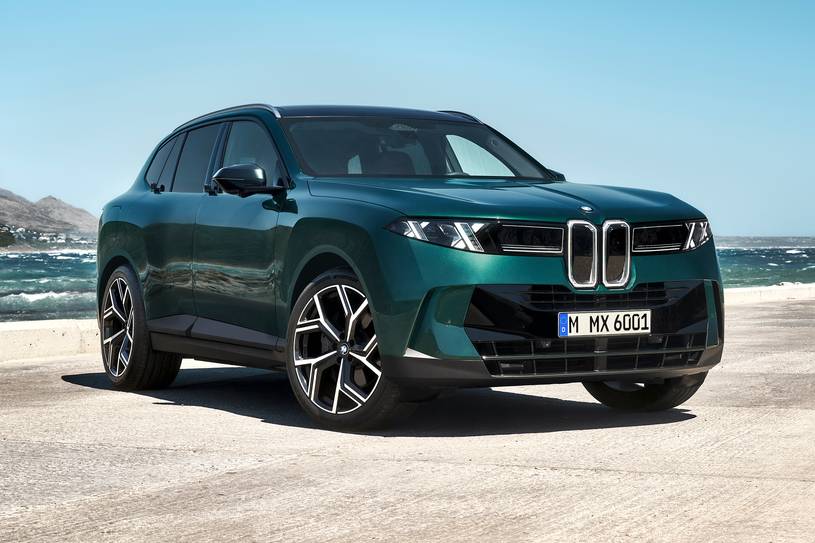

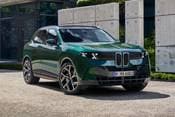

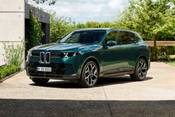
The BMW X5 was one of the first crossovers from the major German brands to hit the market. This midsize SUV has been a favorite among BMW buyers since its introduction for the 2000 model year. Fast-forward 27 years from its initial launch, and the 2027 X5 makes massive changes as it prepares to take on the equally-as-new Audi Q7, the recently refreshed Mercedes-Benz GLE and others. With a new design, new powertrains and an interior that's sure to wow, BMW is betting big on its new X5.
Design is subjective, but the new X5 is sure to split opinion — when I saw it in person, I grew to like the overall shape quickly. Two design tweaks I'm not sure about are the removal of typical door handles for little winglets that sit at the base of the windows (they look like pig's ears) and the almost sacrilegious omission of the X5's split-folding tailgate. BMW said it did this for more efficiency, but who cares when it was such a staple of the X5's design and practicality for every prior generation? But I digress.
A diverse lineup of powertrains
The X5 is BMW's bread-and-butter crossover, and it trades best-seller status with the X3 on a regular basis here in the SUV-crazed U.S. That do-it-all mentality is most evident in the sheer number of powertrain layouts this SUV can have. Globally, the same body you see here will offer gas, fully electric, plug-in hybrid, diesel and hydrogen powerplants. In the U.S., the lineup will have all of those except the diesel.
BMW has only given specifics for a few of the new X5 models so far. The gas-only lineup will feature a turbocharged 3.0-liter straight-six and a 48-volt mild hybrid system that combine to make 394 horsepower and 428 lb-ft of torque (bumps of 19 hp and 45 lb-ft over the current six-cylinder X5). Power will be sent through an eight-speed automatic transmission to either the rear or all four wheels. Like the recently revised 7 Series, a V8 model will join the gas lineup in 2027, but BMW has not detailed that engine yet.
For the plug-in hybrid, the X5 50e xDrive pairs the inline-six with an electric motor for 483 hp and 516 lb-ft of torque. The 26.5-kWh battery should give the PHEV 44 miles of EV-only range, around 15 more miles than the current X5 plug-in. BMW isn't giving any details on the hydrogen-powered X5 right now, but we'll know more closer to that version's release next year.
The electric-only iX5 60 xDrive (the first of what will end up being a whole range of EV X5s) uses two electric motors for a combined 570 hp and 593 lb-ft of torque. The motors pull from a huge 144-kWh battery pack that is integrated directly into the vehicle's body without modules or additional structural components to save cost and weight. It runs on an 800-volt electric architecture and can charge at up to 460 kW — assuming you can find a charger with that much output, the iX5 can juice up from 10% to 80% in just 22 minutes.
The front motor can be automatically switched off at speed to reduce the iX5's rolling resistance and improve efficiency. BMW says this version of the iX5 has an estimated range of 435 miles. Even though that's BMW's own estimate, its test used the EPA's testing procedures, so you can expect that to be very close to the actual figure when it goes on sale later this year. Even so, we'll be sure to scrutinize the final figure when it's time for the Edmunds EV Range Test.
It's also worth noting that the iX5 replaces the BMW iX, BMW's other two-row fully electric crossover. The brand doesn't need two vehicles that do the same exact thing, after all.
BMW's new interior shows up here, too
The interior is a big departure from the current X5, but it will be plenty familiar to anyone who's seen BMW's more recent releases. As expected, the new X5 mimics the iX3 and the new 7 Series. A 17.9-inch display in the center of the dashboard controls all of the X5's major functions (including all of the climate controls and the direction of the air vents), and a 3D head-up display is now standard kit on the X5. I think the optional passenger screen clutters the interior design and should be skipped without exception.
I used the system when I first pored over the X5 earlier this year, and, while I loathe touchscreen-based climate functions, the system was intuitive enough that I got used to it quickly. All of the screens and systems are quick to react, and BMW's voice assistant is now one of the more competent in the industry. It can understand multi-part questions and do far more than just route you from Munich to Berlin.
Panoramic iDrive, the system that projects key information onto a thin black strip where the windshield meets the dashboard in lieu of an instrument cluster, is also here. It puts more information directly into the driver's eyeline, and it isn't obstructed by the steering wheel regardless of its position. In addition to speed, range and driver assistance displays (which are always present), there are six more slots that are customizable with anything from the weather to images of classic BMW art cars.
That funky new steering wheel is making its way into all of BMW's new and updated cars, too. The buttons light up as needed (so you'll only see the accept/decline call buttons when you're receiving one, for example), and despite the odd shape, it's relatively nice to hold thanks to the swanky materials that wrap it.
My hands-on time with the iX5 was limited to one very high-spec trim, but the interior was impeccable. Every seat had oodles of space — headroom and legroom won't cause issues for even taller folks because the X5 has grown in both length and wheelbase (the latter is up 2.4 inches). Everything was coated in extremely high-quality materials from suede to real leather to slate. Yes, there is a touch panel made from a type of stone in the center console of the new X5 — a material previously only used in ultra-luxury cars.
The rear seats recline aplenty, and there are pillows for both your headrest and armrest back there. The X5 now feels more premium than the current Alpina XB7, which is supposed to be the most luxe crossover BMW makes. After settling into the new interior digs, it felt like BMW is shooting for the moon here, targeting something closer to a Bentley than an Audi Q7.
The X5 also employs a new ethos for its driver assistance systems. If you're using adaptive cruise control and tap the brakes, the vehicle no longer turns off the system altogether. Instead, it adjusts the ACC to the speed you've asked it to slow down to. The lane keeping assistance system won't fight you if you want to merge without signaling first because eye-tracking sensors and angle sensors can infer when you're being intentional and when you aren't. The driver aids are designed to be less obtrusive and only intervene when necessary.
Small price bumps for the gas cars, but the EV is pricey
Rear-wheel-drive X5s with the inline-six engine will start at $71,250 (after the $1,450 destination charge is applied), and all-wheel drive bumps the price to $73,550. While the prices have increased over the current X5, they're up by a modest $1,500 each. The plug-in hybrid model starts at $78,950, and the fully electric iX5 60 xDrive is priced from $81,250. All four of these models will be on sale by the end of the year.
Stay tuned for a more detailed price breakdown, what they're like to drive, and how the new X5 stacks up versus its competition.
