" d="M896 513c116 45.015 222 64 304 75V0H0v501c40 36.024 154 76 340 76s344-146.269 556-64Z"/%3E%3C/mask%3E%3Cg mask="url(%23b)"%3E%3Cpath fill="url(%23c)" d="M896 513c116 45.015 222 64 304 75V0H0v501c40 36.024 154 76 340 76s344-146.269 556-64Z"/%3E%3Cpath fill="url(%23d)" fill-opacity=".15" d="M581.718 62.893c42.993 1.53 86.281 5.888 129.704 13.204 311.828 52.485 552.538 242.016 657.698 483.656-149.97-147.971-450.891-226.33-789.375-232.079-338.534.839-640.434 74.572-792.746 220.292 108.75-240.047 352.255-425.97 664.832-473.803a1041.548 1041.548 0 0 1 129.887-11.27Z"/%3E%3Cpath fill="url(%23e)" fill-opacity=".5" d="M611.247 209.93a1458.84 1458.84 0 0 1 139.573 27.692c333.61 83.239 577.16 267.208 668.67 475.188-148.93-138.63-468.279-241.218-835.209-290.421-367.6-43.915-702.265-24.445-881.281 72.561 140.567-178.524 422.355-295.817 766.181-293.074 47.867.484 95.274 3.212 142.066 8.054Z"/%3E%3Cpath fill="url(%23f)" d="M735.039 879.394c48.524-6.62 97.023-16.967 145.3-31.2C1227.03 746.059 1475.76 472.327 1564.28 145c-151.17 209.633-482.23 344.436-865.05 388.31C315.515 568.571-35.93 504.564-227 330.342-73.333 632.61 226.169 849.617 586.429 878.604c50.15 3.871 99.74 4.07 148.61.79Z" opacity=".3"/%3E%3Cpath fill="url(%23g)" d="M694.222 783.712c50.956 12 103.317 20.27 156.946 24.578 385.102 31.013 738.232-146.76 952.062-439.434-231.22 151.216-613.24 158.795-1012.047 55.796C394.784 312.716 68.643 114.101-55.211-133c37.44 360.528 253.087 691.895 601.449 858.946 48.557 23.091 97.963 42.302 147.984 57.766Z" opacity=".9"/%3E%3Cpath fill="url(%23h)" fill-opacity=".5" d="M896 513c116 45.015 222 64 304 75V0H0v501c40 36.024 154 76 340 76s344-146.269 556-64Z"/%3E%3C/g%3E%3Cdefs%3E%3ClinearGradient id="a" x1="1005" x2="989.087" y1="23" y2="552.522" gradientUnits="userSpaceOnUse"%3E%3Cstop stop-color="%23007EE5"/%3E%3Cstop offset=".333" stop-color="%231561D4"/%3E%3Cstop offset="1" stop-color="%230A4AAB"/%3E%3C/linearGradient%3E%3ClinearGradient id="c" x1="1005" x2="989.087" y1="23" y2="552.522" gradientUnits="userSpaceOnUse"%3E%3Cstop stop-color="%23007EE5"/%3E%3Cstop offset=".334" stop-color="%231561D4"/%3E%3C/linearGradient%3E%3ClinearGradient id="d" x1="675.999" x2="879.999" y1="648.999" y2="120.999" gradientUnits="userSpaceOnUse"%3E%3Cstop stop-color="%23fff"/%3E%3Cstop offset="1" stop-color="%23fff" stop-opacity="0"/%3E%3C/linearGradient%3E%3ClinearGradient id="e" x1="656.5" x2="637.602" y1="213" y2="622.259" gradientUnits="userSpaceOnUse"%3E%3Cstop offset=".115" stop-color="%23fff" stop-opacity="0"/%3E%3Cstop offset=".944" stop-color="%23017D8D"/%3E%3C/linearGradient%3E%3ClinearGradient id="f" x1="398" x2="737" y1="599" y2="387" gradientUnits="userSpaceOnUse"%3E%3Cstop stop-color="%2300ABB5"/%3E%3Cstop offset="1" stop-color="%2300A0B5" stop-opacity="0"/%3E%3C/linearGradient%3E%3ClinearGradient id="g" x1="1051.5" x2="271" y1="567" y2="575" gradientUnits="userSpaceOnUse"%3E%3Cstop stop-color="%230098C2"/%3E%3Cstop offset="1" stop-color="%23033E96" stop-opacity="0"/%3E%3C/linearGradient%3E%3ClinearGradient id="h" x1="1005" x2="986.038" y1="23" y2="587.43" gradientUnits="userSpaceOnUse"%3E%3Cstop offset=".813" stop-opacity="0"/%3E%3Cstop offset=".972"/%3E%3C/linearGradient%3E%3C/defs%3E%3C/svg%3E)
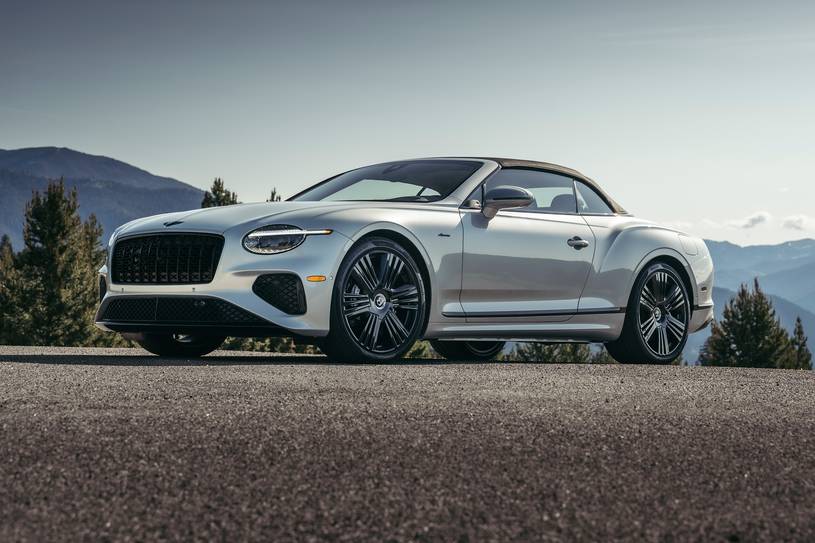
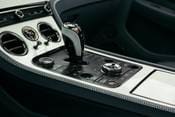
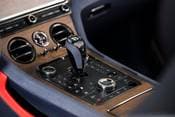
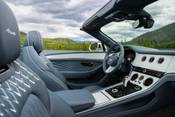
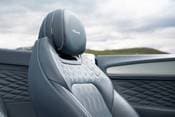
Is the 2027 Bentley Continental a good bargain? Sure, if you consider that it makes you feel like a million bucks and only costs about $300,000 (if you don't splurge for any options). And you should — the Continental is one of the most customizable vehicles on the planet, with an extensive personalization program that allows buyers to choose from more than 100 official paint schemes, multiple leather colors, and exotic add-ons that include a rotating central display. There's another new option box for prospective Continental owners to check this year as well. The 2027 Bentley Supersports is a new high-performance variant with a completely different powertrain than other Continentals, plus a number of bits and bobs to make it feel more dynamic than the rest of the range. Here's what the Supersports is, and what we think about it.
What is the Supersports?
The Continental GT coupe and GTC convertible utilize a 4.0-liter turbocharged V8 paired to a plug-in hybrid system, which is good for a combined 771 horsepower and 738 lb-ft of torque. The Supersports is a more focused, lightweight vehicle, and it starts its diet by ditching the Continental GT's hybrid components — namely, the battery and electric drive motor. Instead, the Supersports solely relies on the V8 engine, which produces 657 horsepower and 590 lb-ft of torque. It also removes the rear seats and swaps out some aluminum bits for lighter-weight carbon fiber. The result is the lightest Continental GT ever produced — and the first one to use rear-wheel drive.
Bentley says the Supersports is capable of a 0-to-60-mph run of 3.7 seconds, which is about half a second slower than the GT Speed. The coupe's top speed "will be circa 192 mph," according to Bentley.
The Supersports isn't about outright speed, though. Instead, it's about on-road verve. To that end, the Supersports uses rear-wheel drive; all other Continental GT models have all-wheel drive. Freeing up the two front wheels allows the car to behave with a bit more playful attitude. Standard rear-axle steering will help with cornering precision, and Bentley says the Continental GT's steering, suspension and traction control systems have all been retuned specifically for Supersports duty.
More importantly, the Supersports "is nearly half a ton lighter than the Continental GT," Bentley says, meaning there's a weight reduction of nearly 1,000 pounds. The coupe's rear seats have been removed, and the aluminum roof panel is now made of carbon fiber, reducing weight and lowering the car's center of gravity. All of this will help with on-road manners — we expect the Supersports to really be able to cut a rug.
While its weight losses are considerable, they are consequential. With no battery pack in the trunk weighing down the rear, the Supersports needs a tall rear spoiler to generate enough downforce to provide balance at high speeds. The wing pairs with a massive front splitter, side skirts, fender blades, dive planes and a rear diffuser, all of which are made of carbon fiber. Even the Conti's roof, normally made of aluminum, is now a carbon-fiber panel.
Titanium quad exhaust tips, courtesy of Akrapovič, ensure the burbly V8's note reverberates off the pit wall as the Supersports fires into life, sitting on a set of 22-inch forged wheels by Manthey Racing. Massive 10-piston brake calipers shine through gloss black spokes, with rotors measuring 17.3 inches up front and 16.1 inches out back, sporting carbon-silicone-carbide construction for heat management and durability. Pirelli P Zero rubber and Trofeo RS rubber are available; the car I step into rides on the latter.
The big Bentley can dance ...
As I approach Turn 2 at Laguna Seca, the first heavy braking zone after the flat-out crest of Turn 1, I look down and see that the Supersports needs to shed 130 mph. The brake pedal is firm, with a relatively short travel. The heavy Bentley slows rapidly with minimal nosedive. Despite needing to cut so much forward momentum, the Supersports feels instantly stable with no twitchiness as braking forces increase.
Like the Continental GT Speed, the Supersports rides on air springs paired with two-chamber adaptive dampers and a 48-volt electronic anti-roll system. So as I begin to release the brake pedal and turn into the first of two apexes, the big Bentley is stable with a front end that's eager to change direction. A brake-based torque-vectoring system that shuffles power between the drive wheels, along with rear-wheel steering, ensures that all 4,398 pounds make it through Turn 2, and their implementation is seamless.
The Supersports' suspension is firm enough to precisely highlight the moment the tires reach their grip limits without creating a ride quality that's overly stiff. And while the Bentley's steering remains fairly muted, it picks up weight naturally. Through subsequent corners, the Supersports does a good job of hiding its mass, though its footprint is still evident. It's a big car, and no amount of carbon fiber anything will change that, especially as it turns hard to the left and drips the equivalent of five stories through Laguna Seca's infamous corkscrew.
Rolling onto the accelerator, the Supersports doesn't struggle to put all of its power down early. It's a case of doing most of your braking in a straight line, being patient through the middle of the corner, and trusting the car to manage its power delivery on the way out. It's thrilling, especially if you poke it into a powerslide. The Supersports demands that you interact with it more so than any other Bentley. It's almost like a supersized BMW M2 CS.
... to an extent
At the end of my two brief stints across Laguna Seca's 11 turns, one thing is clear: The Supersports is best kept off the track. For one, its Trofeo RS tires (the same type we have on our supercharged Ford Mustang Dark Horse) need a decent amount of heat before they hand out their peak performance. Yet it doesn't take more than a handful of full-speed laps before the Bentley's brakes are smoldering. It's a balance between a few quick laps followed by a mandatory cooldown.
While the Supersports does not make a track car out of a Continental GT, it does turn a large, heavy grand tourer into a performance machine that's exciting to drive.
It stops, turns and slides like no Bentley I've ever driven. And I likely never will again, considering that all 500 cars (with a starting price of $490,350) are spoken for. The Supersports may not be a featherweight, but it cuts straight through some of the blandness that has befallen Bentley's plug-in hybrid cars. The Supersports shows that, when Bentley builds what it actually wants to build, the results are bound to be special.
Additional reporting by Steven Ewing


